I’m glad the tricky first round of anagrams didn’t put you off! From the feedback I received from some of you, I seem to have set the bar quite high. However, when you see the answers I am sure you will agree that they weren’t really that difficult!
Here are the answers:
pansies suit crocus (of a pheasant)Narcissus poeticus(Pheasant Eye)
I burn brighter berries (prickly) Berberis thunbergii
ant creosote (winter berries) Cotoneaster
no play huts (not primroses) Polyanthus
nesta, joke and weep (invasive) Japanese Knotweed
a balanced, cosy chinchilla (Malteser?) Lychnis chalcedonica alba(Maltese Cross)
unhurt barnacle busters (commonly a drunken sailor?) Centranthus ruber albus(The white version of Red Valerian but has the common names of Drunken Sailor as well as Bouncing Bess for some obscure reason!)
Round Two – Cryptic Clues
The answer to each of these clues is the name of a wild flower or garden plant – (number in brackets is letters in each word).
One point for each correct answer
1. Musical instrument (5)
2. Bovine takes a tumble (7)
3. They seek him here – they seek him there (7,9)
4. Evergreen drink (9)
5. She’s close to her pupil (4)
6. The Universe as an ordered whole (6)
7. A new one sweeps clean (5)
8. Is it found at the Forge? (3,3,5)
9. Enclosure in criminal court for prisoner (4)
10. Having a right ding dong in the Emerald Isle (5,2,7)
Round Two answers and Round Three questions will be here on Wednesday.
It is getting more difficult to find six interesting things to feature on Saturday at this time of year, particularly when it is cold and wet. However, there is always something going on so here goes.
This little delicate Pelargonium ‘Apple Blossom’ is still going strong although now indoors. It is definitely one of my favourites and may keep going through the winter if I can keep it cool and carefully watered.
Most things in the garden are going to sleep or puckered up with the cold but this Anthemis punctata (I think!) never seems to stop flowering. It seems to be happy in this spot and, apart from a light trim in March, is maintenance free. Like all my grey leaved, sun loving plants, I never water or feed it.
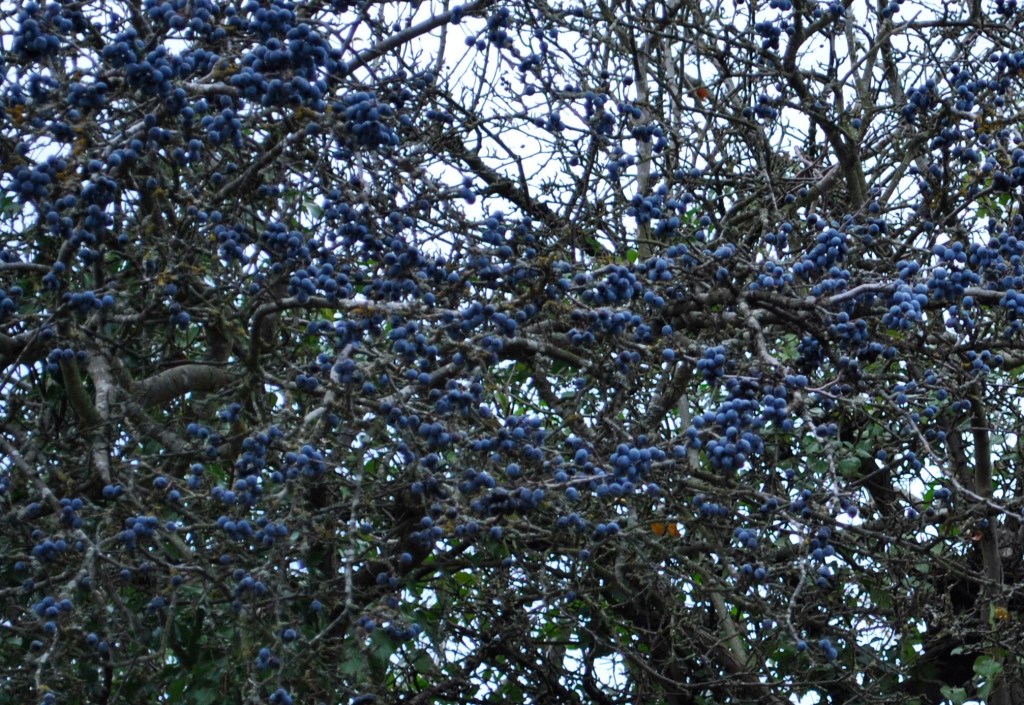
The Blackthorn tree at the end of the road is once again laden with sloes, although only at the top where the local foragers have been unable to reach. The blackbirds will demolish them in double quick time. I notice that people on forums are noticing an absence of birds feeding in their gardens at the moment due to nature’s current bounty.
Frost on the sedums last week.
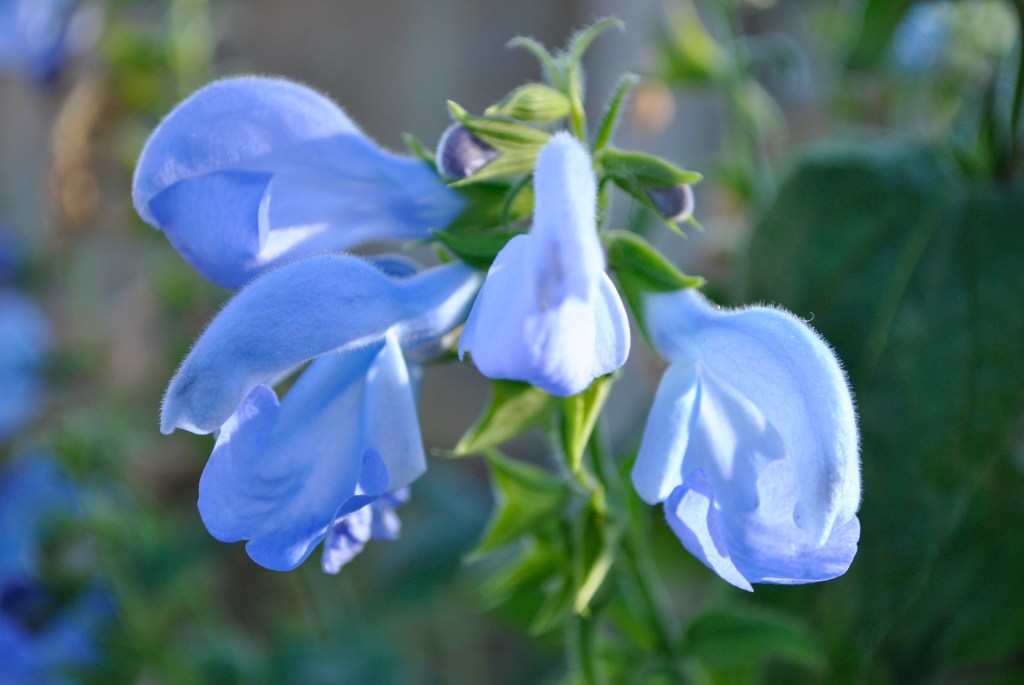
This gorgeous Salvia patens ‘Cambridge Blue’ is flowering again! This time in the greenhouse but still remarkably late.
Finally, the cold frame is now full of young plants which will hunker down for the winter and burst into life next year to fill gaps, replace losses and fill the sales tables at gardening club meetings…if we ever have any!
Have a great weekend and why not have a bash at the Quiz!
As an antidote to all the bad news and bad weather, I thought we could have a bit of festive fun and test your knowledge (and your memory!).
There will be several rounds over the next three weeks including straightforward questions, multiple choice, anagrams, “Who / What am I?”, picture identification, cryptic clues and more. Do as many or as few as you like. Dip in and out. Take it seriously or do it just for fun.
Jot down your answers on a piece of paper and check them against the answers I provide a few days later. Keep your score for each round and let me know the total at the end of the quiz.
I can’t hand out prizes due to the current restrictions but I promise to drink to your health!
I make no apology that the questions are at the tougher end of the horticultural spectrum but I know how clever you are and you wouldn’t want it too easy!
Open to everyone. Followers of my blog will get a notification, Cottage Garden Society members will get an email or a WhatsApp message and it will be posted on our Facebook page for others to join in.
Every three days, I will leave the answers to the previous round and set the questions for the next round.
Round One– Anagrams – Name that plant or flower
One point for each correct answer
pansies suit crocus (of a pheasant)
I burn brighter berries (prickly)
ant creosote (winter berries)
no play huts (not primroses)
nesta, joke and weep (invasive)
a balanced, cosy chinchilla (Malteser?)
fruitier soluble goulash (of Corsica?)
aerial storm (of Peru?)
Ooh heck, Alan (hummocks)
unhurt barnacle busters (commonly a drunken sailor?)
Round one answers and round two questions will be here on Monday.
It has been a very cold week in my part of the Cotswolds. Hard frosts followed by glorious blue skies and warm sunshine. I have friends who tell me that’s why they go skiing. I hate the cold and would never go skiing! But I do like frosty mornings and the way plants take on a new look.
Rosa ‘Darcey Bussell’ and Penstemon ‘White Bedder’
Iberis sempervirens and Erysimum linifolium ‘Variegatum’
I popped outside to chase away next door’s cat from my bird feeder and came across this fuchsia which, I readily admit, I had completely overlooked this year. It was hidden by dahlias and agapanthus but was obviously fine with that as it grew into a fine plant which I will endeavour to look after better next year. It was one of a pair that I planted some years ago but is now a singleton. Supposed to be hardy and up to 5′ tall but I have been routinely hacking it back to the ground in my annual February border clearance!
Fuchsia ‘Whiteknights Pearl’
Sometimes, foliage is enough. This is particularly true if it is variegated, evergreen and glossy like this beautiful Osmanthus which is part of the ‘bones’ of the front border and is gently expanding into an attractive and trouble free shrub.
Osmanthus heterophyllus ‘Goshiki’
I hear from all quarters that it has been an exceptional year for Hesperantha. Gardeners are reporting it to be the best year ever and I must agree, mine have never looked so good.
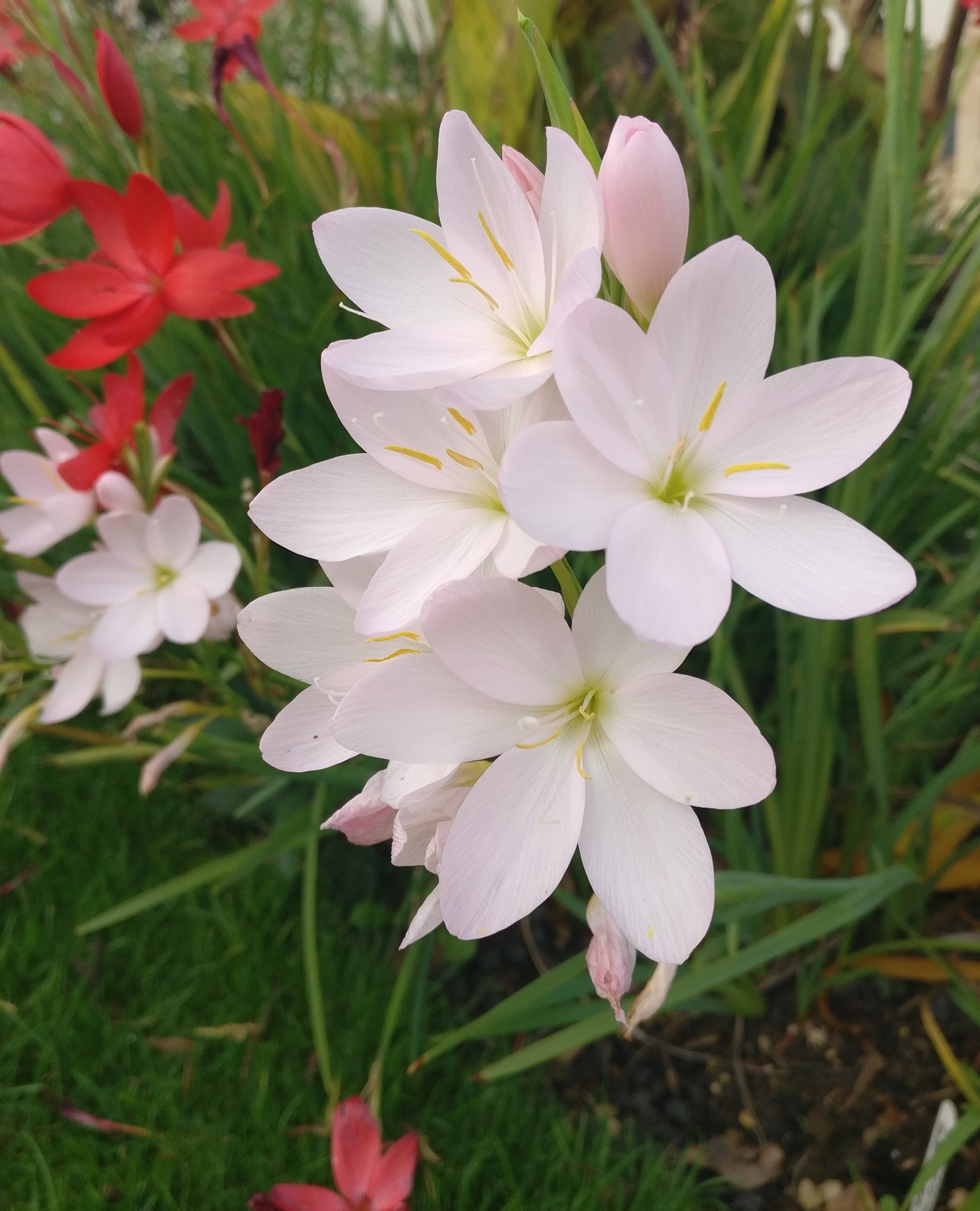
I know I have mentioned this before, but when it’s as beautiful as this it deserves another plug. Hesperantha coccinea ‘Pink Princess’ is simply gorgeous and is today’s star performer. She shrugs off cold and rain and opens her pretty blush pink flowers as soon as the sun shines. One of this years best buys and will hopefully spread and perform as well as this next year.
Hesperantha coccinea ‘Pink Princess’
I love watching the early morning frost turn to water droplets which hang like pearls on flowers and foliage. These are some examples from Thursday morning.
Salvia ‘Trelissick’ and Sambucus nigra ‘Black Lace’
Photinia ‘Red Robin’ and Euphorbia characias
Poinsettia
A few years ago I gave up on Poinsettias for Xmas. They hate draughts and central heating, are fickle about watering and humidity, and almost always drop their leaves and go leggy by The Big Day and are consigned to the utility room. However, I am weak and prone to whims, so this little beauty found it’s way home with me. Pretty don’t you think? Like someone was painting nearby!
It’s been cold, wet and windy all week and I have spent most of it indoors going stir crazy! Despite my best efforts at catching up on all those jobs I promised myself I would do on rainy days, most of them didn’t get done. Lockdown 1.0 was wonderful in April and May, I was doing 10 hour days outside. Lockdown 2.0 is not much fun in the rain!
Still, the garden continues to cheer me and some species just go on and on regardless. These Scabiosa atropurpurea in shades of pink and purple have been in flower since May and may not stop flowering until I am forced to cut back the old growth in February.
I swear they keep changing colour from year to year. These were once all ‘Derry’s Black’ but after three years are now various pinks with just a few of the dark ones left. Some flowerheads are tight and neatly contained while others are open and blousy.
In the same border are the remains of my Echinacea pallida which have been a big attraction for our local Goldfinch population who perch precariously atop the seedhead, even in the wind and rain, to get at the seeds.
Ten years ago I made the mistake of planting some Callendula officinalis and have never managed to get rid of them since! They are real survivors and resist all attempts to eradicate them. They hide away unseen until , one day, ta dah! there they are again, in full flower and spreading their seed for yet another generation to come. They clash with everything else around them, grow absolutely anywhere, in any soil, in cracks and crevices, and literally never stop flowering. Some might call that the perfect garden plant!
The purple beech hedge is always the last to open and the last to change colour and, as it does, it provides this wonderful tapestry of golden yellows, greens and purple for a few weeks before finally turning brown for the winter.
I think perennial wallflowers are one of the hardest working plants in any garden and, despite their short life, are very good value and one of the easiest to propagate from cuttings. This Erysimum linifolium ‘Variegatum’ was given to me by a good friend this year as a tiny cutting and has flowered its socks off all summer in shades of salmon pink, brick red and purple. The pale yellow variegated margins of the foliage add interest and mark this plant out as something a little different.
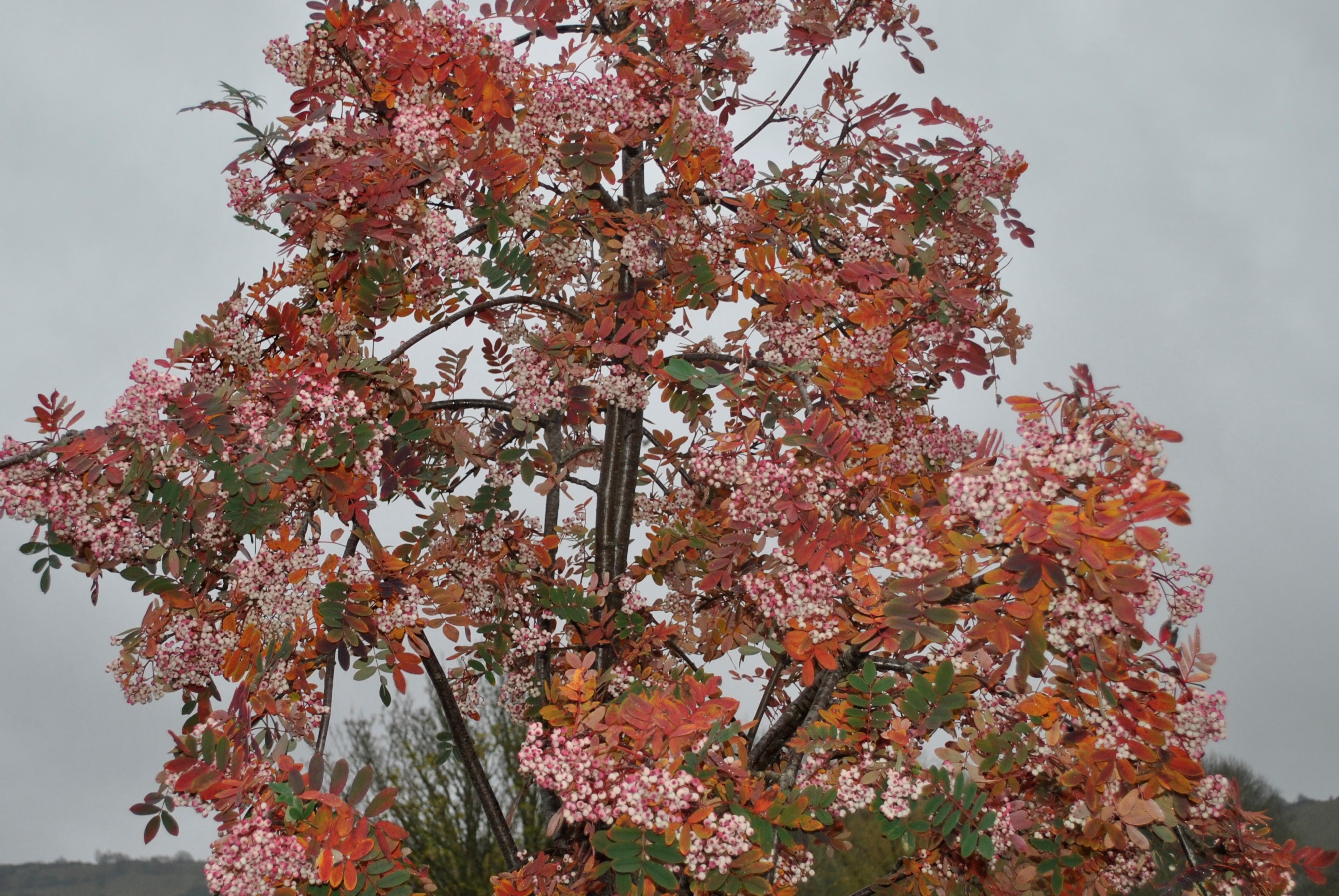
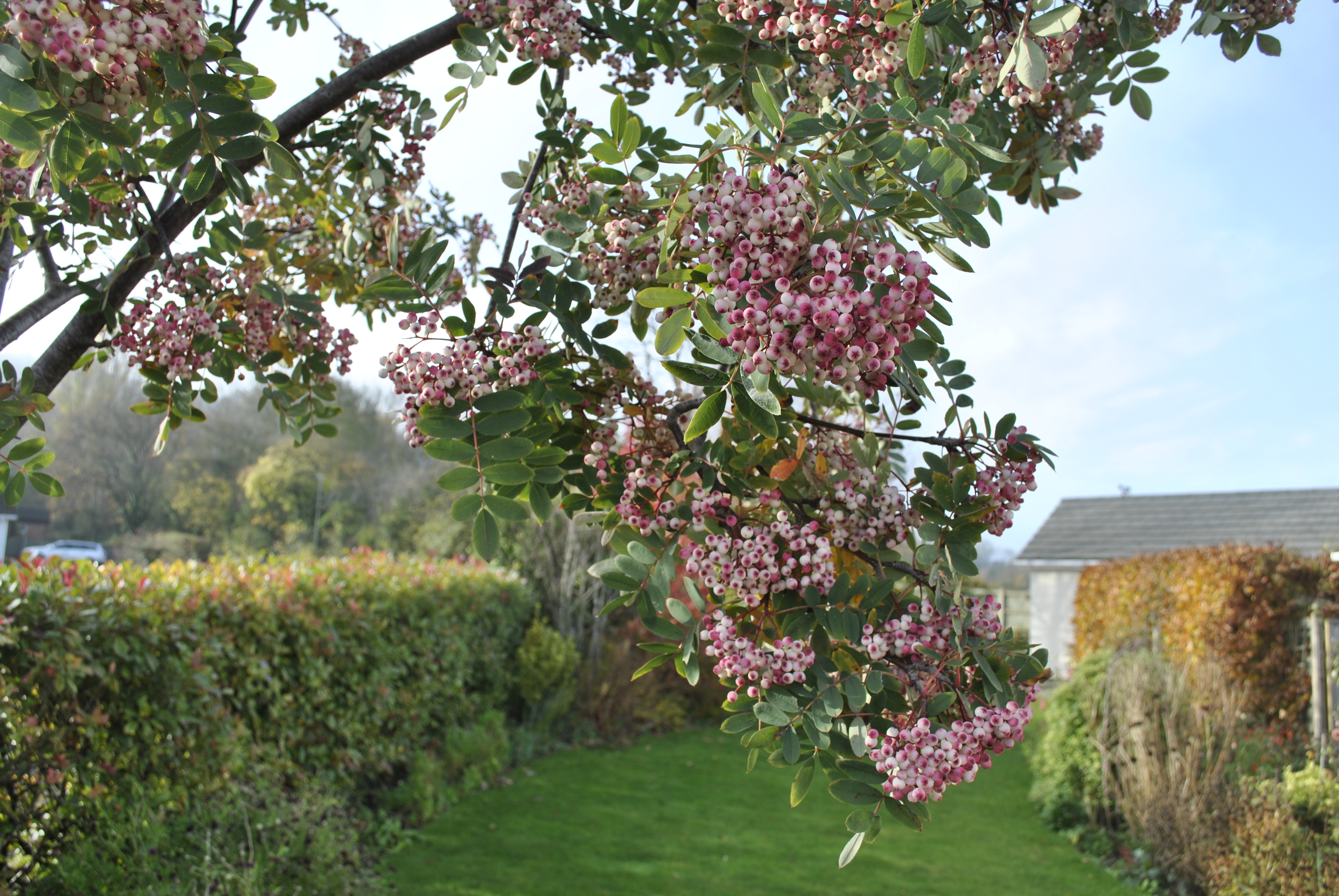
A week on, and the Sorbus hupehensis foliage has turned a rusty brown which compliments the pink berries perfectly.
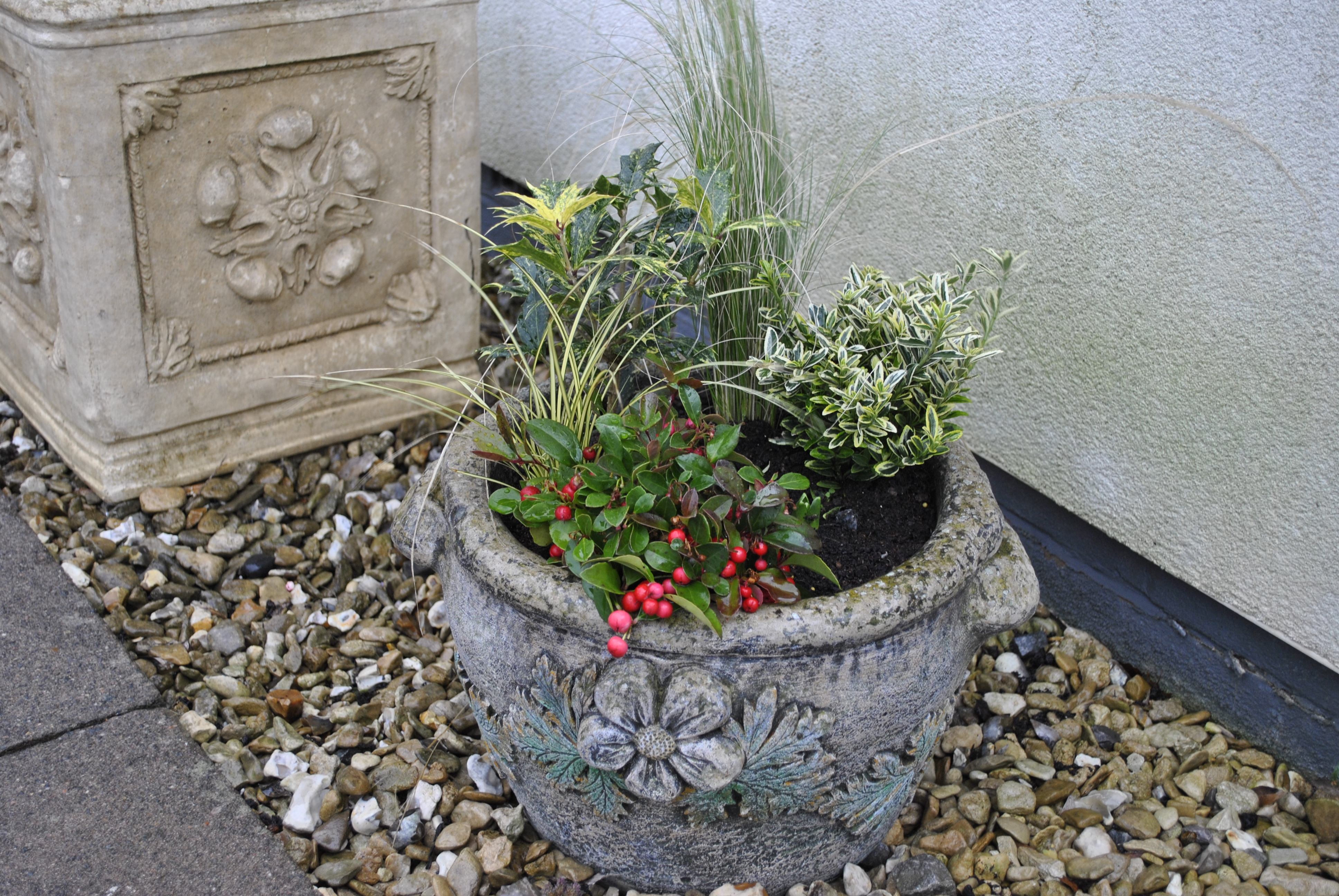
I have had a go at doing some winter pots. I usually plant my bulbs and top them with coarse grit to deter the squirrels but they look sad and empty through the dark days of December and January. So this year, not wallflowers as Monty Don suggested, but small evergreens which provide some colour and interest near the front door.
Erigeron karvinksianus, the Spanish Daisy or fleabane, is shrugging off the wind and rain and attempting to set a record for how far it can spread its seed across my garden. Any crack or crevice will do, any pot or flower bed, but it particularly enjoys the gaps in block paving!
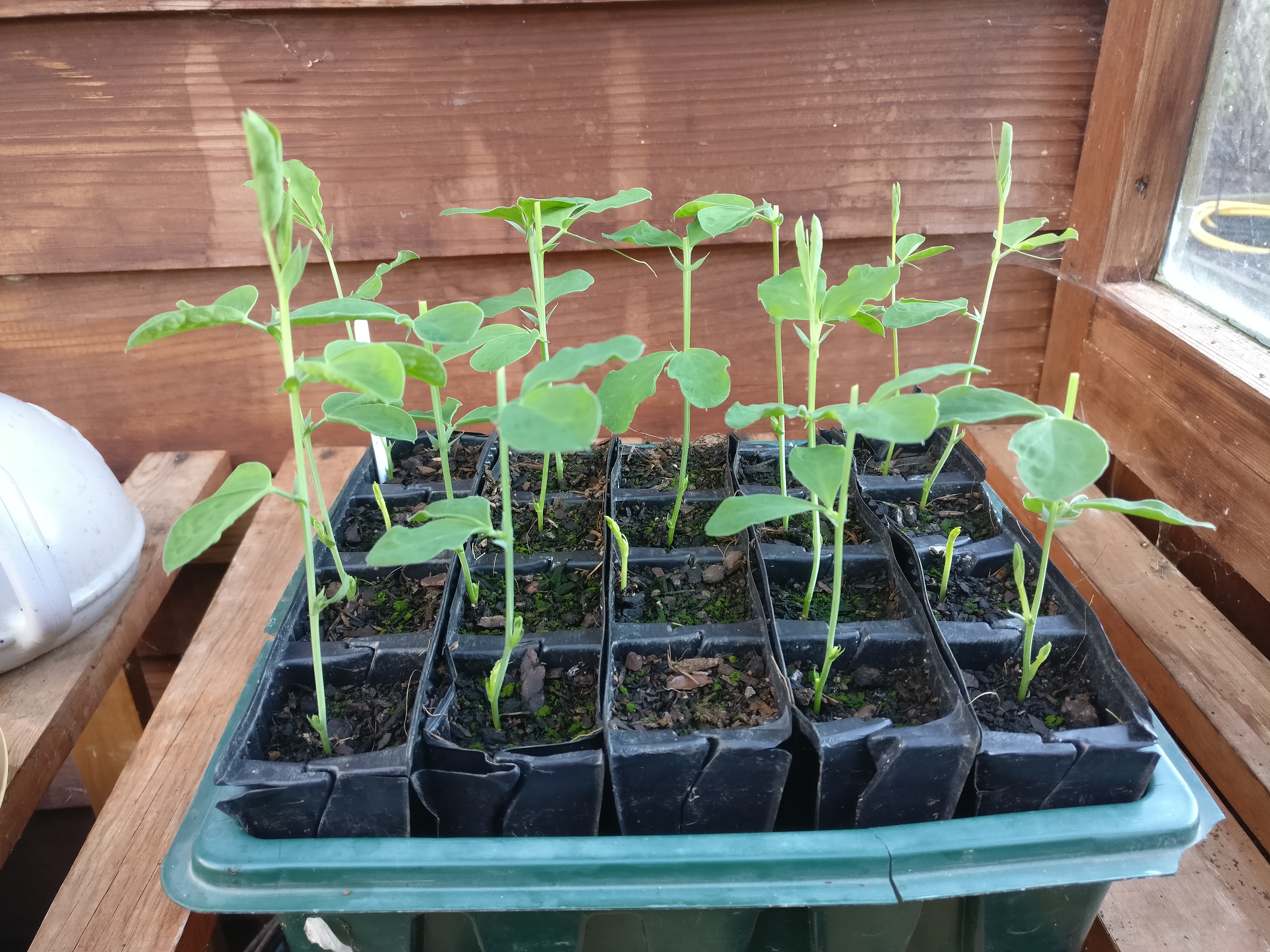
My early October sown sweet peas have germinated well and will now sit in the cold greenhouse until the clocks go forward in March. will pinch out the tops twice to increase the flower power and prevent them from getting too leggy, although they are usually 30-40cm long when they get planted.
I ‘borrow’ this lovely red climbing rose from next door. It seems to prefer life on my side of the fence and rewards me with flowers continuously from May to December. It must be a very old variety as it has been there for at least 40 years. I wish all roses were as floriferous and trouble free as this one!
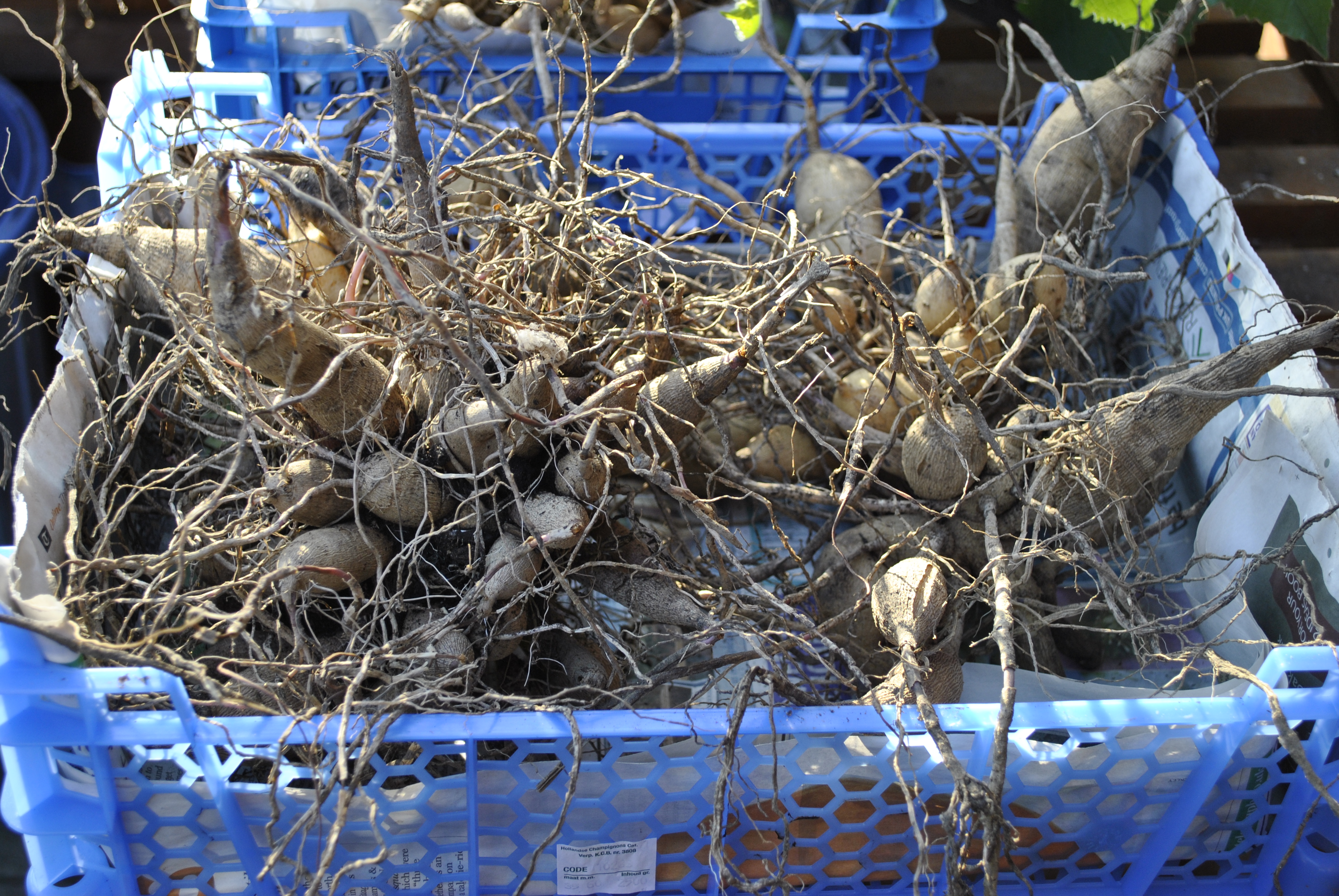
I have lifted the first of many Dahlia tubers, washed them off and put them in mushroom trays to dry before storing them in the shed. They need to be kept slightly moist to stop the tubers withering so I use old compost packed around them.
Still plenty to do despite the awful weather and this wretched virus but that’s all for this Six on Saturday.
A little late to the party again due to enjoying a wonderful day in the garden yesterday enjoying almost spring-like weather. Still a lot of colour and interest and one or two first timers to show you.
Chrysanthemum ‘Romantika’
The button Chrysanth ‘Romantika’ is flowering her socks off now and enjoying the autumn sunshine. Difficult to know why it went out of fashion and became an endangered cultivar but with so many to choose from these days it became a casualty and nearly disappeared until Plant Heritage appealed for someone to save her. I suddenly feel terribly responsible!
Chrysanthemum ‘Royal Command’??
I acquired what I was told was Chrysanthemum ‘Royal Command’ many years ago from a friend who had had it in her garden for over forty years. It had spread all along her back fence taking on an almost invasive quality. I became very attached to it and have propagated and distributed many ‘Irishman’s cuttings’ far and wide. I am now informed by an experienced grower that this may not be ‘Royal Command’ after all but a nameless hybrid clone! Apparently this happens a lot with old Chrysanthemum varieties. They suddenly become tired of who they are and morph into something else!
Aster lateriflorus ‘Lady in Black’
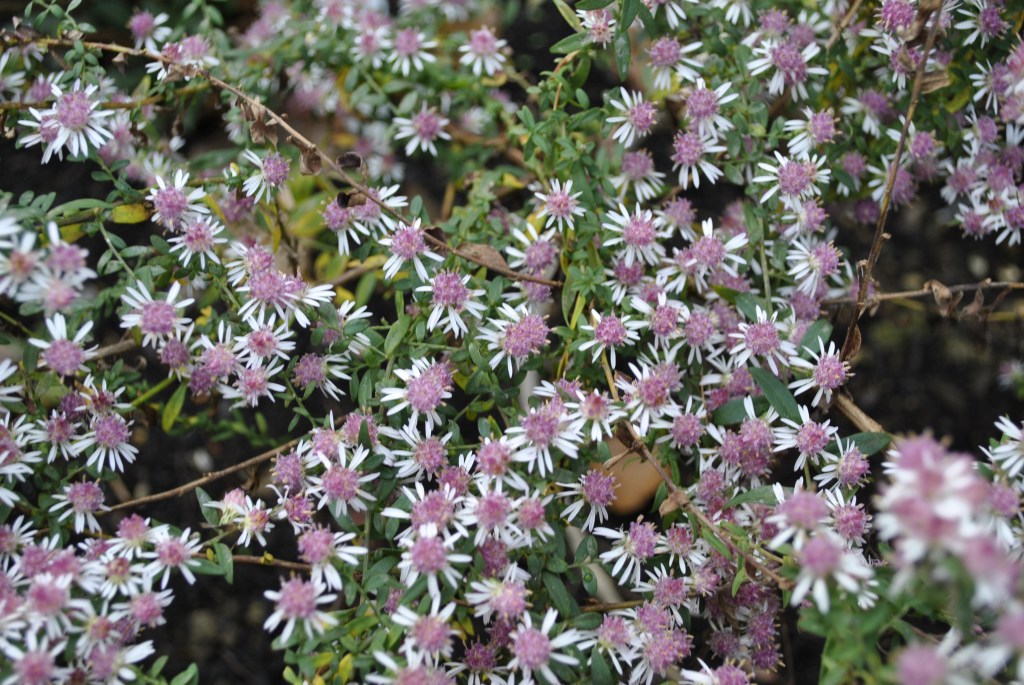
Strictly speaking, this is actually Symphyotrichum lateriflorum ‘Lady in Black’ often referred to as the Calico aster, and I now realise it is not suitable for my garden. I purchased it earlier this year and didn’t do my research properly. It has a very untidy, sprawling habit and needs masses of space, something I cannot provide, so it is going to a friend who loves Asters and will adore its dark plum coloured stems and tiny white flowers with pink centres. We all make mistakes!
Betula utilis var. jacquemontii
One of my jobs yesterday was to wash the trunks of my trio of Himalayan birches to keep them pristine white for the winter. On dark days they earn their name of ‘Grayswood Ghost’
Sorbus hupehensis
The Sorbus is absolutely heaving with fat, juicy berries which will soon be gorged by the wood pigeons.
Leycestria formosa
The Leycesteria formosa, commonly called Himalayan honeysuckle or Pheasant Berry, has also produced a bumper crop of fruits which will soon be taken by the Blackbirds in a comic spectacle of well judged acrobatic leaps. Never seen a pheasant try but there’s always a first time!
Rosa ‘Roald Dahl’
I decided to end on a high note with one of my new roses still going strong and producing more flower buds even at this time of year. Gorgeous!
It’s Saturday again, doesn’t it come round quick! Just had to show you the Liquidambar backlit by the sun this morning before the rain moved in.
Clematis cirrhosa ‘Freckles’ has gone bonkers this week and has literally hundreds of flowers. Probably her best display ever.
Chrysanthemum ‘Bretforton Road’ discovered by Bob Brown of Cotswold Garden Flowers and grown for generations in Badsey, is a bone hardy reliable variety which seems to grow anywhere. It started at one end of a border and is now up the other end too!
In the months and years to come, I hope to be reporting on, and displaying, a National Collection of Tradescantia virginiana and Tradescantia x andersoniana hybrids if I am accepted by the Plant Heritage Plant Conservation Committee in due course. They have asked me to build up the collection and demonstrate my abilities to manage and propagate the 60 or so cultivars and naturally occurring hybrids of this species. Early days but here is the very first picture of how they will be displayed.
Rose cutting update – looks like it’s working! Not sure if any roots have formed yet but the top growth certainly looks promising!
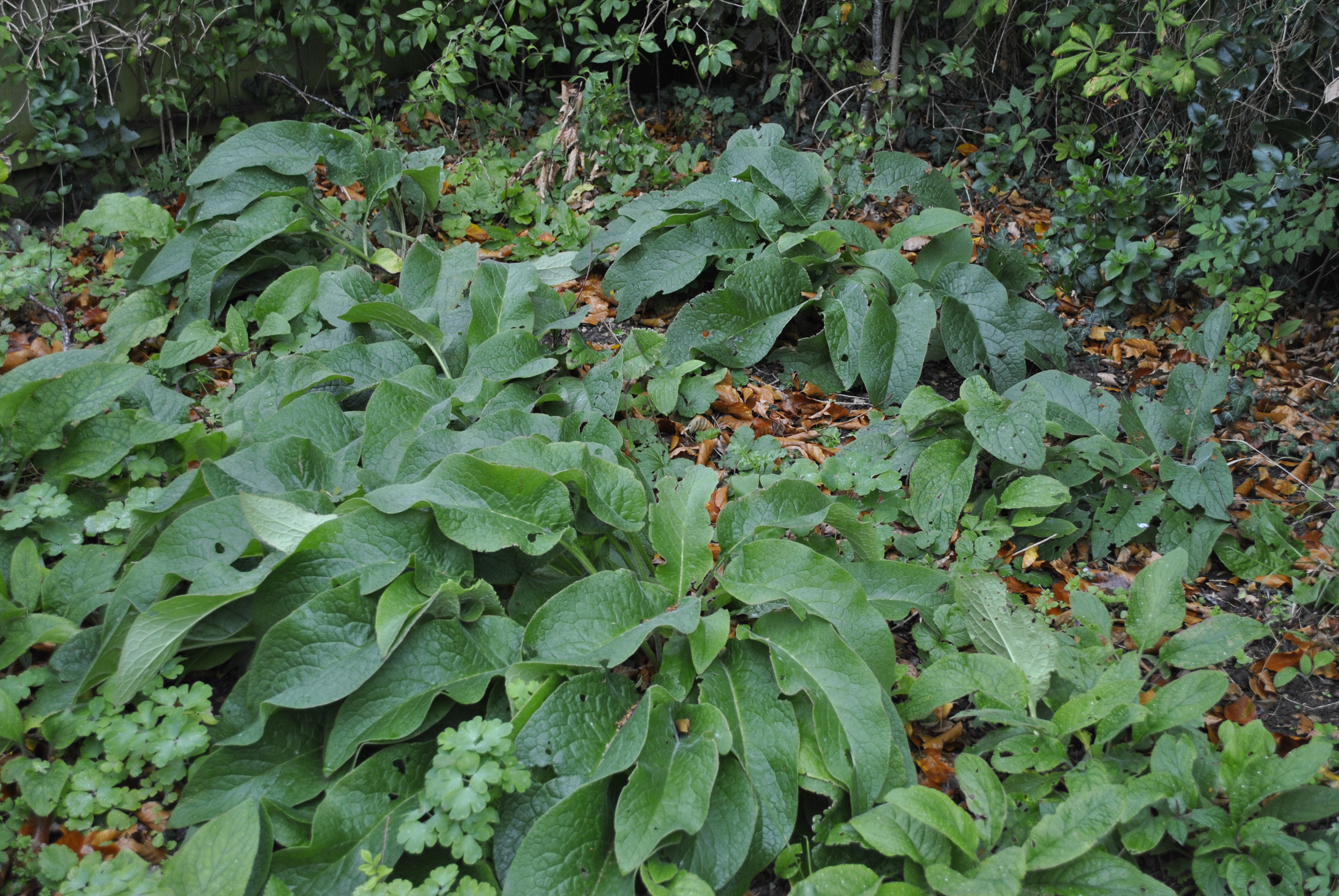
Down in the darkest recesses of the back garden in an area of dry shade under an enormous beech tree is my comfrey patch. Six plants of the sterile hybrid ‘Bocking 14’ produce 4 cuts of leaves for my compost bin each year and are totally happy being hacked down to the ground every 8 weeks or so. It is said that the roots ‘mine’ the rich minerals up to 5 metres down in the earth which, in turn, are passed into the leaves which produce the amazing comfrey liquid I extract and use as plant food.
Hesperantha are todays star performer and are much easier to pronounce since the RHS changed the name from Schizostylis! I have always had a spreading group of the red ‘coccinea’ which I have to cull every so often to curb their tendency to run, but this year I added a blush pink variety called ‘Pink Princess’ which has flowered right on cue.
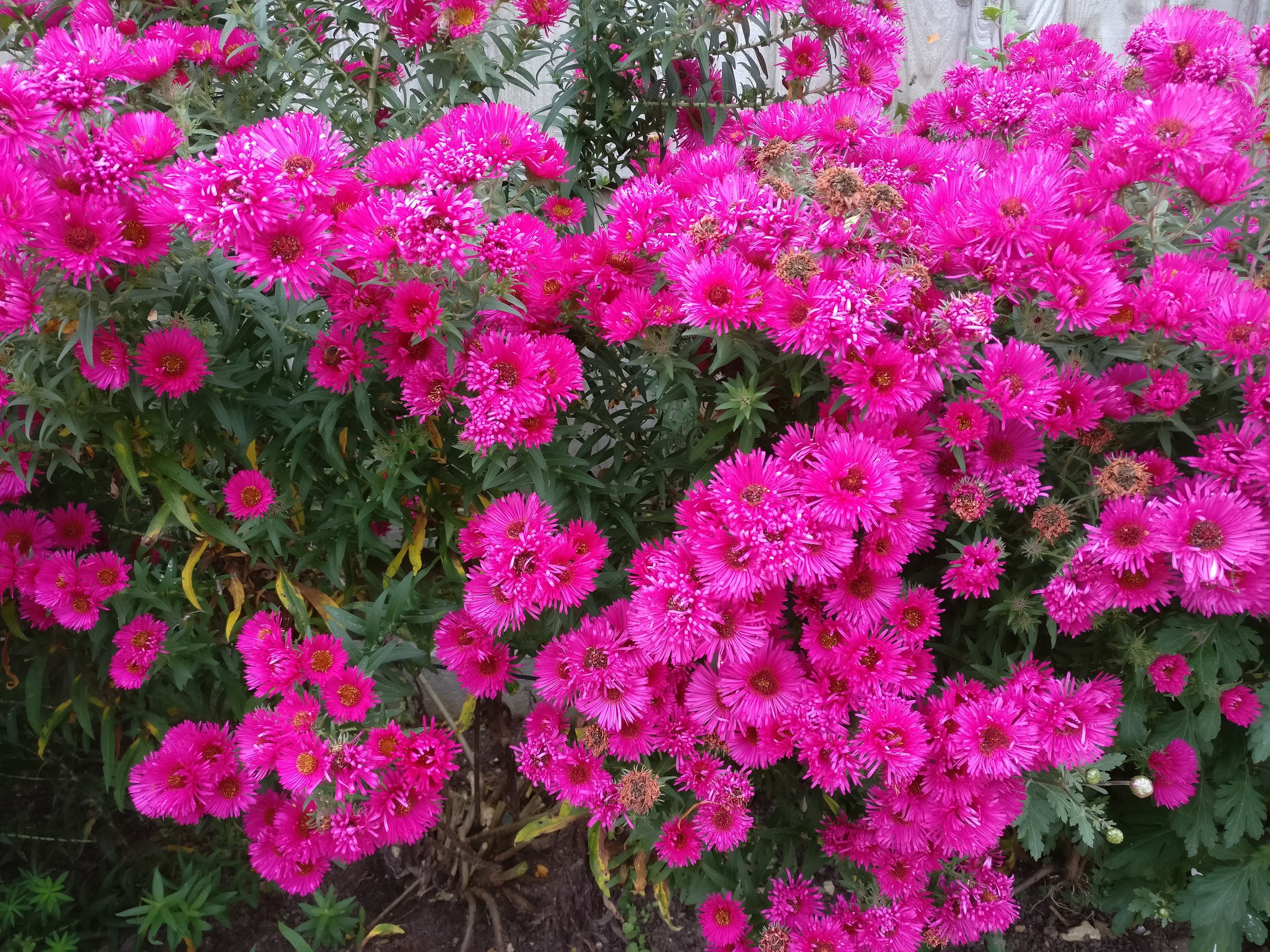
The other brilliant, if rather straggly performer, is the awkwardly named Symphyotrichum novae-angliae ‘Andenken an Alma Pötschke’ which is an outstanding if rather garish cerise pink colour. I am not sure I like it and it may have to go!
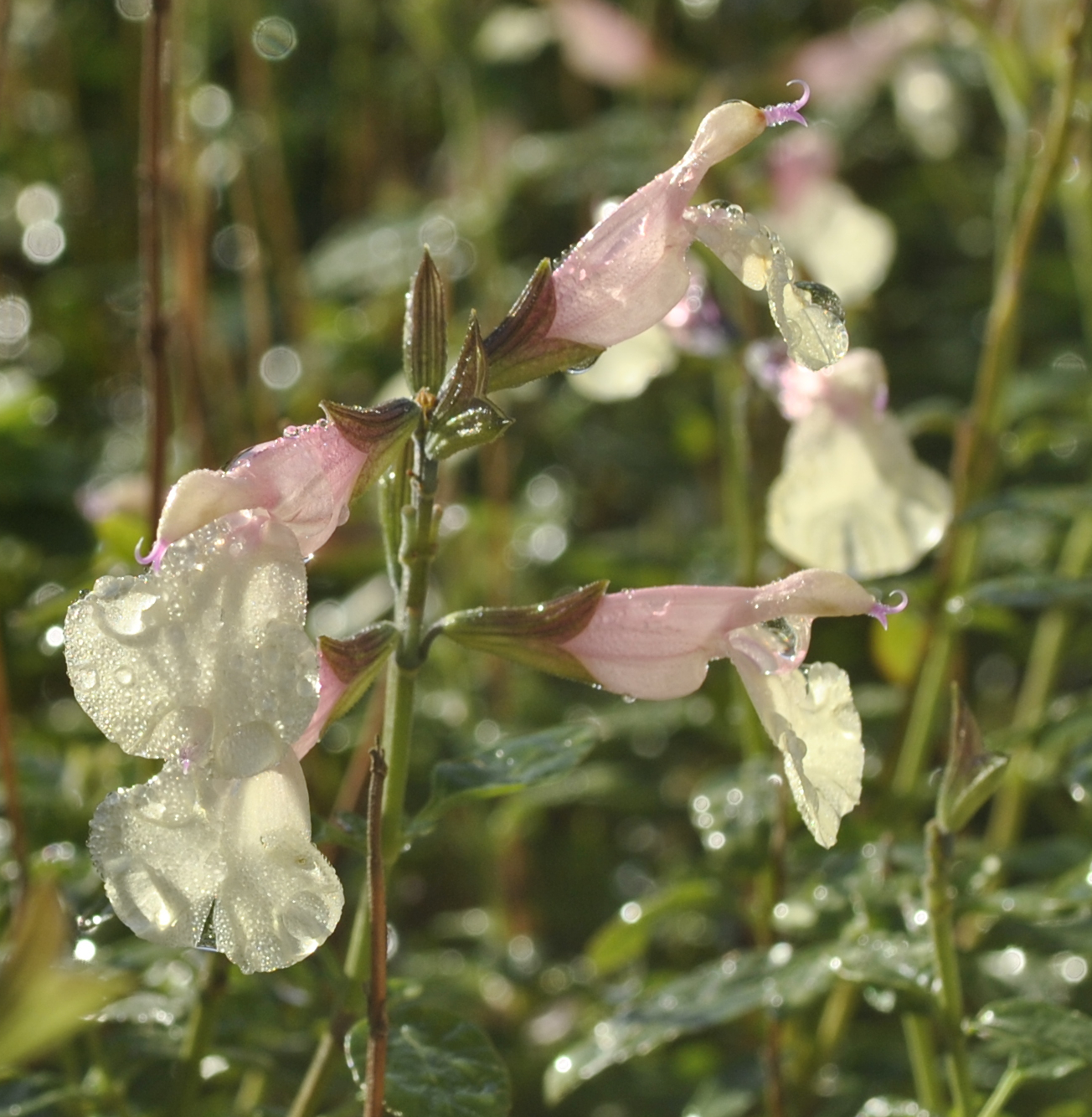
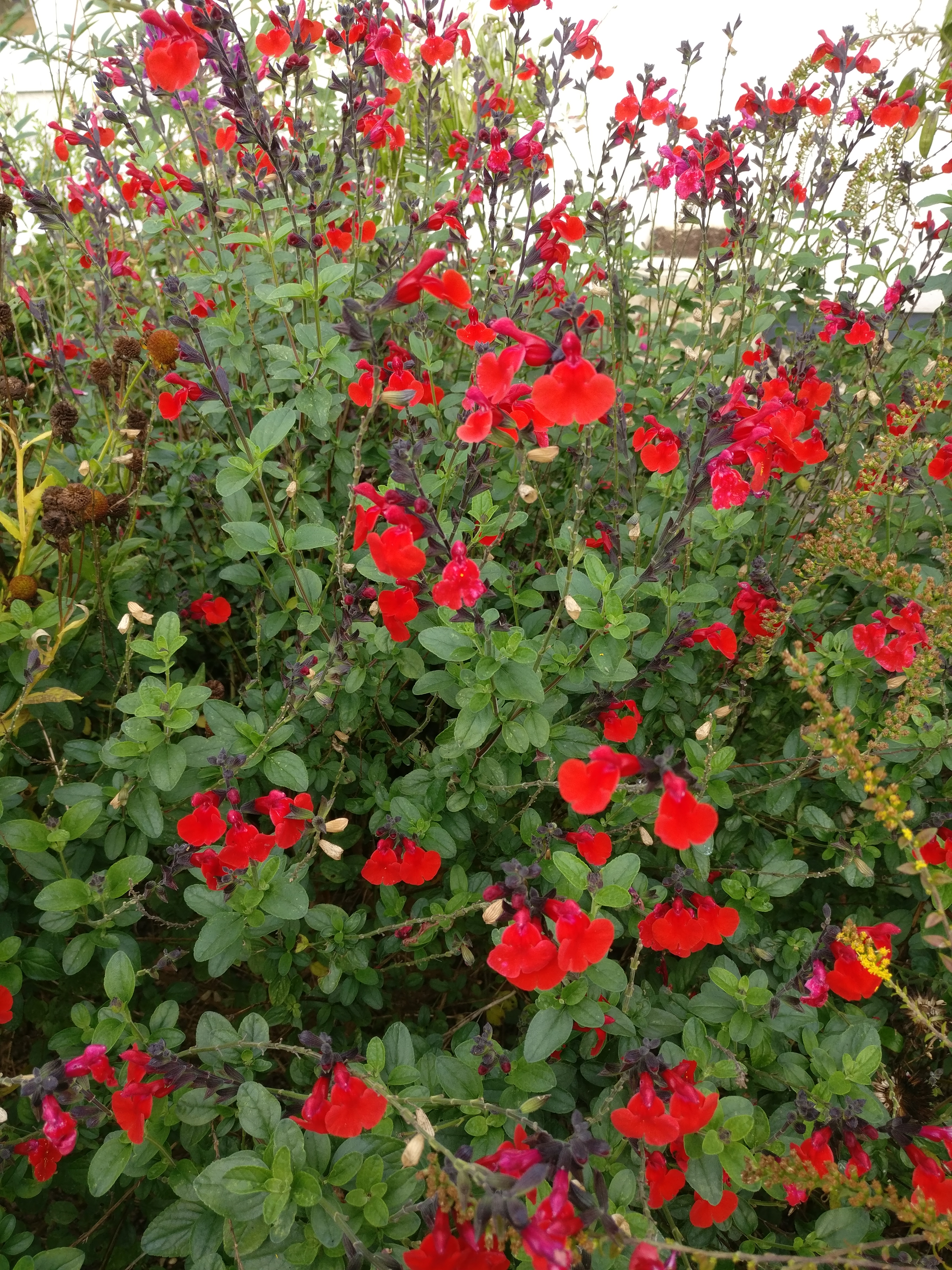
For some odd reason, the Salvia microphylla and gregii types like ‘Hot Lips’ and ‘Royal Bumble’ have a last hurrah in October and their flower colour intensifies for a few weeks until the first frost hits them. Perhaps they prefer the cooler weather or they are intent on setting good seed but whatever the reason, it makes a good autumn show.
The Rudbeckias are almost over now having flowered since July but the Dahlias are still going strong and with constant dead-heading, will go on until the first frost. On sunny days, the bees are all over them.
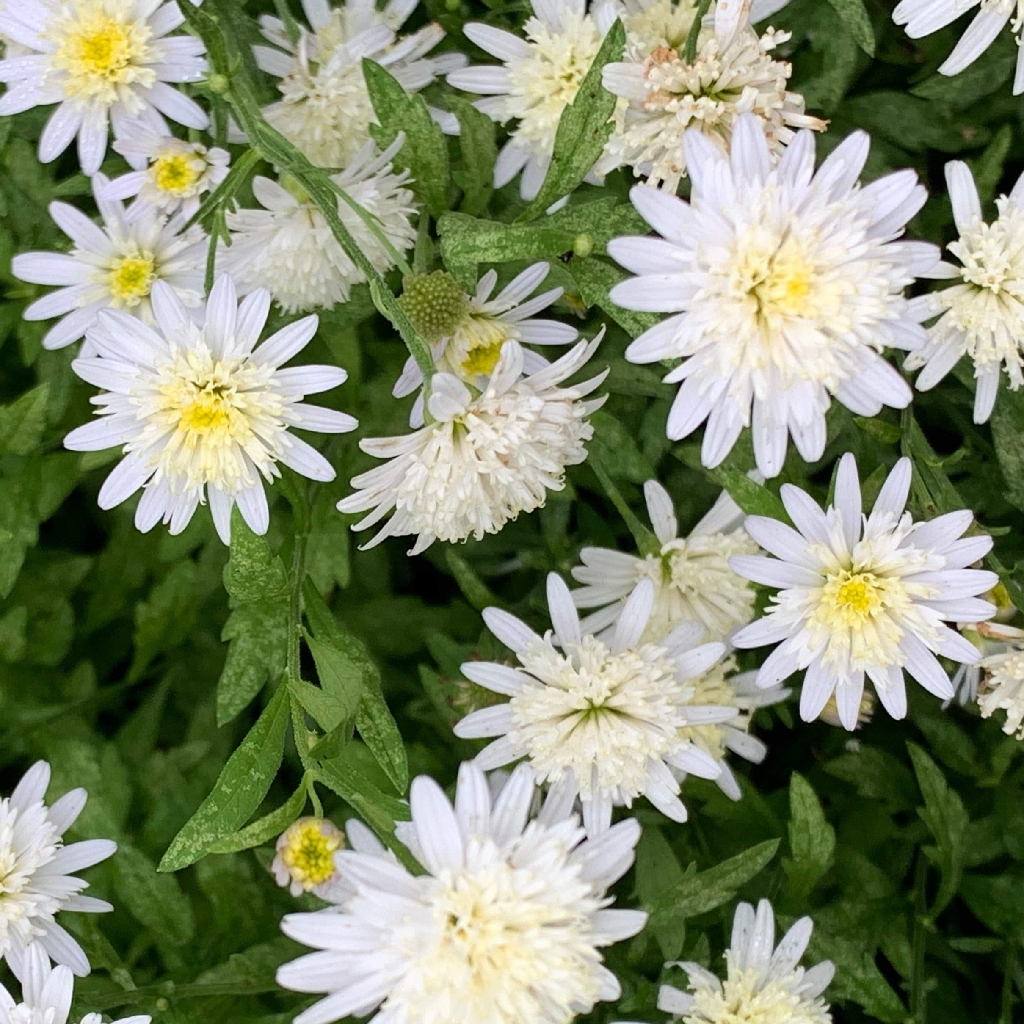
Aster asteroides ‘Stardust’ continues to shine out in the gloom of increasingly dull, cloudy days giving a lift to the borders and providing a rich nectar feed for pollinators.
The last flowers on Tradescantia ‘Sweet Kate’ are beginning to fade and soon she will be asleep for the winter, gathering her strength for another show in 2021. I can’t wait!
That’s my six for this week. I have been bulb planting as well but who wants to see bulbs before they flower! Over 200 narcissus have gone into pots and borders including 100 white Triandrus ‘Tresamble’ planted in the rose garden to give an early display and the tulips are lurking in paper bags in the shed waiting for their turn in November.

















 Davids Garden Diary