Six on Saturday

My Six on Saturday blogs have recently been interrupted by illness and holidays (in that order!) and on my return I was laser focused on getting the rose garden in shape. I foolishly (as it turned out) spread my own compost over the beds last year, and paid the price in millions of weeds. I also succumbed to my tendency to overplant, and stuffed every available space with herbaceous perennials, summer flowering bulbs and any spare plants looking for a home. I soon discovered that roses don’t like that. They like and need space and airflow around them, otherwise they sulk and whole stems die off! So, 13 old compost bags full of plants, weeds and detritus have gone to the recycling centre, beds are now weed free, fed and mulched, and looking all the better for it.

There is not much colour in the garden yet, but these little Anemone blanda have spread themselves around and pop up everywhere to compete nicely with the unwanted, and impossible to eradicate, Ficaria verna commonly known as the hated lesser celandine.
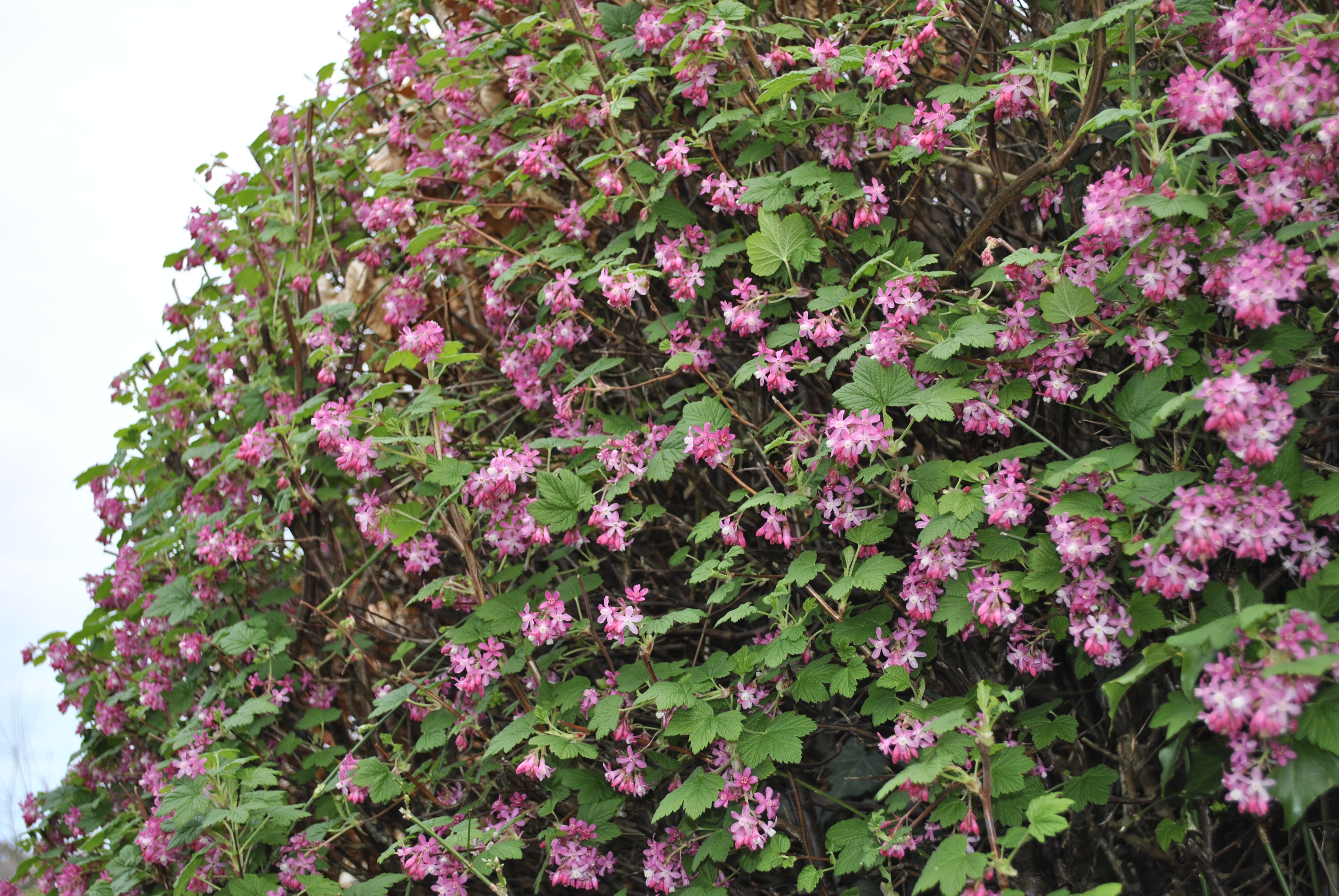
The other stalwart of the early Spring garden is the common flowering redcurrant, Ribes sanguineum. This one grows as a ‘full stop’ at the end of a beech hedge and gets a hard prune in August, which as every gardener knows, is far too late, But somehow, it has adapted to to this and rewards me with a good show every February and March. When I walk past, it is buzzing with bumble bees which always brings a smile.

Last October, a kind friend gave me some seeds of Lunaria annua ‘Chedglow’, a rather choice variety of Purple Honesty which begins life with blotchy leaves before they turn a dark shade of purple topped with dark purple flowers. I look forward to seeing it in all its glory next Spring.

The mild winter seems to have confused some of my November planted Tulips! These are not a dwarf variety, nor are they an early variety. They are supposed to be up to 40cm tall and flowering in May!

As usual, I seem to have sown far too many Cosmos in the mistaken belief that, because they are last years seed, the germination rate would be far less. Cosmos, as we all know, does not follow the rules, hasn’t read the packet, and will grow regardless of age!

Right, back to the pressure washing!

Have a great weekend

David

Six on Saturday

Merry Xmas to everyone who reads, follows or stumbles across my blog this weekend. It has been a couple of weeks since I posted anything, mainly because there wasn’t much to show or say. And there still isn’t! But I couldn’t let the Saturday before Christmas go by without a quick six. This hanging basket was instead of a wreath on the front door this year, just to be different. Hope you like it!

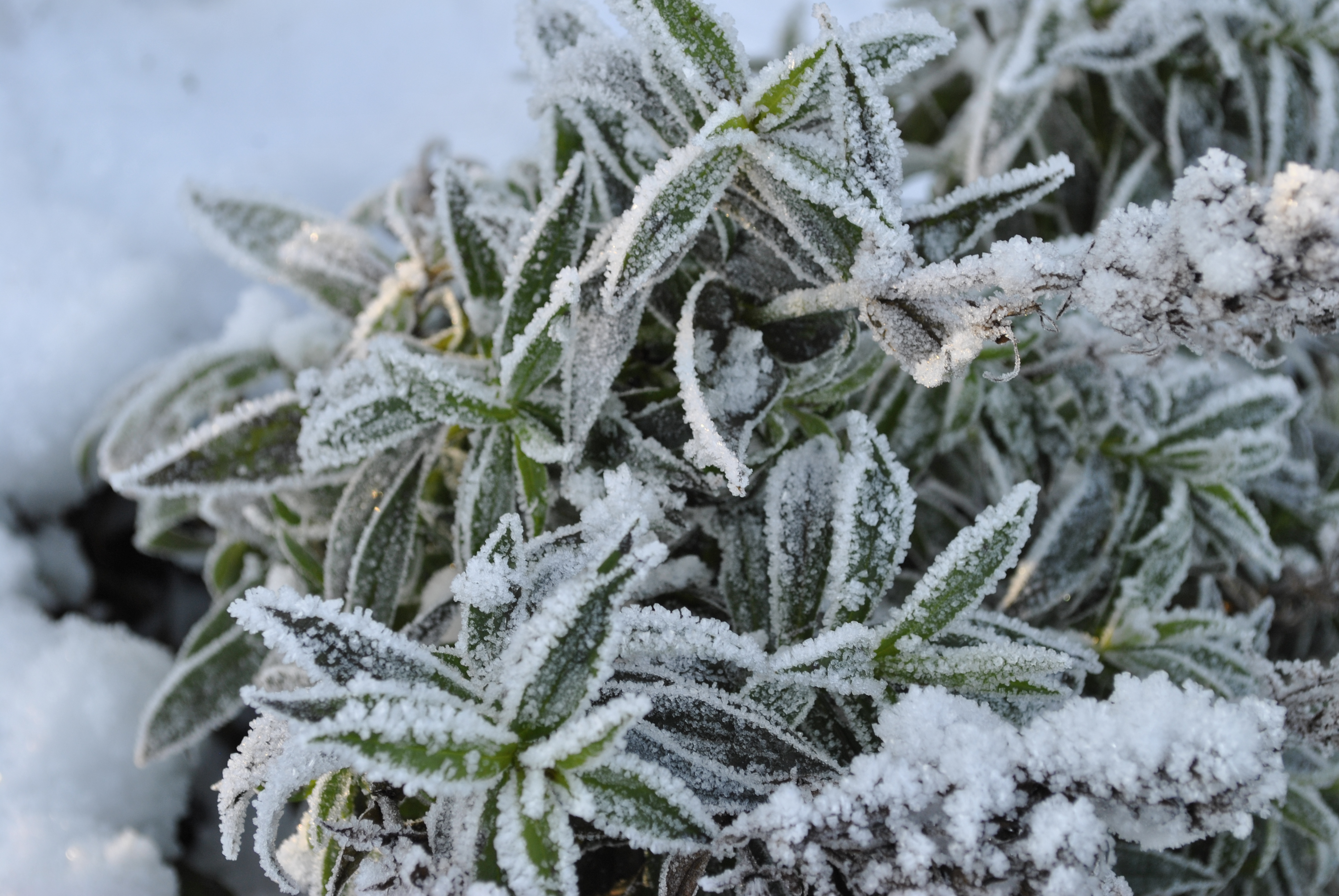
Just a little reminder of this time last year when we had 10 days of ultra low temperatures and the cell structure of many, usually hardy, plants was destroyed. We spent an agonising six months counting the cost of the losses, the precious plants that did not recover, the coastal New Zealand species we took for granted like Hebe, Pittosporum and Flax which turned out to be so vulnerable. The Penstemons, Hydrangeas and fleshy rooted Agapanthus which turned to mush. Some of my friends with plant nurseries and National Plant Collections will never recover.

But, on the other hand, many other plants benefited from the cold winter and warm spring. The roses were excellent and far less troubled with greenfly and rose sawfly, although blackspot was still a big problem here in my garden. June was a spectacular month and those plants which survived excelled in the warm Cotswold sunshine.

Among the plants I would single out for praise and which received good reaction from visitors this year was Veronica longifolia, kindly donated by my good friend and horticultural wizard, Yvonne Gregory. It is as tall as the Veronicastrum in the background but totally self supporting at over 5′ and adored by bees.

Not the best photograph because it is tall and gangly, but my outstanding plant of the year was undoubtedly Salvia uliginosa which flowered from May until I finally cut it back in mid November. There wasn’t a day go by when it wasn’t covered in bees and other pollinators. On warm sunny days it literally buzzed! I know of no other plant with such flower power and pollinator attraction. Especially outstanding because the bumble bees couldn’t get inside the tiny flowers, they had to pierce the base of the flower to get at the nectar, but this didn’t put them off one little bit!

I leave you for now with a rare picture of my juvenile Wisteria chinensis ‘Prolific’, not because the plant itself is rare but because it is an early flowerer and vulnerable to late April frosts which have killed the emerging flower buds for the last four years, but not this year!  I finally got to see and smell the beautiful racemes of lavender blue flowers covering the patio fence and not the frosted, brown and withered buds I usually see!

A very Merry Christmas, I hope you have a wonderful time.

David

Six on Saturday

The annual dilemma. To lift, or not to lift, that is the question!

Very often, at this time of year, social media gardening forums are full of questions about overwintering dahlia tubers. I love dahlias and have grown them for many years. They are great value for money, have almost unrivalled flower power, particularly if regularly deadheaded, and come in every different size, shape, style and colour, including their foliage. BUT, what is the best way to keep the tubers from turning to mush over winter? Leave them in the ground and hope? Leave them in the ground, mulch them and hope? Lift them and wash them, don’t wash them, dry them upside down in a warm room, a greenhouse, a shed. Or just pot them up and keep them in the shed or garage? I have tried them all and can honestly say that I don’t know a sure-fire way of getting them through the winter with 100% success. It depends on many factors!

So, I am trying something new! This week, I have dug mine up, washed most of the soil off (they were wet anyway!), dried them upside down for a few days on the greenhouse staging covered over with fleece, and then placed them in big pots filled with Strulch mineralised straw. It is recommended to use vermiculite, newspaper or compost, but as I had an open bag of Strulch which is dry and inert I think it should do the job well. The pots are now in the shed under two layers of fleece which should keep them dry and frost free. It may or may not work, but it is no better or worse than other methods I have tried!

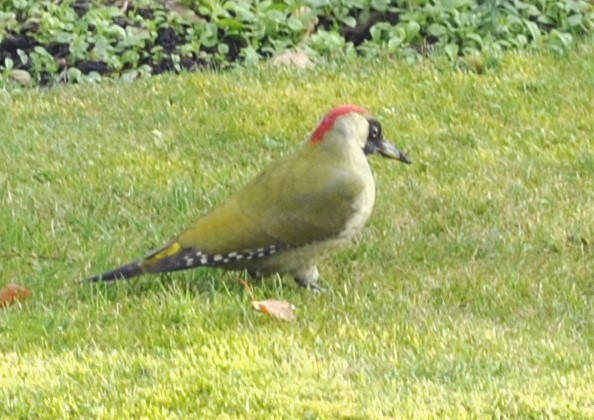
This Green Woodpecker is a regular visitor, mainly due to the number of resident ants in our lawn. He was there for over an hour on Thursday, poking his long beak into the grass and sucking up his sparse meal. How such a large and beautiful bird survives on a diet of ants I don’t know.

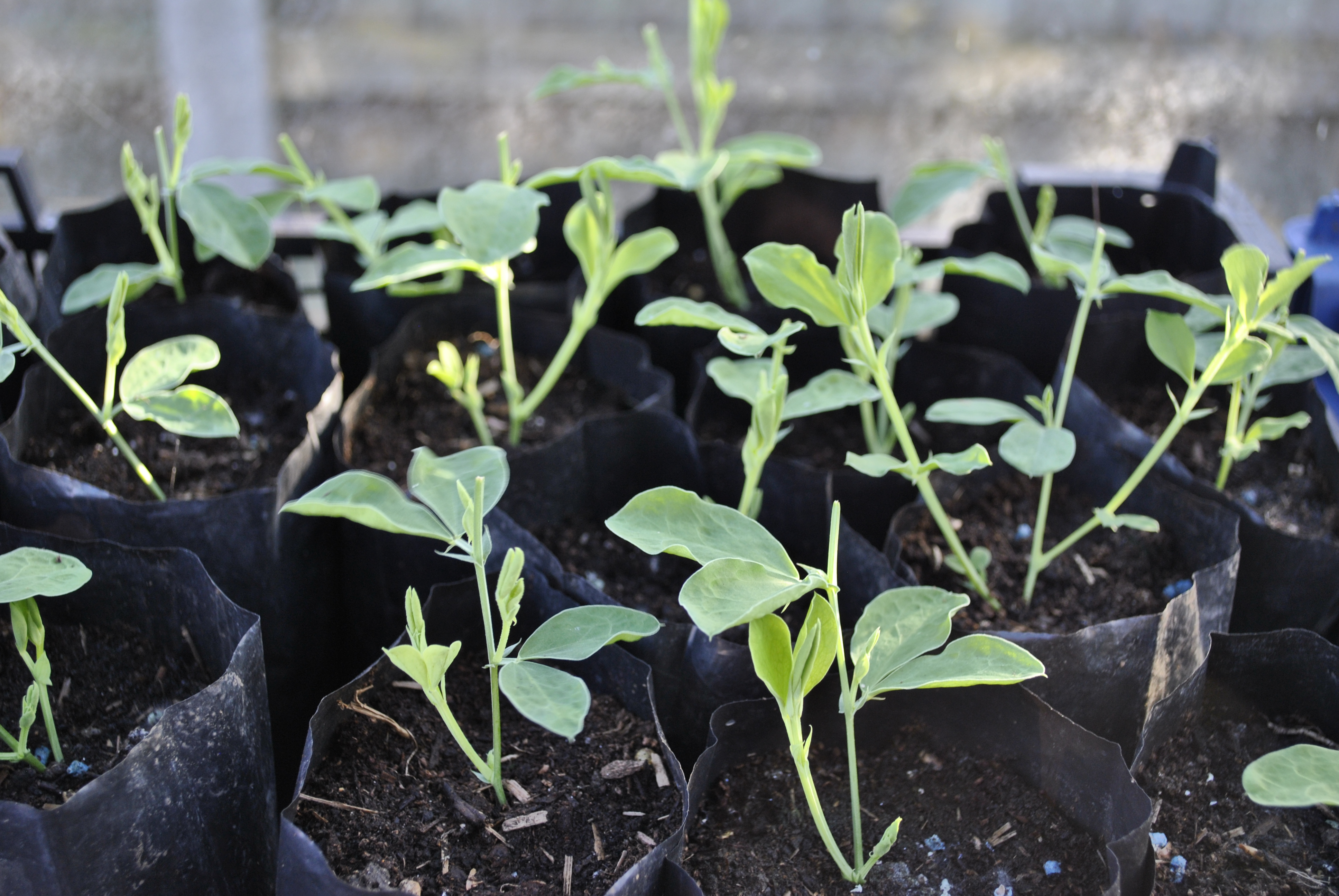
Side shoots doing well on the Sweet Peas. Growth will slow down dramatically now that the colder temperatures have arrived. They will just sit there and ride out the winter without any further attention.

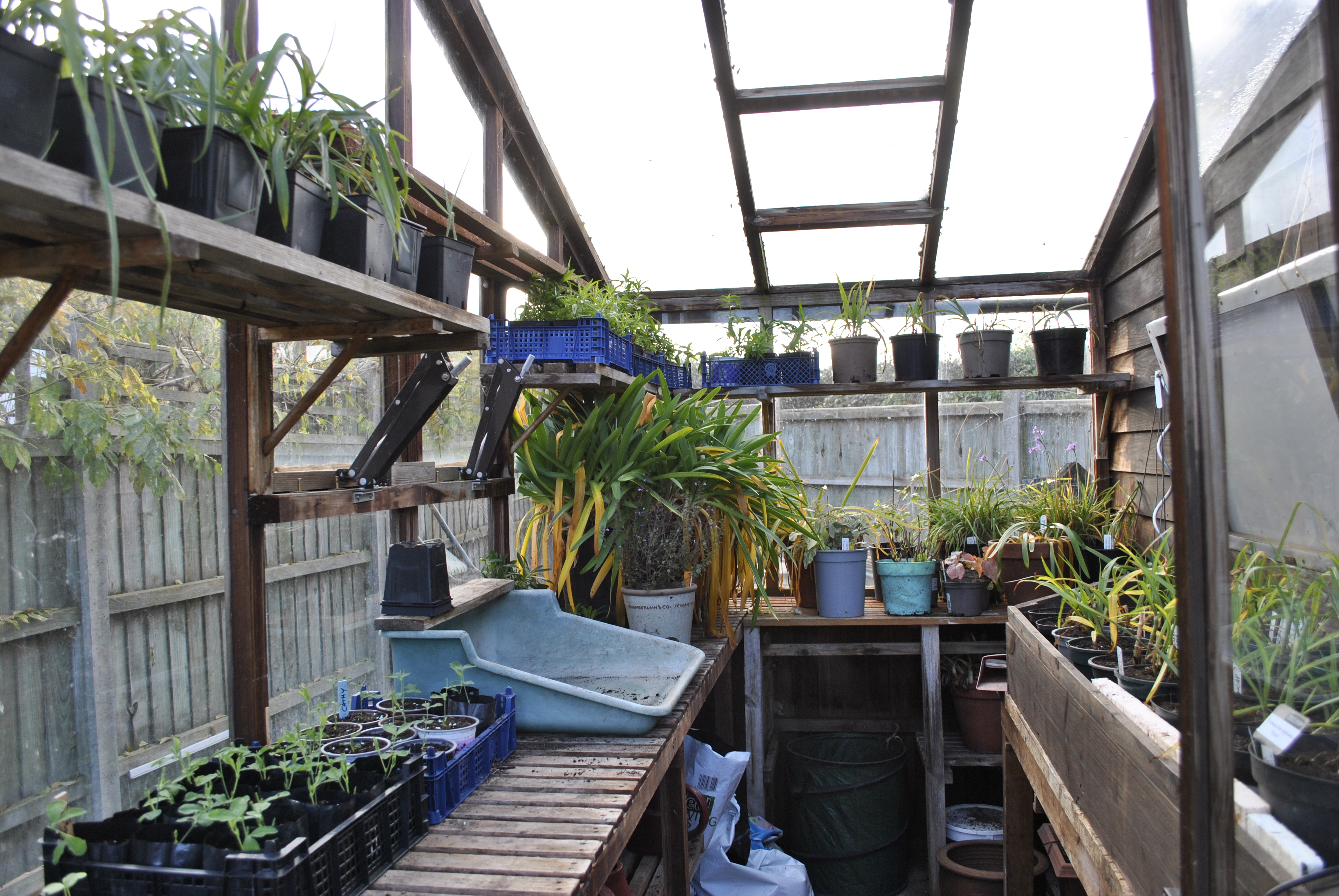
The messy greenhouse is now full, mostly of Tradescantia hybrid seedlings I am hoping will produce interesting, and potentially new cultivars in the coming years. They are totally hardy but don’t like to get too wet so they will avoid the worst of the weather in the cold greenhouse.

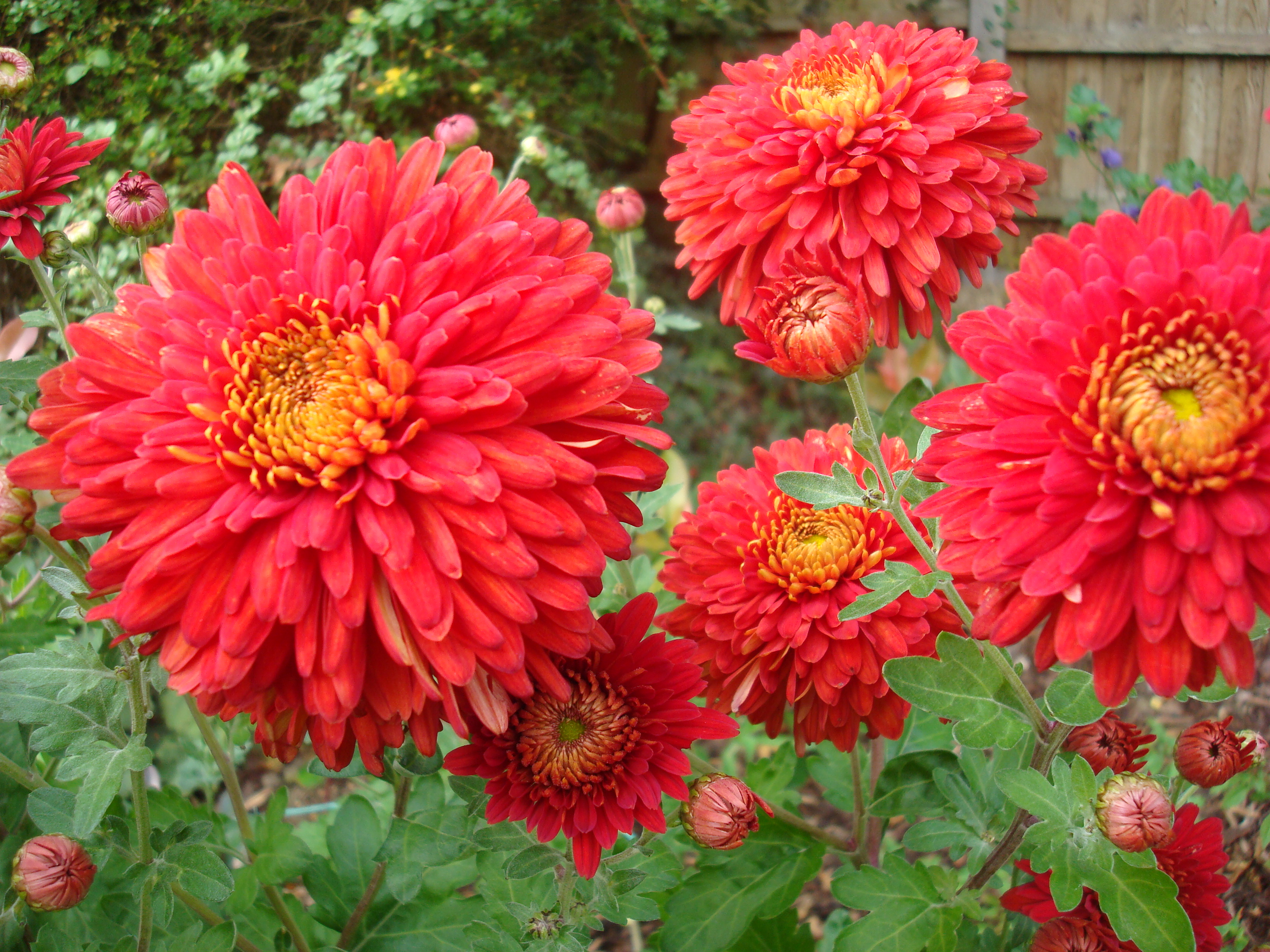
Talking of unique and interesting cultivars, this is a Chrysanthemum rescued from my Grandad’s garden when he died in 1987. I have tried to find it’s name but to no avail. So, I offered it to a local nursery who kindly named it after my Grandad. Chrysanthemum ‘George Simons’ is now in their catalogue and is apparently very popular, just like he was!

It’s been too cold for any real gardening this week, just weeding, mulching and digging up dahlias! Stay warm and have a great weekend.

David

Six on Saturday

Suddenly, it’s all change! After weeks of dreary, relentless rain, it has turned very cold and we had our first frost last night. In anticipation, I managed to give the lawns their final cut and edging of the year. You wouldn’t know it from this pic but it is mostly moss anyway! The trees are bare, the leaves swept and raked, the pure white trunks of the Jacquemontii Silver Birches glistening in the morning sunshine.

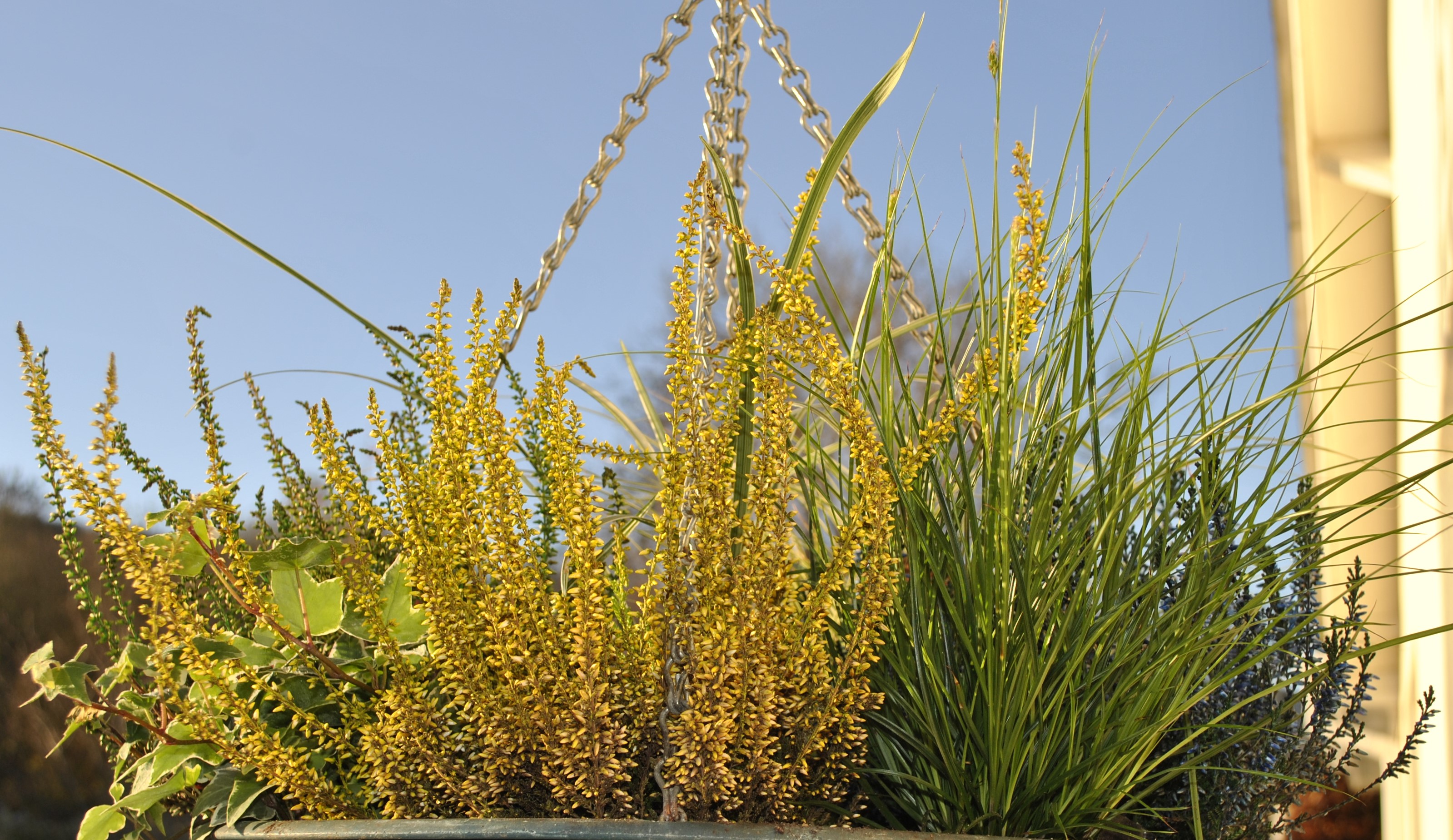
I don’t normally go in for sprayed heathers but I wanted some winter basket plants and I was in a hurry! A yellow heather could almost be realistic…..

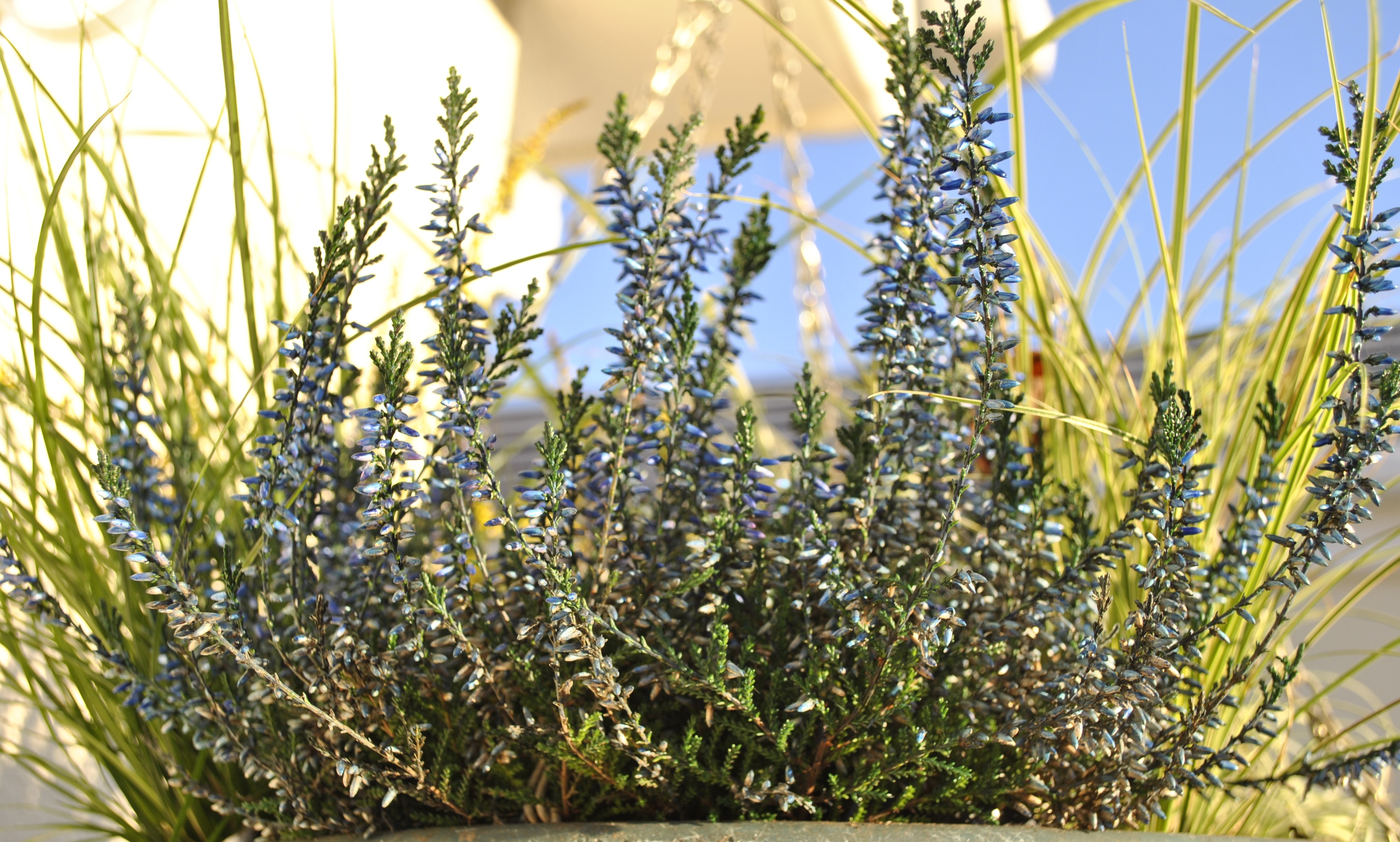
The blue one however, definitely not! My local nursery makes up hundreds of baskets and tubs for pubs and shops and tell me these sprayed heathers are popular because they will take the weather, look colourful all winter and don’t need any looking after!

I am not normally a fan of these Cyclamen persicum either, but needs must! I was very disappointed with the winter flowering pansies last year which didn’t really get into their stride until March! These colourful cyclamen will take a few degrees of frost but hate rain, so a sheltered spot under the overhang of the eaves should protect them. This is a big pot of 15 Tulips which should take over in April/May if the cyclamen last that long!

The naturalised early Narcissus are already up so I have to be extra careful when clearing up the leaves in the borders. To be honest though, these Silver Birch leaves will break down very quickly and the worms will make short work of them.

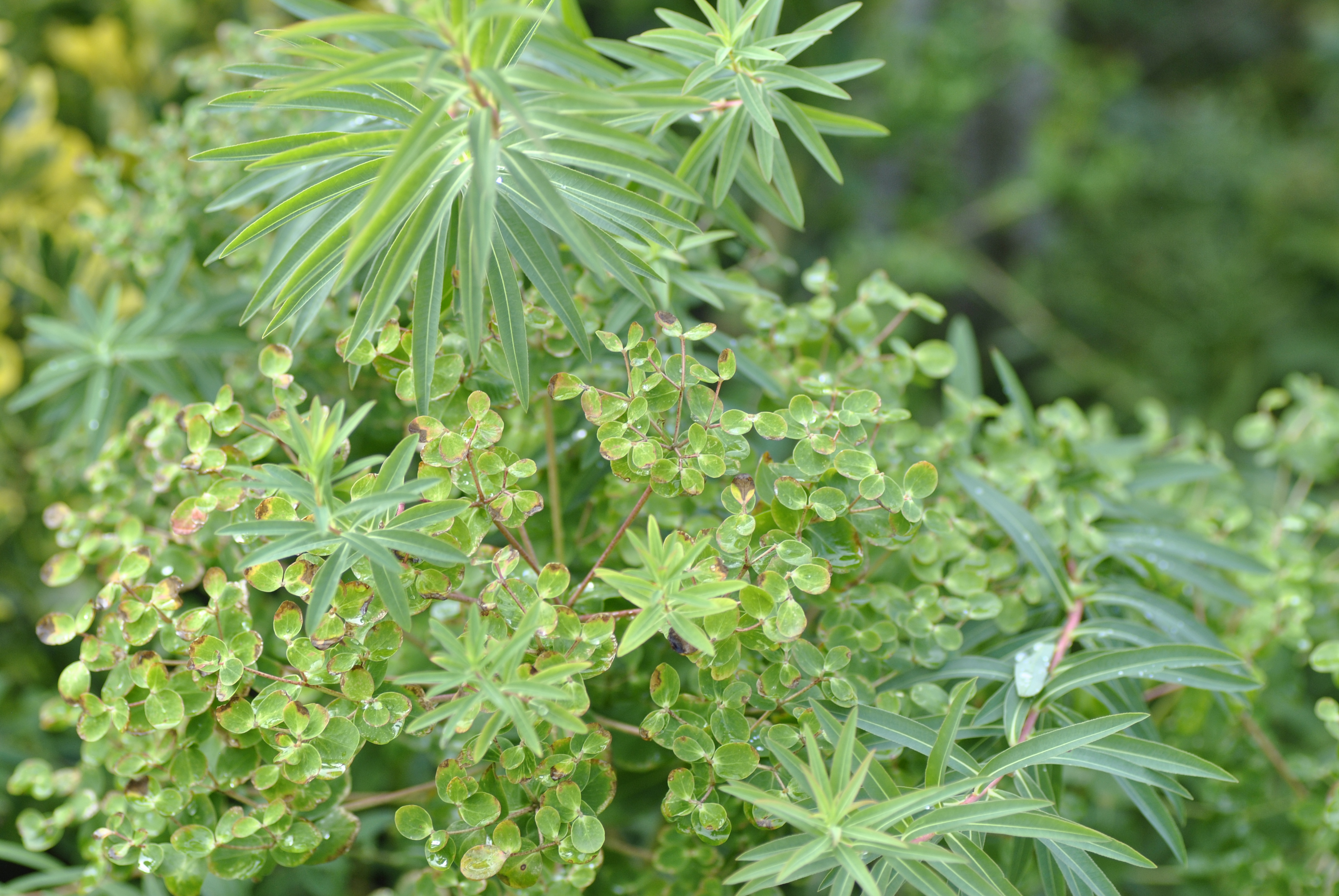
Just three weeks ago, the Euphorbia palustris looked like this, lush green foliage and seedheads.

Today, it looks like this! I like taking photos of plants when they are dying down or going dormant, it is often when they look their best! It is also a good reminder of the natural life cycle of deciduous and herbaceous plants. I caught a family of Tits inspecting this plant for spiders and other creepy crawlies this week so they also play an important ecological role as they fade away.

One of the things about writing a blog like this is that you inevitably get things wrong from time to time. Last week I mentioned what I thought was Persicaria microcephala ‘Red Dragon’ and one of my subscribers politely pointed out that it was not! I am indebted to her and everyone else for keeping me right! It has now been re-labelled without the cultivar name which is a strikingly different colour! What I have is the species, not ‘Red Dragon’.

Thank you for all your comments and questions. I read them all and reply to the vast majority. It’s nice to know you are there!

Have a great weekend

David
Six on Saturday

It’s been a week of mixed weather but Thursday and Friday were glorious autumn days, warm sunshine, no rain and no wind. A lot of clearing up was done, plants were lifted, divided, re-potted and real gardening was finally achieved. I felt so much better, the garden looked much better and then it all went back to normal this morning! More rain……

Another year has been and gone and I still don’t know the identity of this plant! It is a toss-up between Carex morrowii ‘Silver Sceptre’ and Liriope spicata ‘Gyn-ryu’ or ‘Silver Dragon’. It is driving me mad not knowing, so I am appealing to those who know about these things to cast your opinion please. As you can see, I have just split the mother plant into 9 divisions for a plant sale next year but I don’t know what to write on the labels!

Another plant which was bursting out of it’s pot, but needing to be contained, is Persicaria microcephala ‘Red Dragon’ which is now neatly divided into 6 new plants for next year’s charity sale. It will come with a warning label not to let it loose, it is a real spreader!

A quick Sweet Pea update for those following progress. Six weeks since sowing on 7th October. Seedlings now all pinched out, separated into their own pots and producing side shoots as planned. I discovered a slug hiding under one of the pots so ferric phosphate pellets applied just in case!

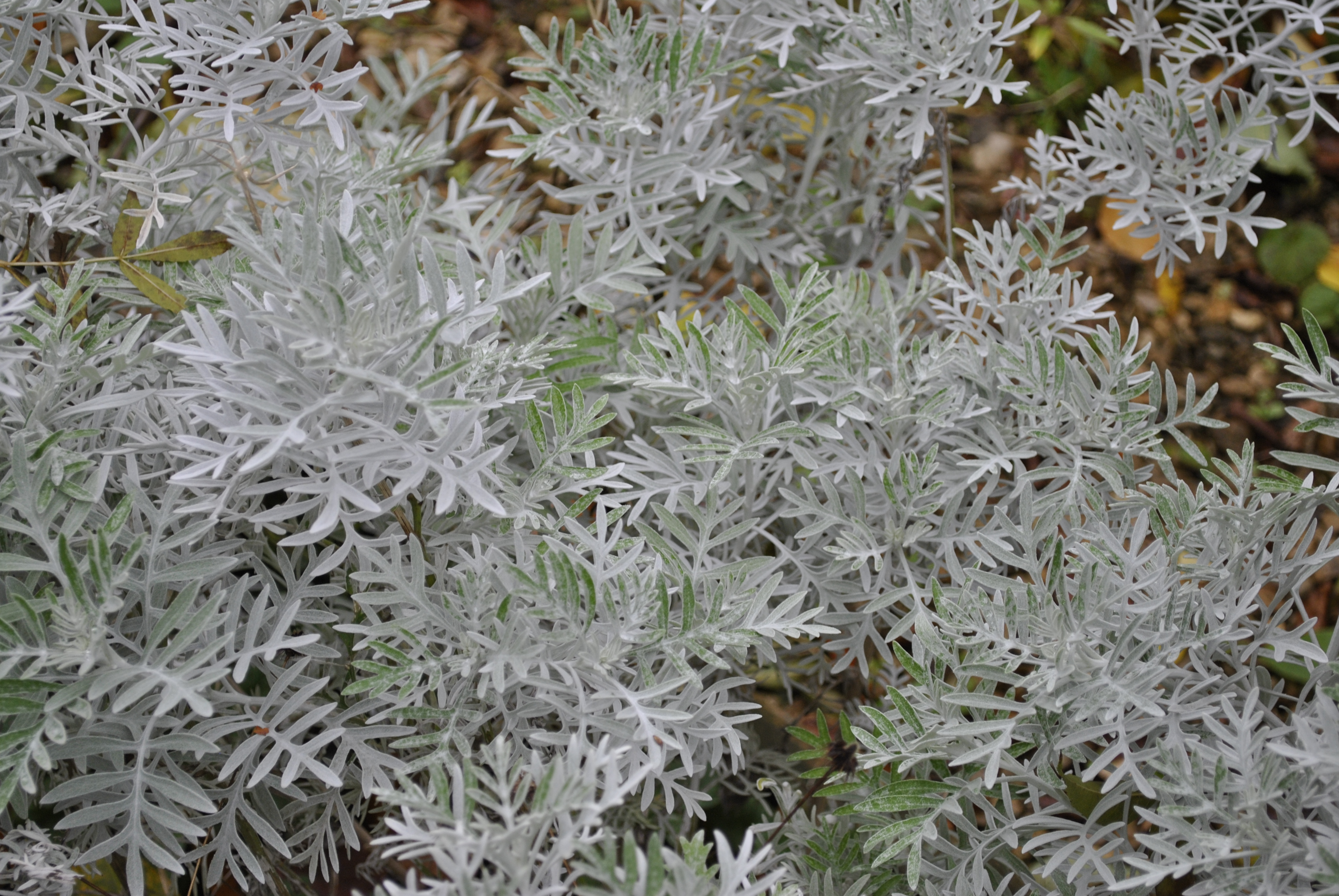
I find most people think this is Artemisia ‘Powis Castle’ but, in fact, it is Senecio viravira or Dusty Miller. In summer it is topped with beautiful clusters of pale lemon daisy flowers but these are insignificant compared to the year round silver grey foliage which always looks fresh, even in winter. Easy to grow and maintain, just a haircut in spring and away it goes for another year.

Despite the time of year and significant drop in temperature, Clematis ‘Madame Julia Correvon’ is still going strong and producing more flowers. Such an attractive and well behaved climber deserves a place in every garden.

Possibly the most popular shrubby Salvia, and for very good reason, is the ubiquitous ‘Hot Lips’, which is still flowering her face off in my shrub border. Sometimes red, sometimes white and sometimes red & white, the flowers respond to temperature and change colour accordingly. Pruning them seems to be the most asked question I get and I am pretty brutal in spring, cutting them back hard to new growth lower down. Probably more than 50% of the top growth goes. I also ‘layer’ a lower stem by pegging it down to the soil and ‘hey presto’, it roots! The shrubby salvias don’t last forever, 10 years if you are lucky, so a couple of younger plants waiting in the wings to be separated and grown on is a good insurance policy.

Finally, the first Narcissus poking their heads up!

Six on Saturday

First frost last night, sign of things to come! Beautiful clear blue sky today, very cold but not raining for a change. It has been a very wet, miserable week and not much proper gardening done. A few weeds removed here and there, some biennial Honesty seeds sown, Pelargoniums removed from summer containers and some carefully chosen perennials cut back, but that was about it. Still, I did sort out the mounting pile of paperwork in my study!

About five years ago, I smushed (technical word!) Mistletoe berries from a Xmas wreath into some cracks in my old apple tree. It has been a painfully slow process but it is now growing away well. I think it will need another couple of years before I cut my first Mistletoe for Xmas decorations but I am really hoping for Mistle Thrushes to appear!

Just a week after pinching out the tops of the Sweet Peas, the side shoots are already beginning to appear. I still find a lot of people who don’t do this and end up with long straggly single stem plants which will never do as well as branched plants. Of course, this only applies to autumn sown seeds that are overwintered.

This Little Owl is a regular visitor to the garden but quite elusive most of the time and doesn’t care to be photographed. I suspect it has discovered the field mice under the shed or around the compost heaps. I certainly hear owls in the garden most evenings, which I really enjoy.

Another regular visitor is this Great Spotted Woodpecker who feasts on the sunflower hearts meant for the Blue Tits and finches. He (I know it is a male due to the red marking on his head) is in his winter plumage and looks magnificent! I hear him drumming in the nearby woods and his call is quite distinctive.

Finally, Clematis cirrhosa ‘Freckles’ is beginning to emerge from its summer dormancy and enjoy the colder weather and shorter days of autumn and winter. It will go on well into January and completely smother the arch with these pretty purple and creamy white bells.

Have a great weekend

David

Six on Saturday

Another week, another storm. This time it was Ciaran’s turn to rip through the garden on Thursday, drenching the already saturated soil and knocking the patio furniture about. Fortunately, once again, no permanent damage was done, just a few pots to make upright and one or two leggy plants to prop up with my homemade rusty steel girdles. Not that the storm bothered my tall hardy Fuchsia ‘Whiteknights Pearl’ one little bit. Standing proudly erect and still flowering its pretty little head off.

I know I mentioned this last week and received a few comments, but I just wanted to show how quickly the autumn sown Sweet Peas grow. These are now ready for the growing tips to be pinched out to encourage side shoots to grow. In another couple of weeks I will select the best ones and pot them up separately. They don’t blink at having their roots disturbed at this stage.

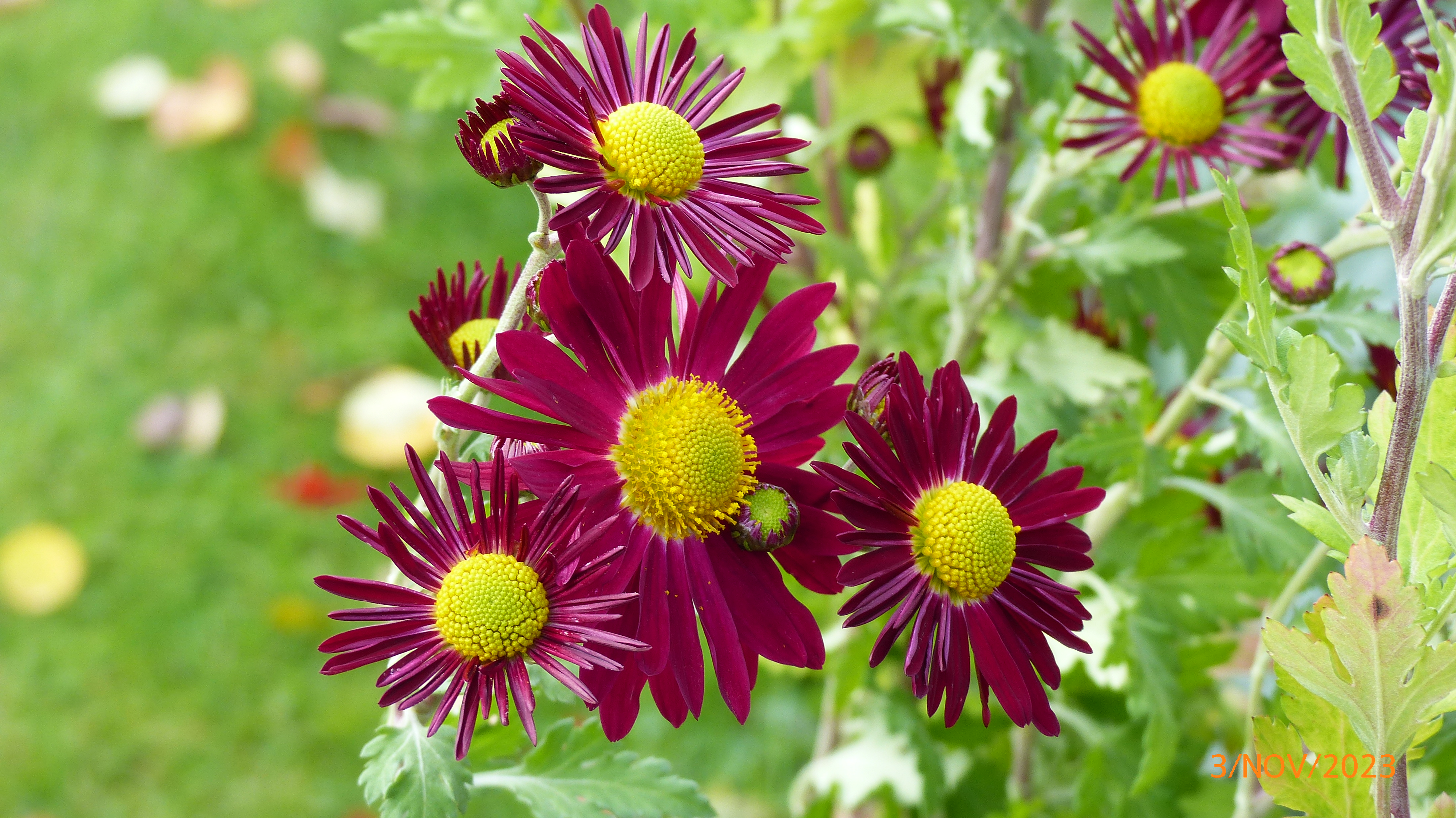
As well as ‘Bretforton Road’ featured last week, my other favourite hardy Chrysanthemum at this time of year is ‘Royal Command’. This one has been with me for many years and is a real survivor. Tough and resilient, I just love its dark red quilled petals and bright yellow centre on tall stems. Not sold by many nurseries these days as there just so many more popular ones on offer, but sometimes the old ones are the best!

This diminutive Pieris ‘Little Heath’ was bought as a 9cm pot for my winter hanging basket last November and has grown into a handsome little shrub. About to flower too! Currently in a clay pot where it has been happy all summer, I think it is time to find a place in the garden where it can get its feet down and mature alongside its bigger cousins.

And so to this week’s ‘What am I?’ quiz round. If you can identify this without resorting to a plant app or other external source you are truly a very clever plant person indeed. It took me quite a while to realise what it was, and then only by accident. Give up? It is Guizotia abyssinica, more commonly called Niger or Nyjer, the source of the tiny black seeds adored by Goldfinches. It took quite a while to realise that these unusual plants which were popping up all around the Nyjer seed feeder were, in fact, Nyjer plants! I kept pulling them up thinking they were a weed which, as I didn’t plant them, they were. But one escaped my notice and sneakily grew within the cover of a Pittosporum and has now popped it’s head out of the top and is about to flower!.As they originate in Ethiopia, I doubt if they will take any frost but we will see. I hope to post a photo of the flower very soon!

The Hesperantha coccinea are adding a touch of glamour to the front border at the moment with their tall stems of crimson flowers. I took advice from the National Collection Holder who told me to never walk past them in the summer without chucking some water over them! Apparently, the reason they often flower reluctantly is a lack of water in the dry summer months. In their native South Africa they grow in moist soil along the banks of rivers and streams or in low lying areas which retain water most of the year. They hate being dry at the roots.

Finally, just to say the Salvia uliginosa is STILL flowering and attracting bumble bees on dry days. It just never stops! What a success, my outstanding Plant of the Year!

Have a great weekend. I am off to learn all there is to know about Hardy Geraniums from an expert at our Gardening Group.

David

Six on Saturday

Knowing storm Babet was on the way, I hastily went out with my camera on Wednesday while everything was still intact! The wind and torrential rain duly arrived in the early hours of Thursday and deluged my exposed suburban garden on the edge of the Cotswold escarpment. Fortunately, there is no damage, just masses of leaf litter and very wet grass. I feel for the poor people in the north east of Scotland who are bearing the brunt of the storm.

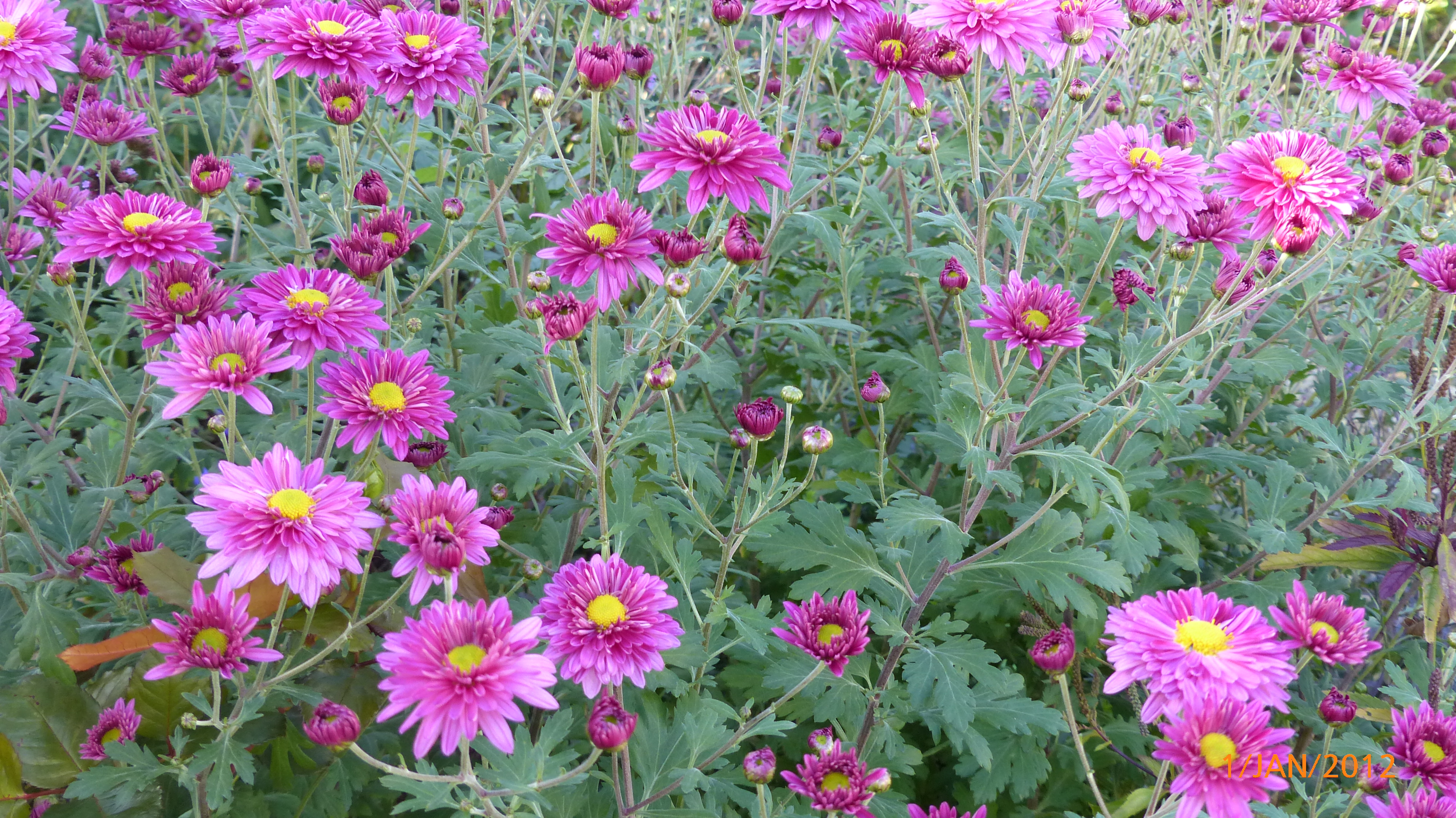
I like plants with a bit of history and this Chrysanthemum ‘Bretforton Road’ is such a plant. Grown for generations in Badsey, Worcestershire, it was discovered by Bob Brown of Cotswold Garden Flowers when peering over a wall into a local garden. Tough as old boots, but pretty as a picture, this Chrysanth has been divided many times and passed to friends and family who love it too.

Just a few of the 21 pots of spring bulbs ready to go out in the front garden to replace the geraniums which are still going strong. Perhaps I am too soft but I hate to destroy perfectly good plants just because their allotted time is up. They can stay there until the frost knocks them back, the bulbs can wait.

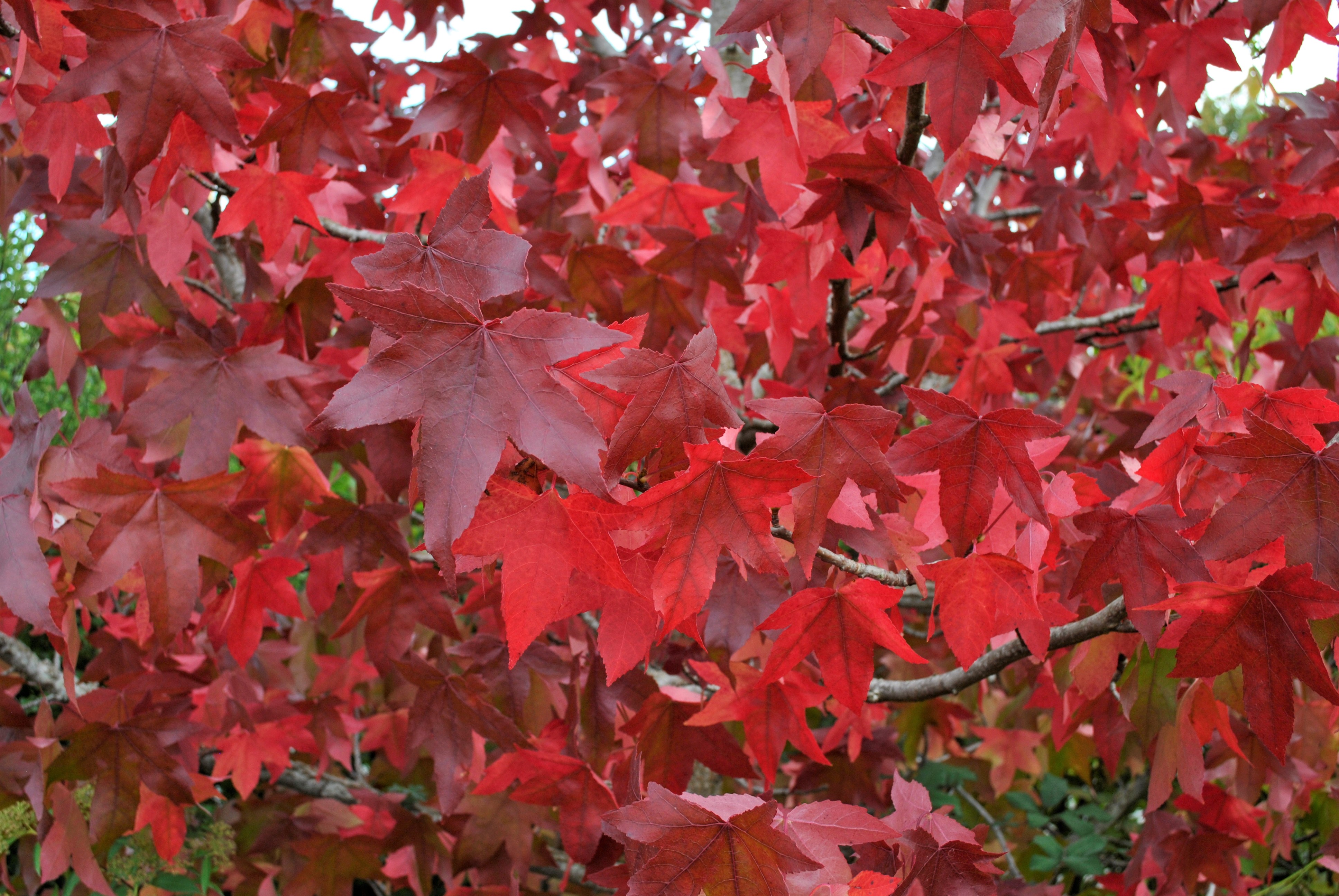
Ironically, the Liquidambar styraciflua ‘Worplesdon’ is at its best when photosynthesis stops and the leaves turn a fiery red as they begin to die off. I have to admit though, this picture was taken mid-week before the 60mph winds arrived. There is now a red carpet of leaves on the lawn!

The Amelanchier lamarckii too is slowly turning to a lovely burnt sugar orange before slowly shedding its leaves.

A kind friend donated Salvia greggii ‘Icing Sugar’ earlier this year saying it needed a good prune and ‘sorting out’, which I duly did. It has rewarded me accordingly.

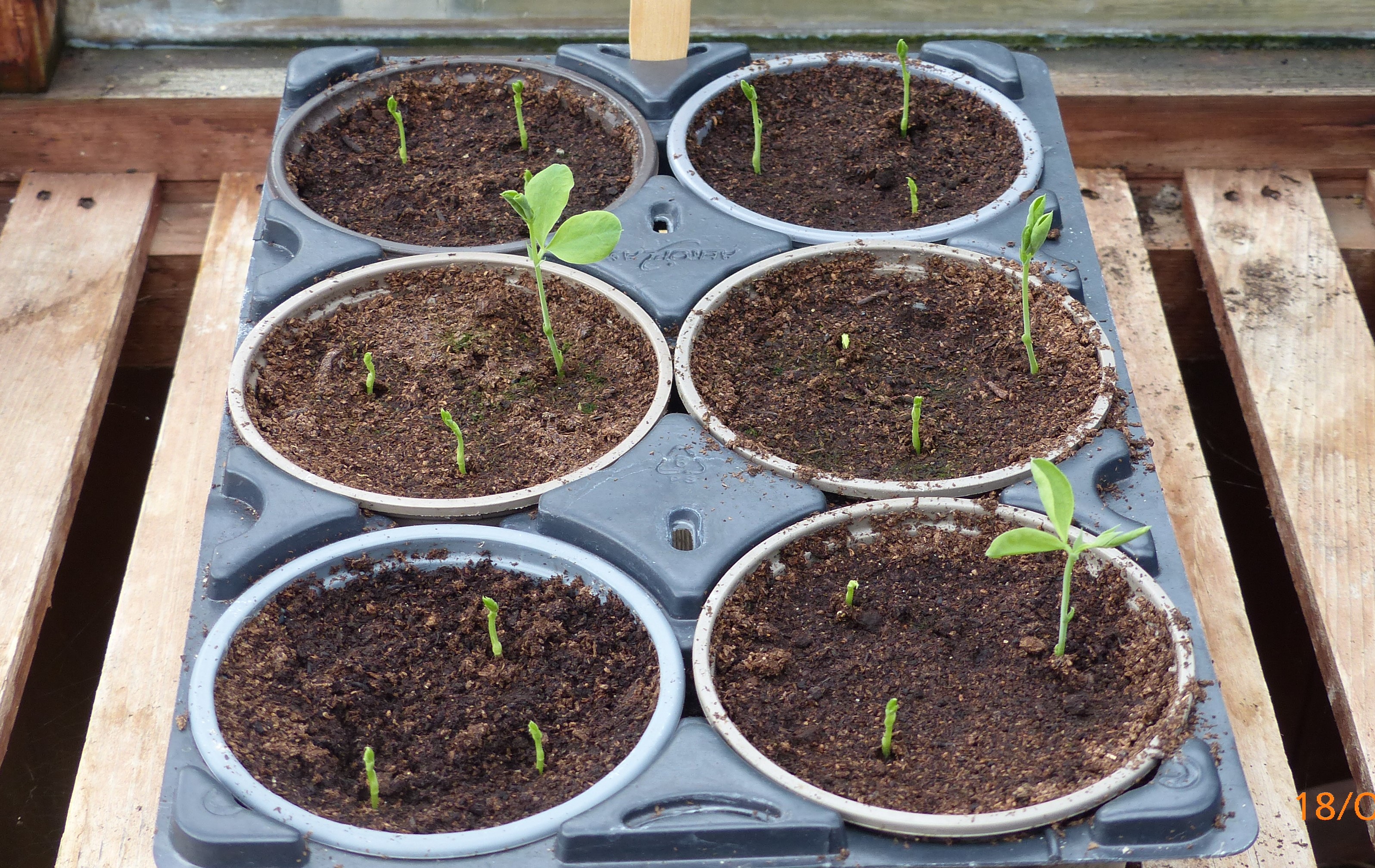
The same friend asked me why I had sowed my Sweet Peas so early, and this has been a regular topic with gardening friends over the years. Although I find they grow whenever you sow them, I believe that autumn sown, overwintered Sweet Peas are stronger, tougher and more floriferous. I like to get them germinated by the end of October, pinched out after two sets of proper leaves have grown by the end of November, and transplanted into their own deep pots by Xmas. They then spend their energy producing two side shoots and a good root system instead of becoming tall and leggy on a single main shoot. They are completely hardy and don’t need any heat over winter. They can go into a cold frame or cold greenhouse until they are ready to be planted out when the clocks go forward in March. These are some of mine planted on 7th October. No chipping, soaking or sanding of the seeds, just push them 1″ into a pot of compost, water them well and place them in a warm sunny position until they germinate then put them outside under cover but in good light.

Sometimes, I think garden bloggers like me are guilty of making our gardens sound better than they really are. It is all too easy to cherry pick the best bits each week and give the impression that everything in the rest of the garden is rosy. So, from now on, I am going to include five good bits and one not-so-good bit to be more honest and transparent.

It seems that Nigella damascena seeds can survive anything and grow anywhere, particularly if there is no soil of any kind! I foolishly topped up some gravel paths from one part of the garden to another, not imagining this would be the result. Very pretty though!

Have a great weekend

David
Six on Saturday

I have been absent for a couple of weeks due to holidays and a very poorly wife who contracted a nasty dose of Covid courtesy of Easy Jet! Air travel still carries risks, and several friends have succumbed to the pesky pandemic in recent weeks. On a lighter note, Dahlia ‘David Howard’ looking resplendent in the morning dew and new to me this year, but I am disappointed to find that the flowers do not go over well, hanging on in tatters unless I am extremely diligent with deadheading, removing the spent flowers as soon as they go over. This is a shame as I love the beauty and art of the flower.

I have a love-hate relationship with Ivy. It is making a takeover bid on my western boundary fence and is quite a nuisance. However, when it matures and turns arboreal, the flowers are a magnet for bees, wasps, and butterflies at this time of year, and the black fruits are a favourite of Blackbirds in the winter. On mild days it is literally buzzing with life. I think the wildlife will win this one!

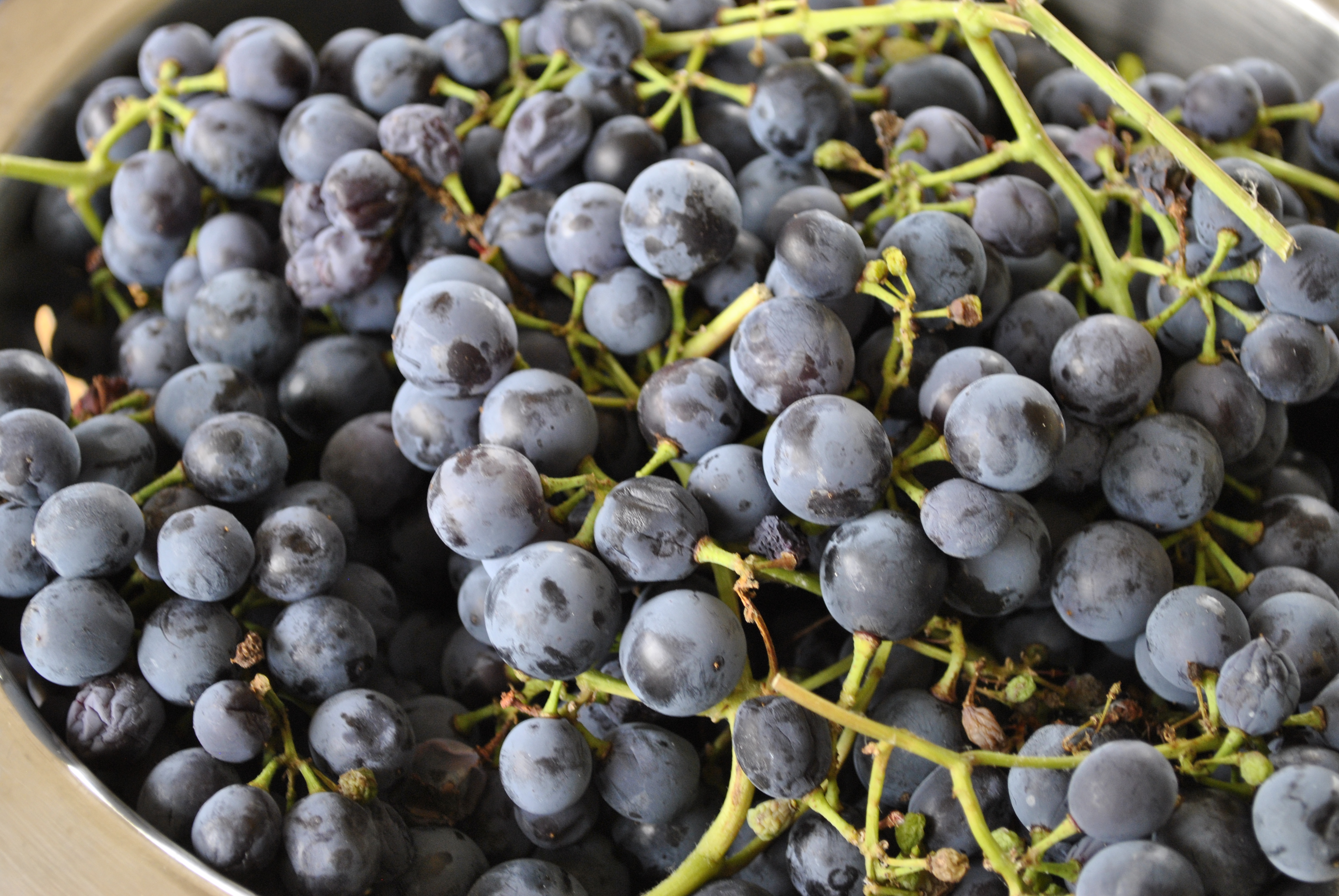
It has been a bumper year for grapes and the harvest from my single vine was 11.3kgs which is astonishing. The variety is Vitis labrusca ‘Isabella’, the Pink Fox Grape, predominantly used for jam making in the US but sweet enough to eat as a dessert grape, if you don’t mind the pips!.

The fruits look more like blueberries than grapes!

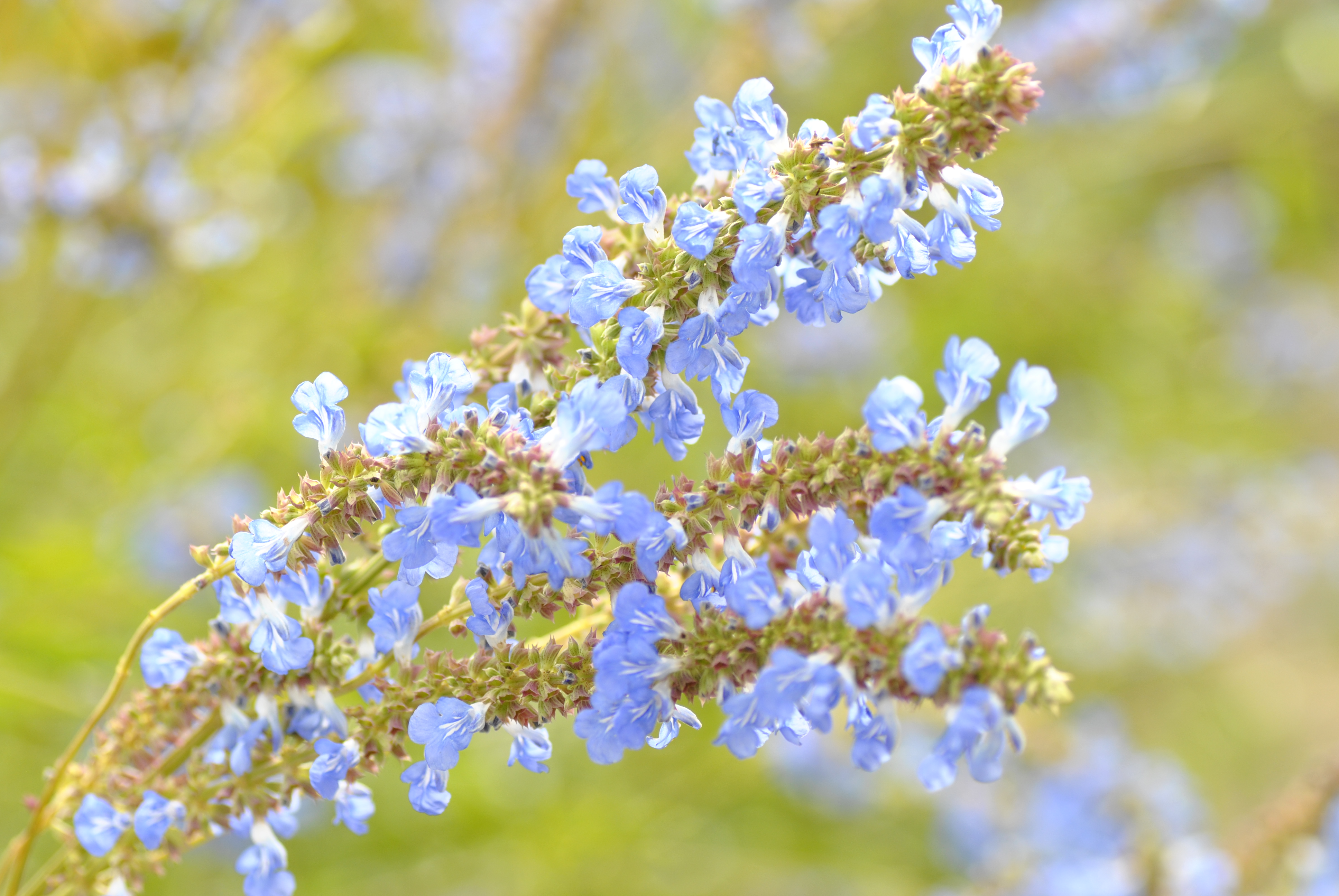
The stand out pollinator food plant this year has undoubtedly been Salvia uliginosa, which has constantly been covered in bees, particularly bumble bees, since May and is still going strong. It is very tall and ethereal, swaying in the slightest breeze, but the bees hang on determinedly. As I have mentioned previously, due to their size, the bees do not enter the flowers, they make a hole in the base from the outside to sip the nectar. Clever little bees!

We all make mistakes! Some years ago I planted one small pot of the tall grass, Miscanthus sinensis, at the back of the shrubbery where I naively thought it would stay and provide a nice backdrop for other, shorter shrubs. It has now spread throughout the shrubbery, popping up everywhere and taking over. A real survivor, it is totally bombproof and makes the very best of whatever conditions it finds itself in.

The seedheads are also beautiful at this time of year and will stand throughout the winter, looking particularly good after frost.

Another casualty of last year’s harsh winter was my only remaining Canna ‘Tropicana’ which I leave in the ground under a good mulch of compost. This would usually flower in August but here we are in October and it is only just beginning to flower. It only has two flower spikes this year instead of the usual three or four which probably means part of the enormous tuber turned to mush due to the cold and wet.

Finally, surely the purest white of all pure whites, (with just a hint of green!) Lathyrus latifolius ‘White Pearl’, planted many years ago and almost forgotten until these perfect, but unscented, everlasting Sweet Pea flowers adorn the arch over which they mingle with the delicate pink rose ‘Dorothy Perkins’.

Have a great weekend

David
Six on Saturday

Obviously, the intense heat has been the main topic of conversation this week and, for gardeners in particular, it has been difficult to cope with. Many of my potted plants have become dehydrated and flopped before I noticed, but a good drink and they all revived fairly quickly. I always worry about the longer term damage it might have done though, I am sure that like us, a sudden and debilitating change in health can’t be good for them. However, we keep calm and carry on watering!

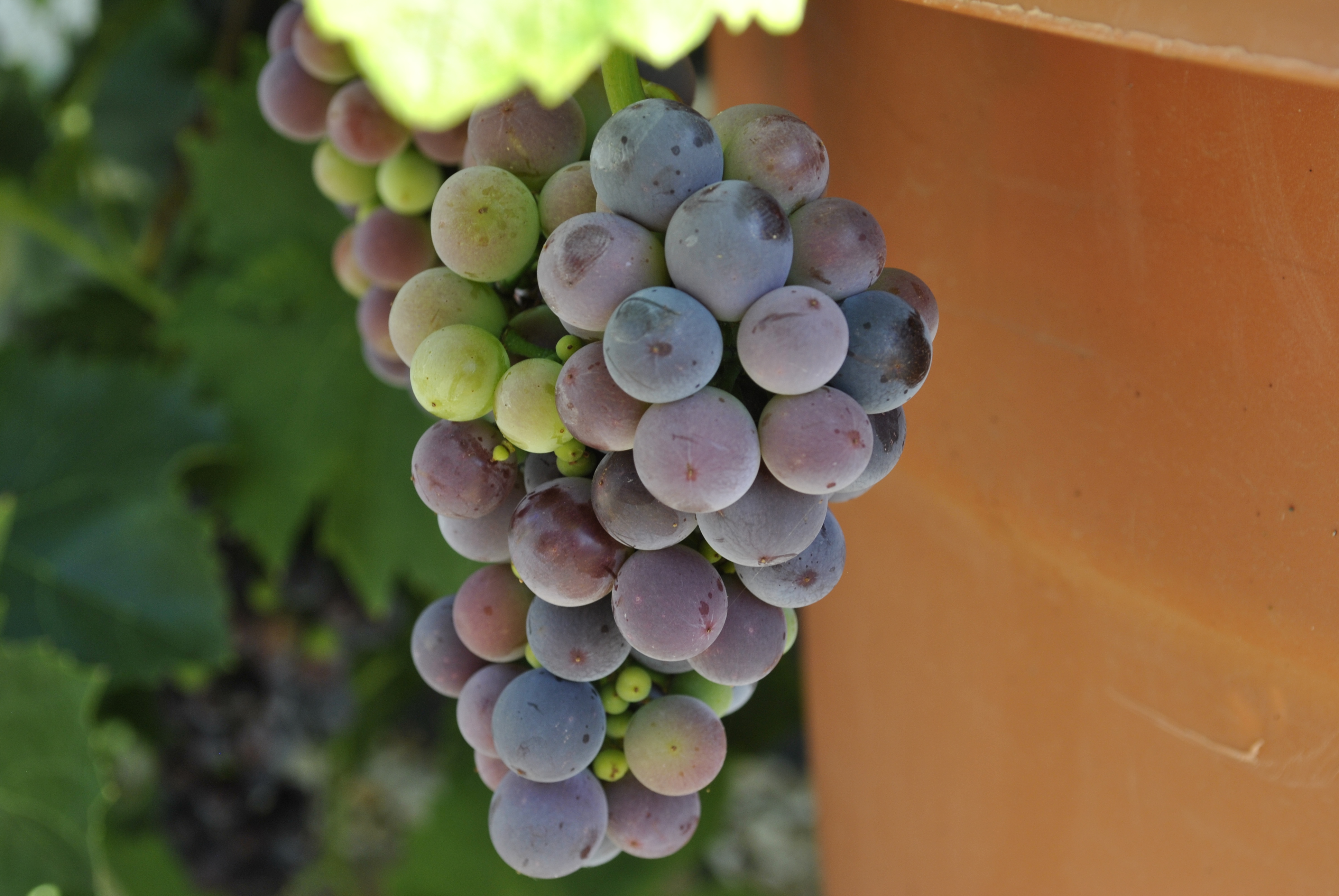
The ‘Pink Fox Grape’, Vitis labrusca ‘Isabella’, has produced a good crop of sweet purple fruit almost ready to be picked and made into grape jelly. I am not a winemaker, and even if I was there is only enough fruit for a few bottles, but these are sweet enough to be eaten as a dessert grape as well, lovely with a bit of cheese, yum.

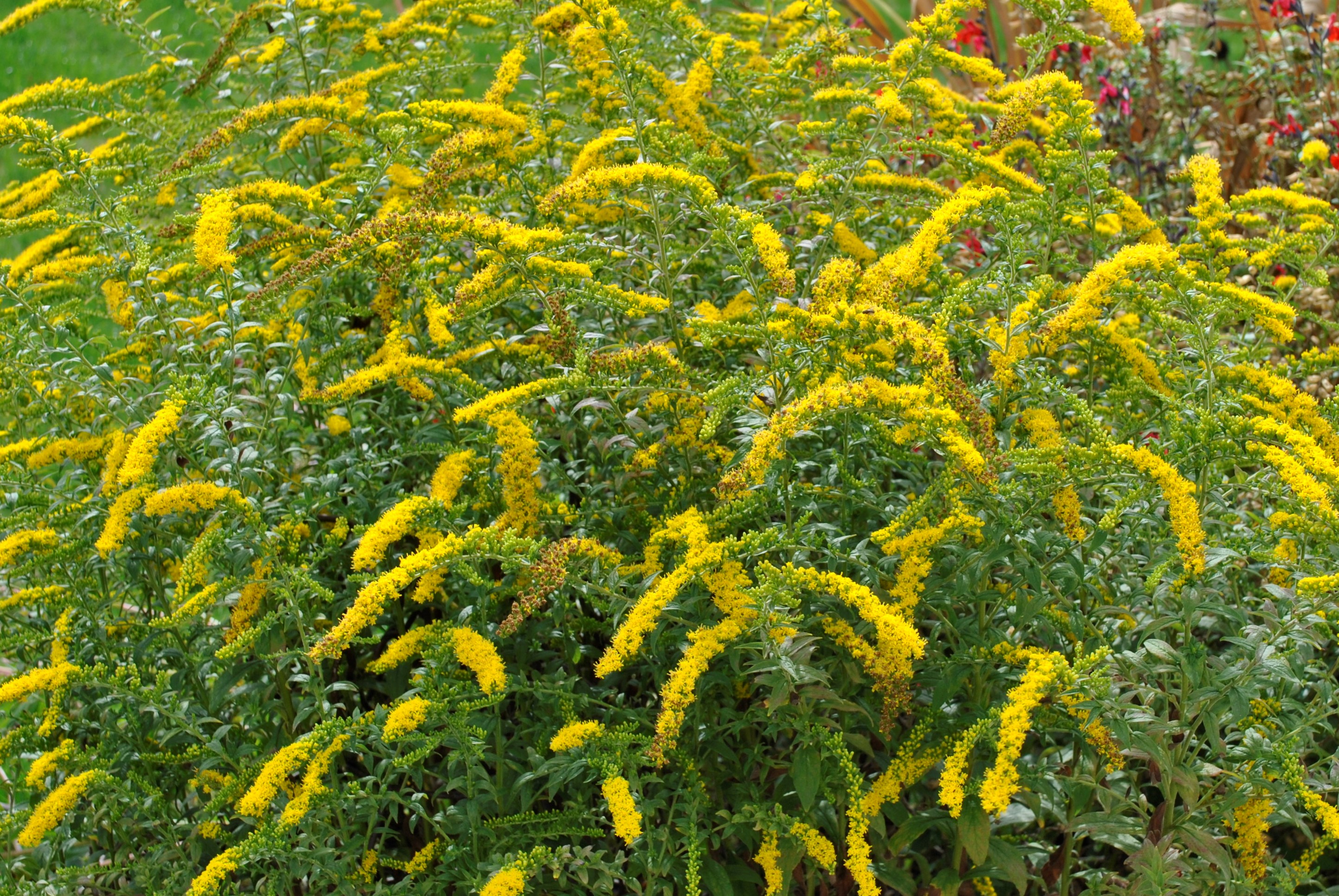
For those who don’t like Golden Rod, this is its refined cousin, Solidago rugosa ‘Fireworks’, which works well in late summer and early autumn with blues and purples like Symphyotrichum and asters, Salvias and even Cosmos. It is a fuss free hardy perennial which literally erupts in all directions with long-lasting spikes of yellow florets which are adored by bees and other pollinators.

The second flush of Delphiniums is never quite as good as the first but still impressive and the slugs don’t seem to bother with the new shoots at this time of year. I only cut these back to the ground in late July so not bad in just 6 weeks.

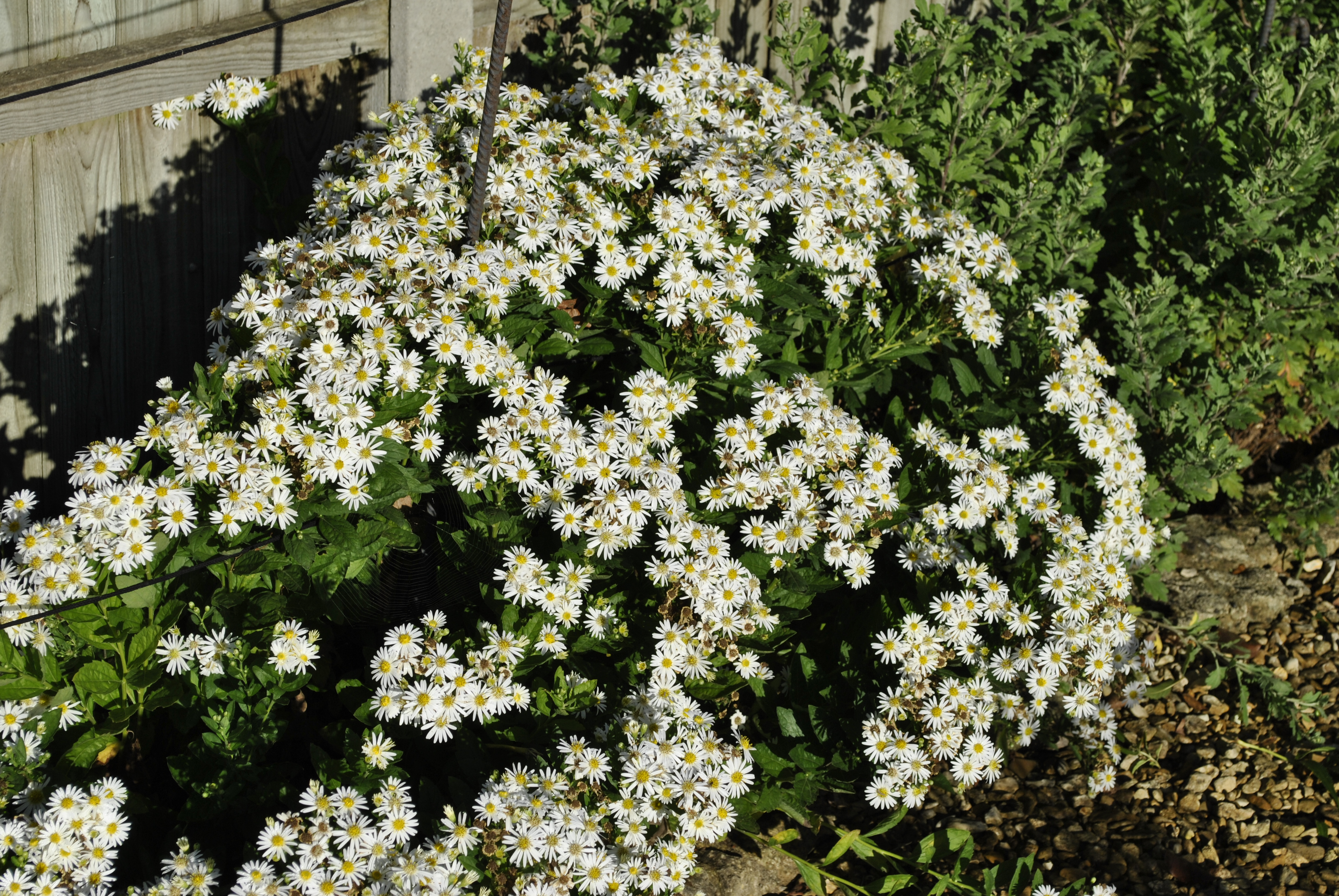
The Asian aster, Aster trifoliatus subsp. ageratoides ‘Stardust’, is a hardy, low maintenance and reliable, spreading perennial. In late summer it produces clusters of dark green leaves topped with masses of pure white daisy flowers with bright yellow centres. Very easy to grow and easy to create new plants from the underground spreading runners. I started with one plant and now have twenty and that’s on top of the dozens I have given away to unsuspecting friends and gardening club members!

Following on from last week’s mention of the beginnings of autumn colours, the Liquidambar styraciflua ‘Worplesdon’ has now produced the most delicious range of reds, oranges, browns and fawns as the tree slowly begins to slip into dormancy for another year.

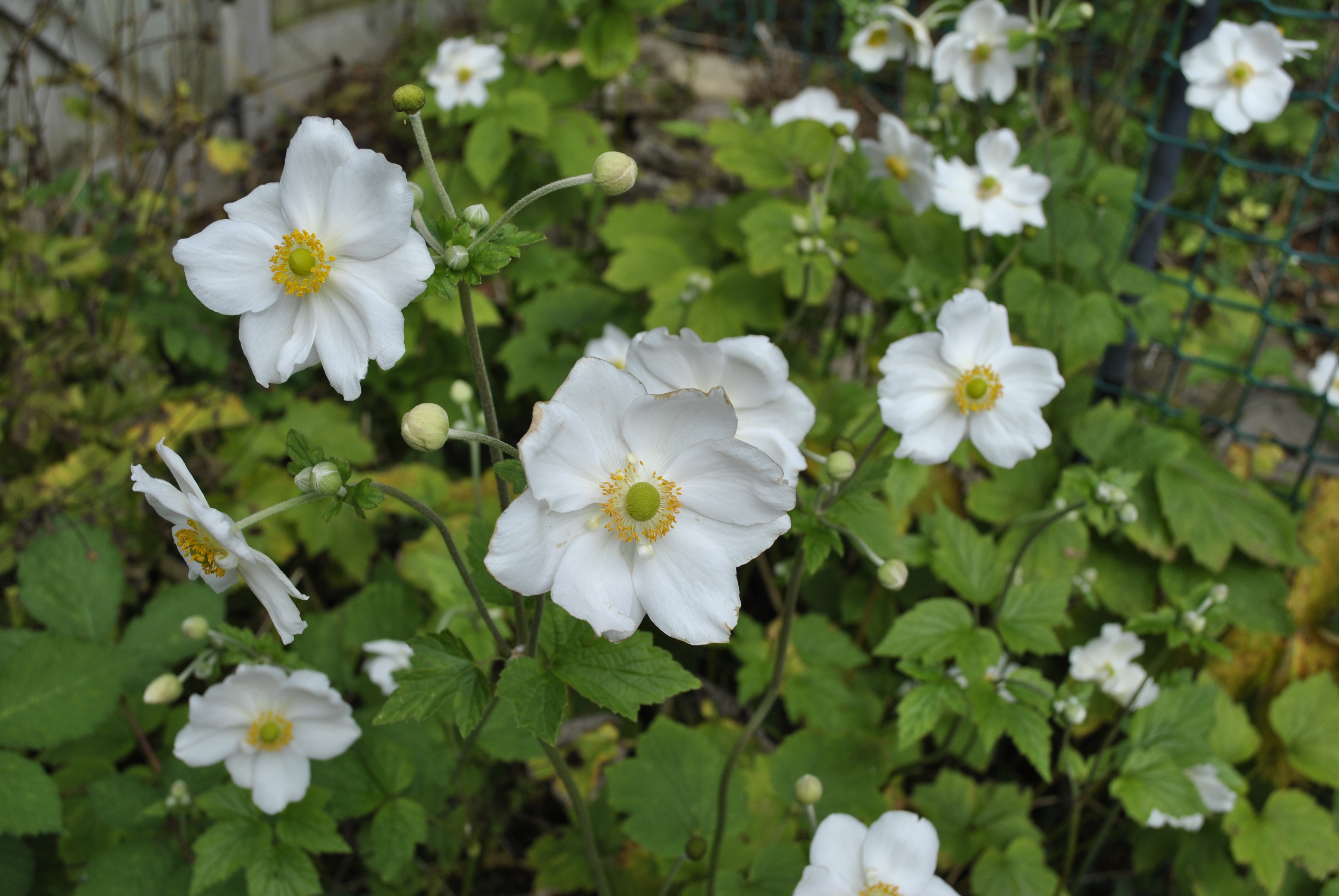
Finally for this week the lovely Japanese Anemone ‘Honorine Jorbet’ which is delighting me with her beautiful pure chalky white flowers with green centres surrounded by bright yellow stamens and anthers. Simply a wonderful combination on a plant that enjoys the dry shade and gloom of a north or east facing garden or border.

Have a great weekend and keep cool. Rain is on the way!

David