Six on Saturday

Knowing storm Babet was on the way, I hastily went out with my camera on Wednesday while everything was still intact! The wind and torrential rain duly arrived in the early hours of Thursday and deluged my exposed suburban garden on the edge of the Cotswold escarpment. Fortunately, there is no damage, just masses of leaf litter and very wet grass. I feel for the poor people in the north east of Scotland who are bearing the brunt of the storm.
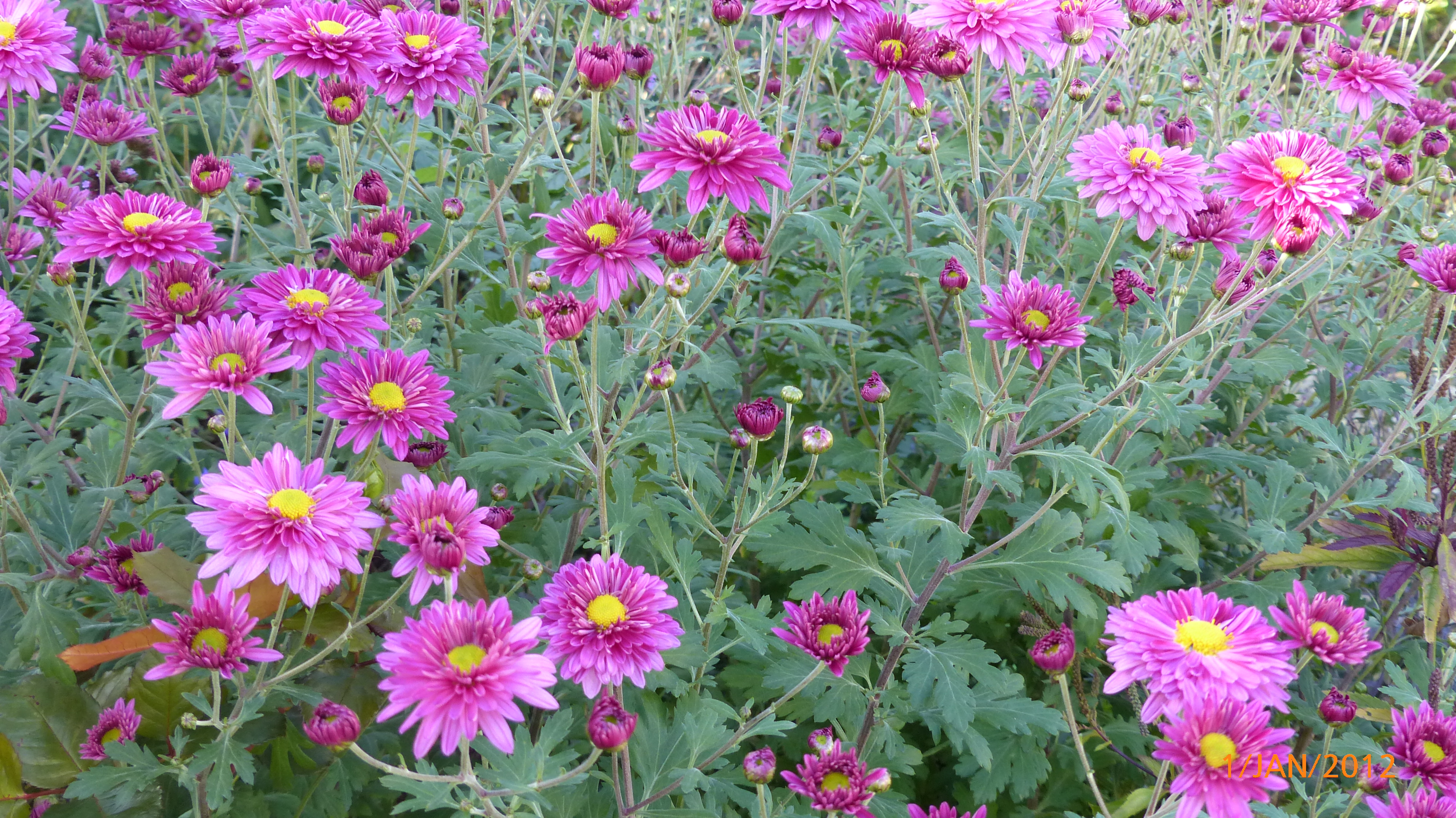
I like plants with a bit of history and this Chrysanthemum ‘Bretforton Road’ is such a plant. Grown for generations in Badsey, Worcestershire, it was discovered by Bob Brown of Cotswold Garden Flowers when peering over a wall into a local garden. Tough as old boots, but pretty as a picture, this Chrysanth has been divided many times and passed to friends and family who love it too.

Just a few of the 21 pots of spring bulbs ready to go out in the front garden to replace the geraniums which are still going strong. Perhaps I am too soft but I hate to destroy perfectly good plants just because their allotted time is up. They can stay there until the frost knocks them back, the bulbs can wait.
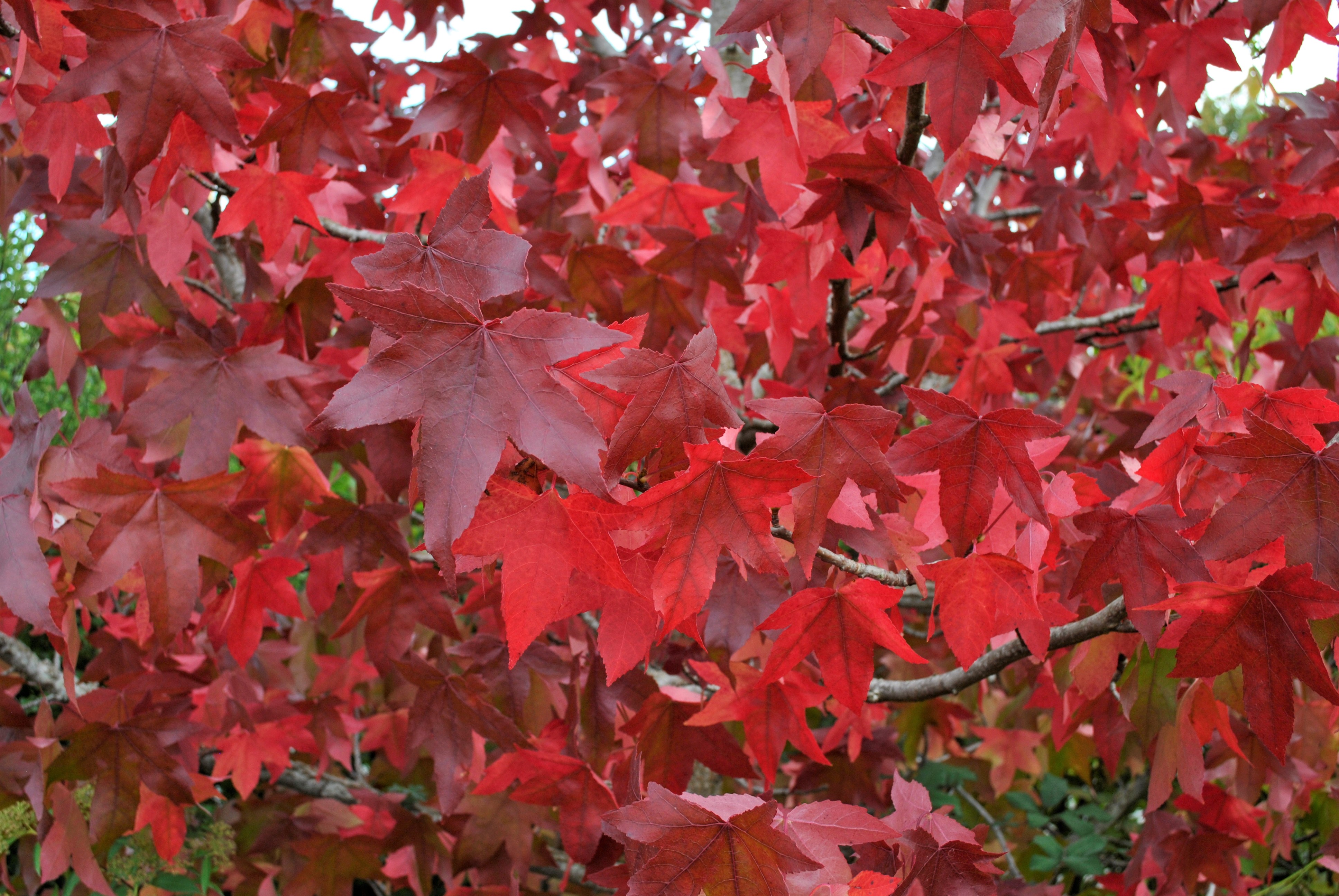
Ironically, the Liquidambar styraciflua ‘Worplesdon’ is at its best when photosynthesis stops and the leaves turn a fiery red as they begin to die off. I have to admit though, this picture was taken mid-week before the 60mph winds arrived. There is now a red carpet of leaves on the lawn!

The Amelanchier lamarckii too is slowly turning to a lovely burnt sugar orange before slowly shedding its leaves.

A kind friend donated Salvia greggii ‘Icing Sugar’ earlier this year saying it needed a good prune and ‘sorting out’, which I duly did. It has rewarded me accordingly.

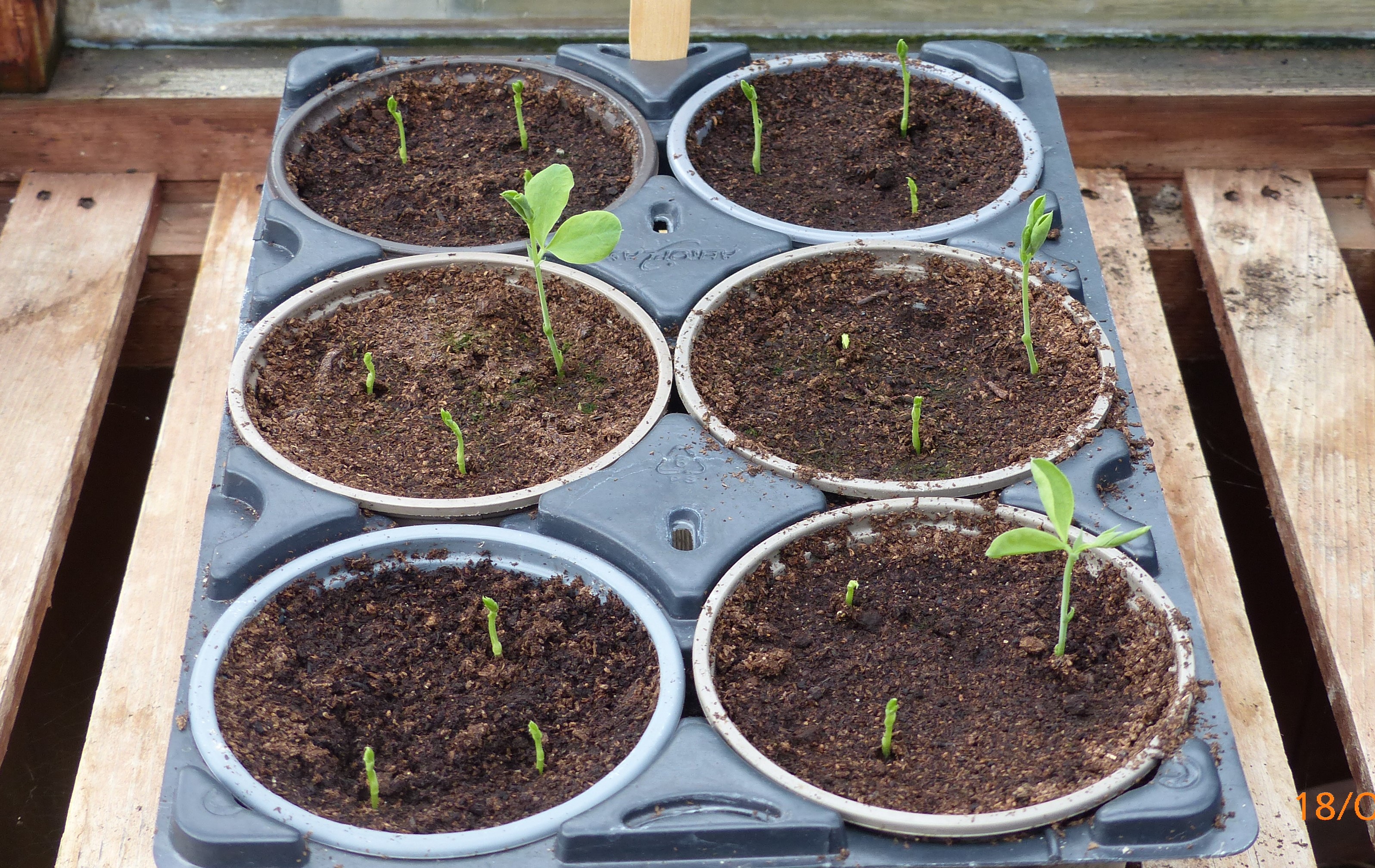
The same friend asked me why I had sowed my Sweet Peas so early, and this has been a regular topic with gardening friends over the years. Although I find they grow whenever you sow them, I believe that autumn sown, overwintered Sweet Peas are stronger, tougher and more floriferous. I like to get them germinated by the end of October, pinched out after two sets of proper leaves have grown by the end of November, and transplanted into their own deep pots by Xmas. They then spend their energy producing two side shoots and a good root system instead of becoming tall and leggy on a single main shoot. They are completely hardy and don’t need any heat over winter. They can go into a cold frame or cold greenhouse until they are ready to be planted out when the clocks go forward in March. These are some of mine planted on 7th October. No chipping, soaking or sanding of the seeds, just push them 1″ into a pot of compost, water them well and place them in a warm sunny position until they germinate then put them outside under cover but in good light.
Sometimes, I think garden bloggers like me are guilty of making our gardens sound better than they really are. It is all too easy to cherry pick the best bits each week and give the impression that everything in the rest of the garden is rosy. So, from now on, I am going to include five good bits and one not-so-good bit to be more honest and transparent.

It seems that Nigella damascena seeds can survive anything and grow anywhere, particularly if there is no soil of any kind! I foolishly topped up some gravel paths from one part of the garden to another, not imagining this would be the result. Very pretty though!

Have a great weekend

David
Six on Saturday

Obviously, the intense heat has been the main topic of conversation this week and, for gardeners in particular, it has been difficult to cope with. Many of my potted plants have become dehydrated and flopped before I noticed, but a good drink and they all revived fairly quickly. I always worry about the longer term damage it might have done though, I am sure that like us, a sudden and debilitating change in health can’t be good for them. However, we keep calm and carry on watering!

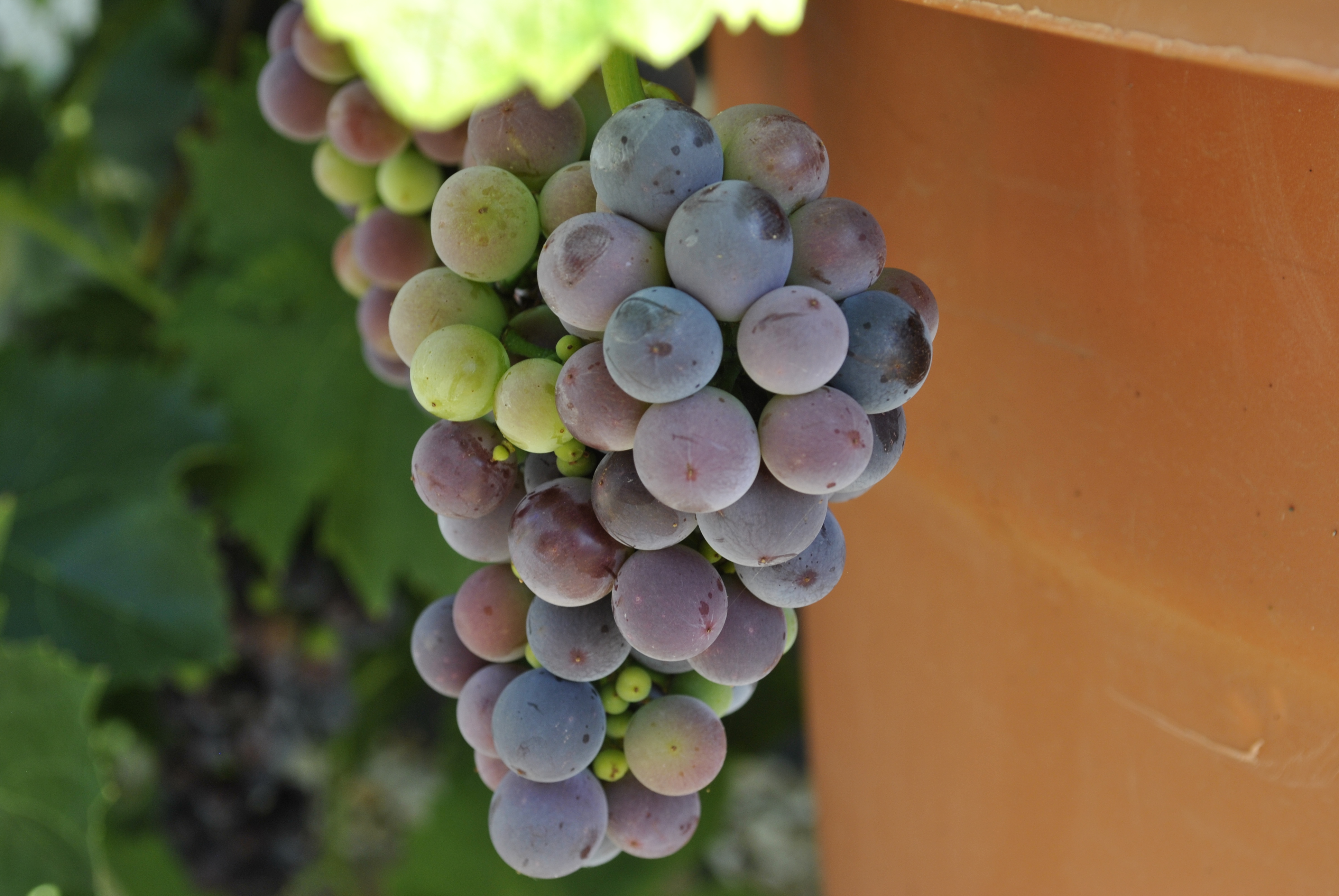
The ‘Pink Fox Grape’, Vitis labrusca ‘Isabella’, has produced a good crop of sweet purple fruit almost ready to be picked and made into grape jelly. I am not a winemaker, and even if I was there is only enough fruit for a few bottles, but these are sweet enough to be eaten as a dessert grape as well, lovely with a bit of cheese, yum.

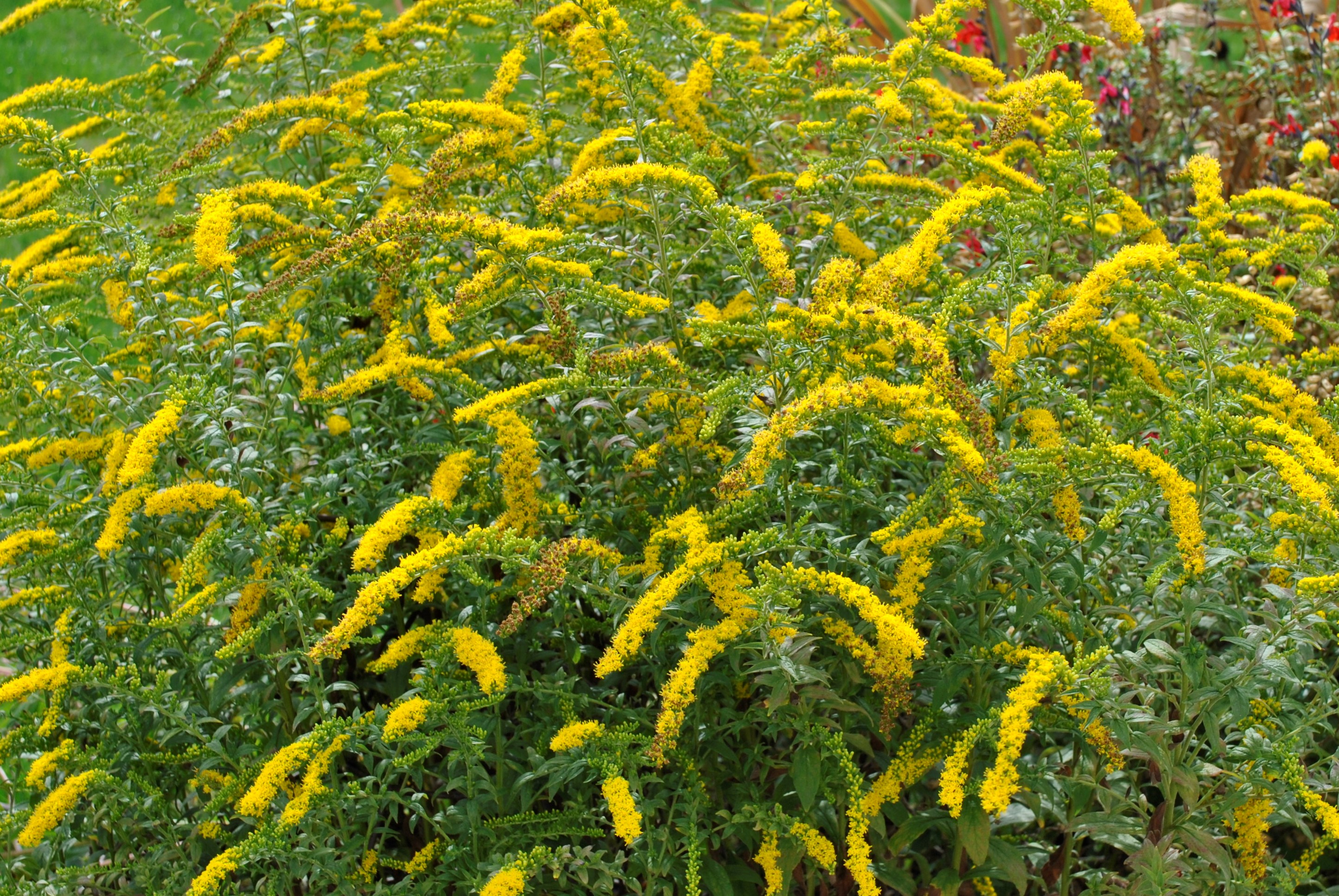
For those who don’t like Golden Rod, this is its refined cousin, Solidago rugosa ‘Fireworks’, which works well in late summer and early autumn with blues and purples like Symphyotrichum and asters, Salvias and even Cosmos. It is a fuss free hardy perennial which literally erupts in all directions with long-lasting spikes of yellow florets which are adored by bees and other pollinators.

The second flush of Delphiniums is never quite as good as the first but still impressive and the slugs don’t seem to bother with the new shoots at this time of year. I only cut these back to the ground in late July so not bad in just 6 weeks.

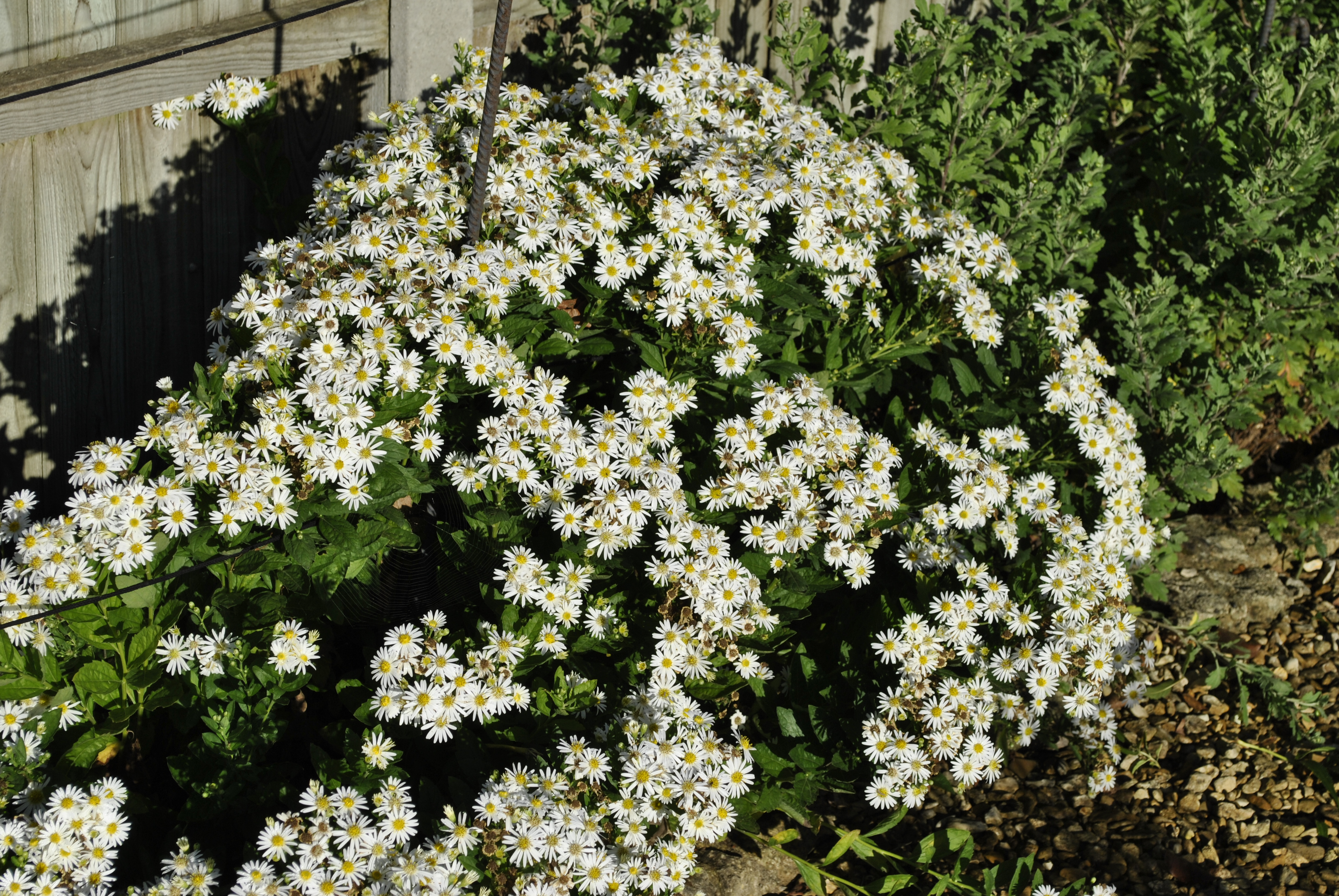
The Asian aster, Aster trifoliatus subsp. ageratoides ‘Stardust’, is a hardy, low maintenance and reliable, spreading perennial. In late summer it produces clusters of dark green leaves topped with masses of pure white daisy flowers with bright yellow centres. Very easy to grow and easy to create new plants from the underground spreading runners. I started with one plant and now have twenty and that’s on top of the dozens I have given away to unsuspecting friends and gardening club members!

Following on from last week’s mention of the beginnings of autumn colours, the Liquidambar styraciflua ‘Worplesdon’ has now produced the most delicious range of reds, oranges, browns and fawns as the tree slowly begins to slip into dormancy for another year.

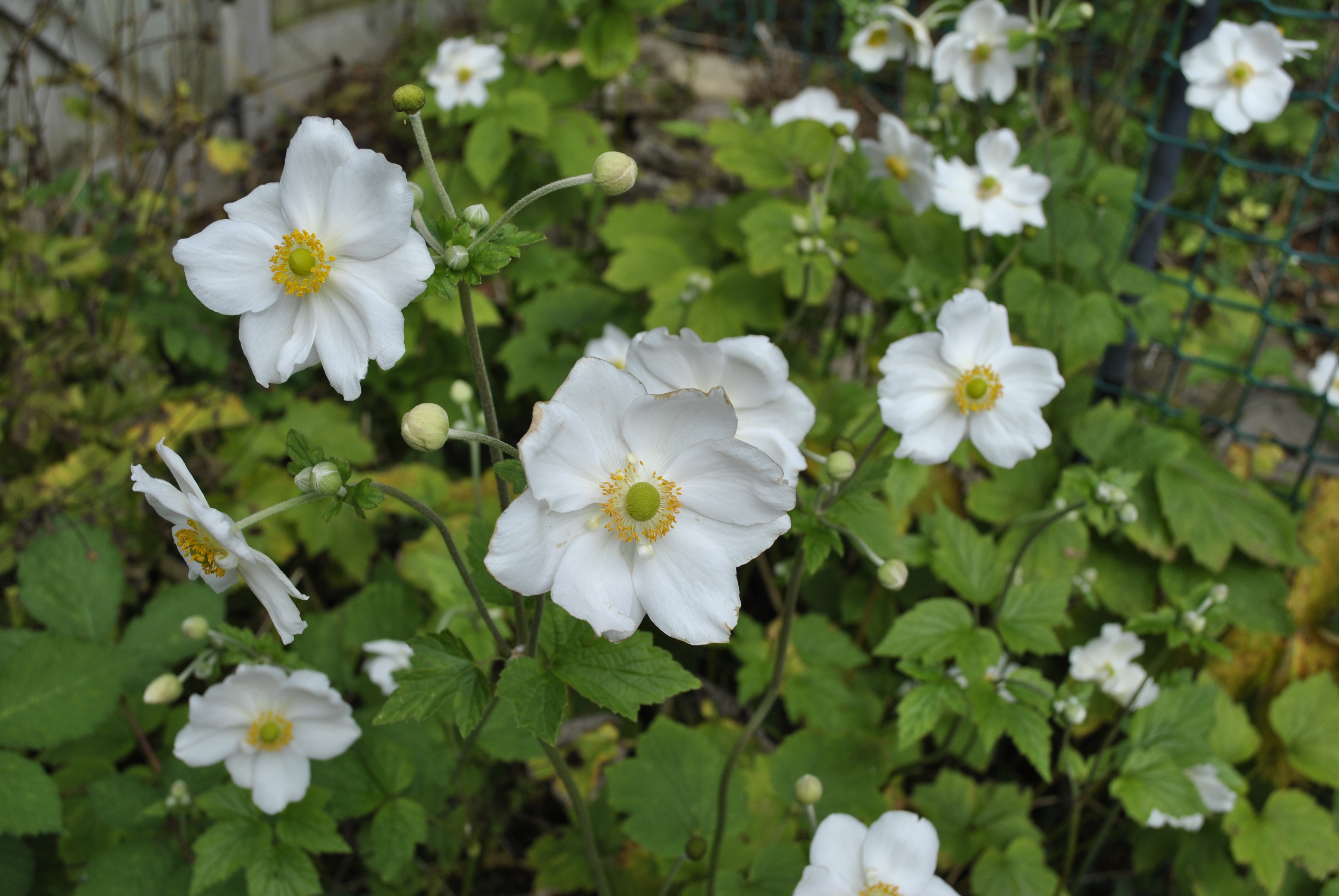
Finally for this week the lovely Japanese Anemone ‘Honorine Jorbet’ which is delighting me with her beautiful pure chalky white flowers with green centres surrounded by bright yellow stamens and anthers. Simply a wonderful combination on a plant that enjoys the dry shade and gloom of a north or east facing garden or border.

Have a great weekend and keep cool. Rain is on the way!

David

Six on Saturday

It would seem that Autumn is upon us already and the turning leaves of the Liquidambar styraciflua ‘Worplesdon’ are always the first to confirm it in my garden. Not really surprising as these acer relatives are primarily grown for their glorious autumn hues of red and orange.

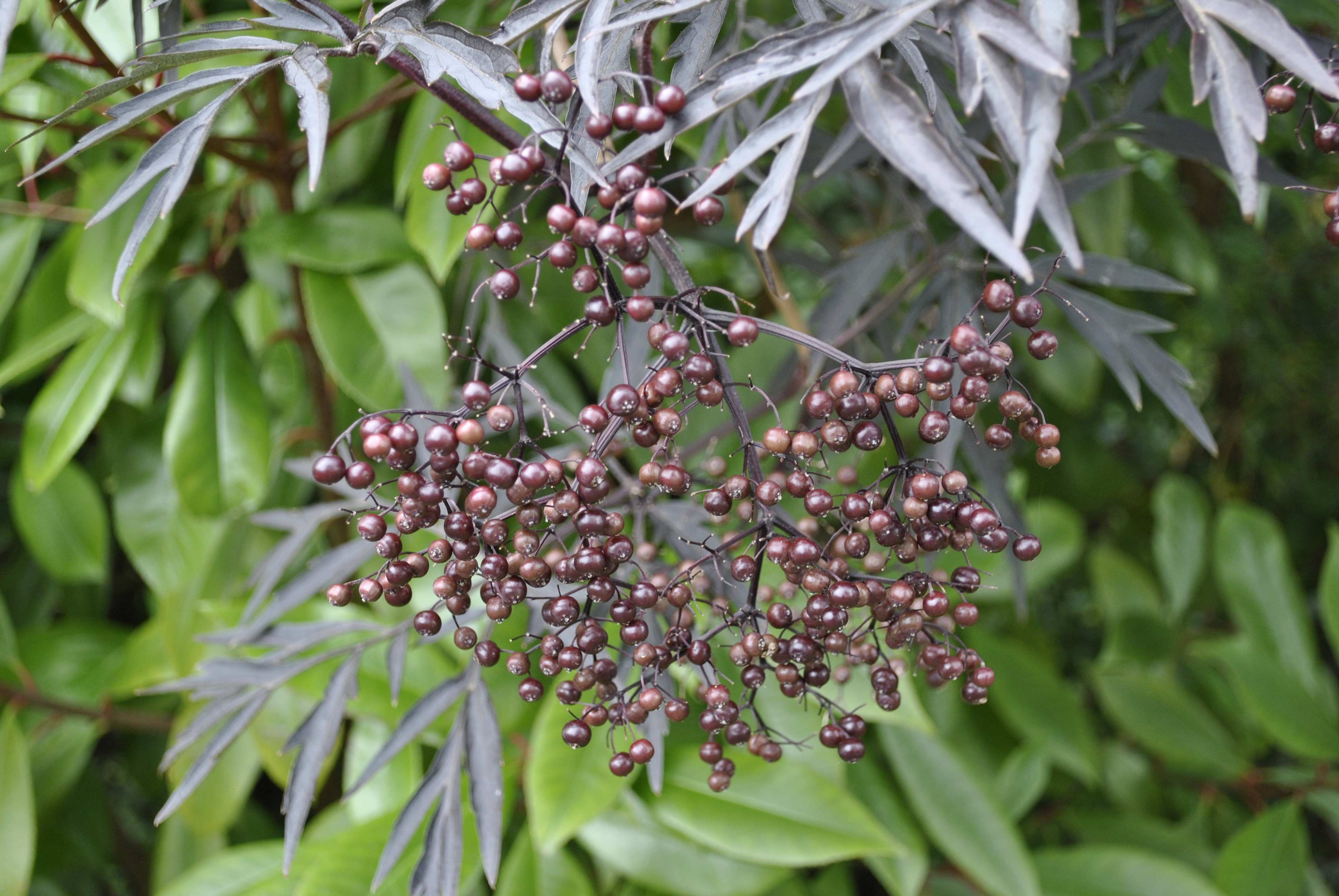
The fruits of the dark leaved elder, Sambucus nigra ‘Black Lace’, are also a sign that the seasons are slowly changing. It won’t be long before the birds will pick them clean in preparation for whatever sort of winter we are going to have this year!

The red tips of the Photinia fraserii ‘Red Robin’ have appeared again just a few short weeks after their mid summer trim and in rude health after the disappointingly wet July & August. A final trim might be in order at the end of the month just to keep it tight and tidy for the winter.

One of the benefits of being the National Collection Holder of hardy Tradescantias is the potential for new cultivars from the hundreds of self sown seedlings I get each year. The Tradescantia Andersoniana Group is very promiscuous and hybrids are plentiful as in many species, and new varieties are often selected from the result of cross pollination. Very few are sufficiently different to be worthy of the work and cost required to progress them via micro-propagation but occasionally an unusual colour combination catches my eye as the one above did yesterday. I have provisionally called it ‘Lavender Blush’ and I will grow it on to see if the colours remain stable next year. Fingers crossed!

A month too early but the Hesperantha coccinea are beginning to flower, again probably due to the wet July & August mimicking the summer rains in their native South Africa. The pale pink and white varieties are yet to show but it surely won’t be long now.

Finally for this week, the little patch of Persicaria affinis under the Rowan tree has finally formed a beautiful mat of pink tufty bunny tail flowers which, for a pleasant change, is exactly what I planned and wanted! Six plants, well spaced out, have knitted together over the last three years to replace the dwindling Osteospermum jacundum and have now fully done so. I love it when a plan comes together which, in gardening, I find quite rare!

Have a great weekend

David

Six on Saturday

And, just like that, Autumn is upon us! The Liquidamber styraciflua ‘Worplesdon’ began her decline at the end of August this year, a full month earlier than usual, so her leaves are already turning crimson as they lose their sugar and end their life cycle for another year.

The Amelanchier lamarckii is also turning from its summer green to that gorgeous, golden honey shade before they too drop and carpet the ground with colour. This is not death but renewal, and both trees will come back bigger and stronger next year.

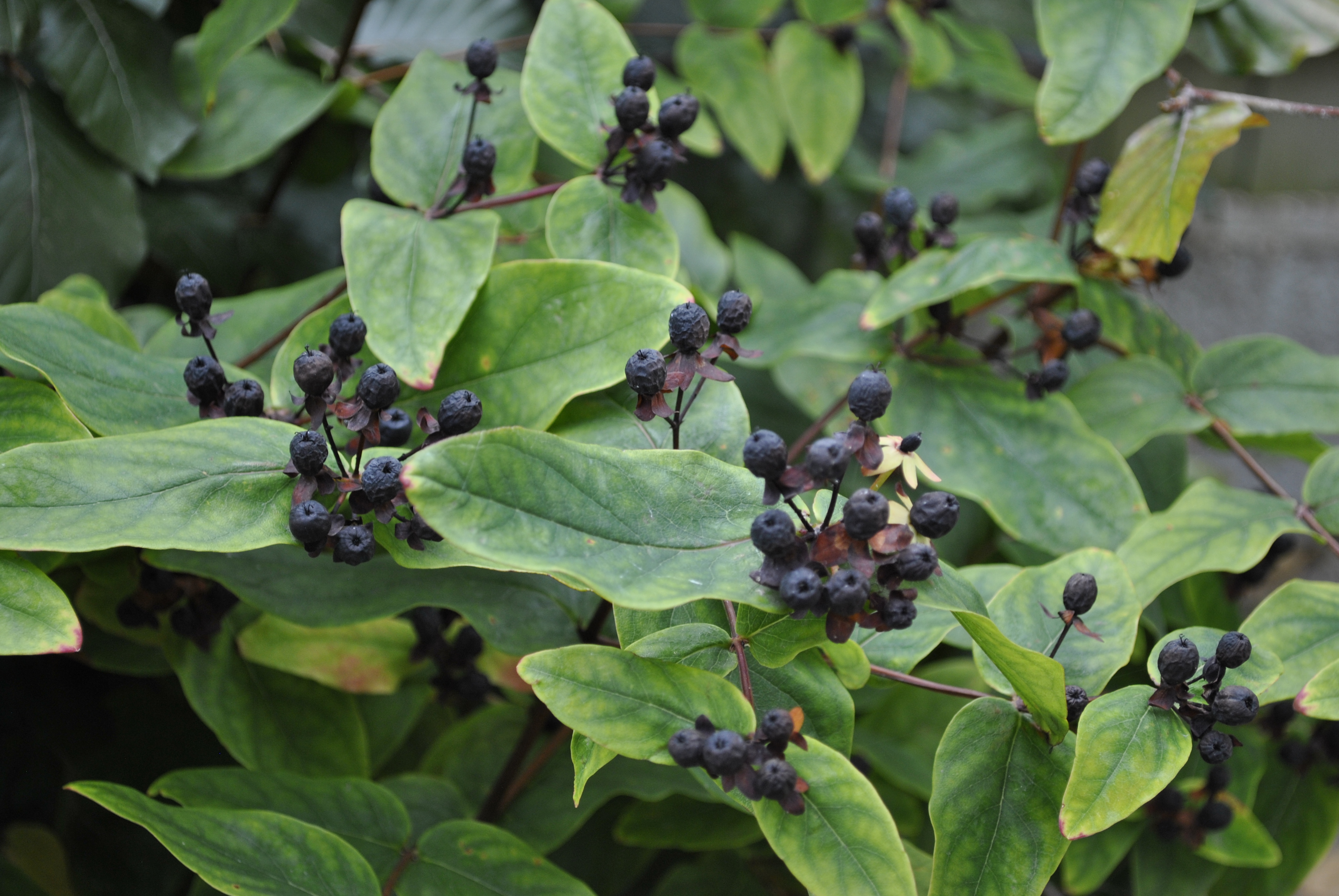
The previous owners of our bungalow must have planted some Rose of Sharon bushes, Hypericum calycinum, which, despite my best efforts, are still around making a nuisance of themselves 13 years later. I pull them out but they always return. This one escaped my attention by hiding under the beech in the drive border but I must dig it up before those berries fall and cause even more mayhem next year. A real persistent survivor from the 70’s when it was all the rage. Little did they know!

This little patch of Persicaria affinis did not enjoy the full glare of the hot sun in July and sulked for weeks afterwards. Even copious amounts of water did not coax it into flower but now, suddenly in October, it is back again in force! The little pink fluffy bunny tails are enjoying the cooler conditions and the low sun in the lee of the hedge and delighting me every morning as I raise the kitchen blind.

The Chinese Mountain Ash, Sorbus hupehensis ‘Pink Pagoda’, is laden with fruit after a barren season last year. It may be a variety that has a rest year, I am not sure. What I do know is that the pesky Wood Pigeons will be on it shortly performing their acrobatics to strip the tree of every last berry. They are quite comical and never seem to break a branch no matter how precarious their endeavours!

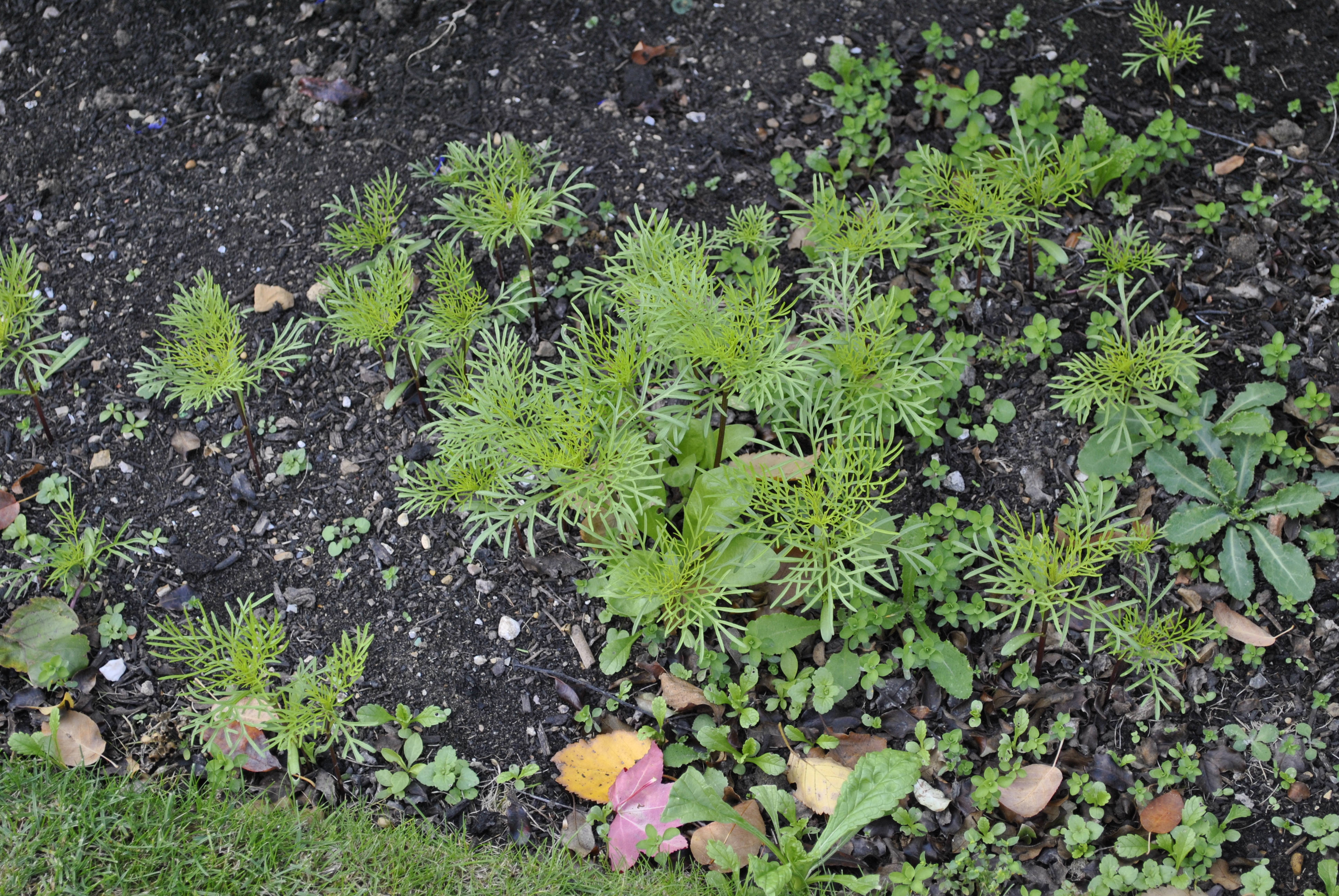
This is a bit of a dilemma. The Cosmos which was planted here, which fell over and was removed weeks ago, obviously shed a lot of seed behind my back and has produced dozens of babies. I doubt they will survive the winter but even if I were to dig them up, I have nowhere warm enough to put them. What to do? Leave them and watch them turn to mush and die? Pot them up and leave them in the greenhouse to turn to mush and die?

This was it before it was removed. Too pretty to lose forever. Watch this space!

Have a great weekend

David

Six on Saturday

Autumn has arrived in style and the Liquidamber styraciflua ‘Worplesdon’ is putting on her beautiful display. I always marvel at the way shorter days trigger dormancy and leaves stop making chlorophyll causing them to change colour and fall off the tree.

Helianthus ‘Lemon Queen’ has been rather shorter in stature this year, only 150cm tall, probably due to the dry summer we have had and the adjacent hedges and trees sucking up the available moisture. They don’t need much water but if dry, they don’t wilt like other plants, they just don’t seem to grow as tall.

The Alstroemeria ‘Indian Summer’ have been extraordinarily good this year and we have taken armfuls of flowers into the house and given bouquets to friends and family, but still they go on! Twisting and pulling rather than cutting does seem to stimulate more and more flowering shoots as the advice suggests. It’s a bit like pulling rhubarb!

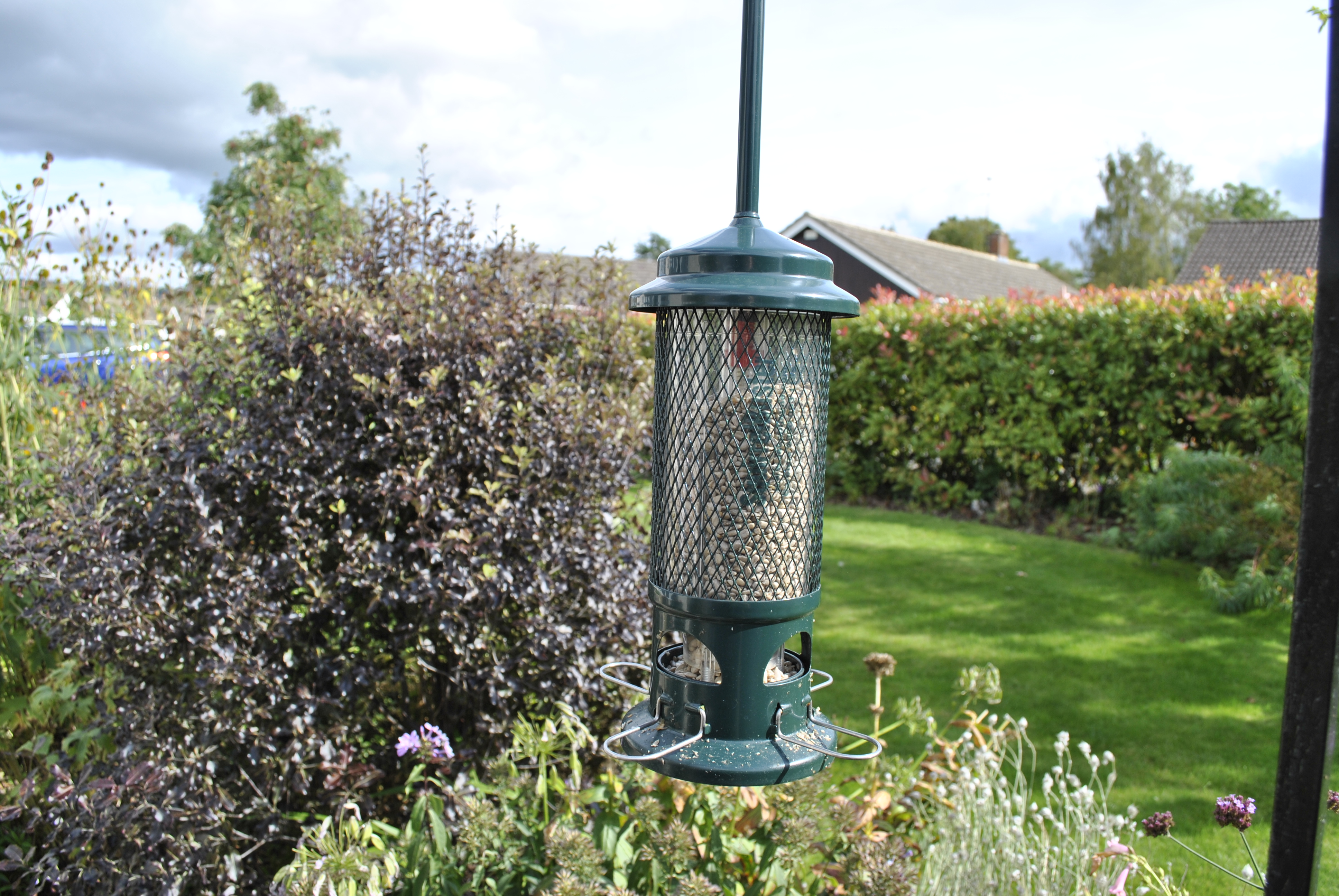
We have a squirrel problem. They are always on the bird feeders and are costing me a small fortune in sunflower hearts which, incidentally, have increased in cost by 50% since Brexit! However, the new ‘Squirrel Buster’ feeder really works and the squirrels have given up and gone somewhere else for their daily fill. I would highly recommend it, very well made, sturdy and weatherproof. £30 well invested!

The very last Phlox flowers nestled amongst the agapanthus foliage. It has been a wonderful year for garden phlox and they have given me a lot of pleasure, although I am gradually reducing them or banishing them to less front and facing positions. I love the flowers but hate the foliage and their weedy appearance. Too old fashioned and a tendency to get mildew unless constantly moist makes them a bit-part player nowadays.

In just three years this Sambucus nigra ‘Black Lace’ has gone from a self sown seedling in a 9cm pot to a 3m tall giant! What a performer. It must be its common hedge cousin genes which makes it so prolific. I stupidly planted it close to the driveway so it’s going to need hacking back in the early spring. Knowledgeable gardening friends tell me that ‘coppicing’ produces better foliage but less flowers so maybe a more selective approach is in order!

That’s my six. I look forward to seeing yours.

Have a great weekend

David