
It’s been a week of mixed weather but Thursday and Friday were glorious autumn days, warm sunshine, no rain and no wind. A lot of clearing up was done, plants were lifted, divided, re-potted and real gardening was finally achieved. I felt so much better, the garden looked much better and then it all went back to normal this morning! More rain……

Another year has been and gone and I still don’t know the identity of this plant! It is a toss-up between Carex morrowii ‘Silver Sceptre’ and Liriope spicata ‘Gyn-ryu’ or ‘Silver Dragon’. It is driving me mad not knowing, so I am appealing to those who know about these things to cast your opinion please. As you can see, I have just split the mother plant into 9 divisions for a plant sale next year but I don’t know what to write on the labels!

Another plant which was bursting out of it’s pot, but needing to be contained, is Persicaria microcephala ‘Red Dragon’ which is now neatly divided into 6 new plants for next year’s charity sale. It will come with a warning label not to let it loose, it is a real spreader!

A quick Sweet Pea update for those following progress. Six weeks since sowing on 7th October. Seedlings now all pinched out, separated into their own pots and producing side shoots as planned. I discovered a slug hiding under one of the pots so ferric phosphate pellets applied just in case!
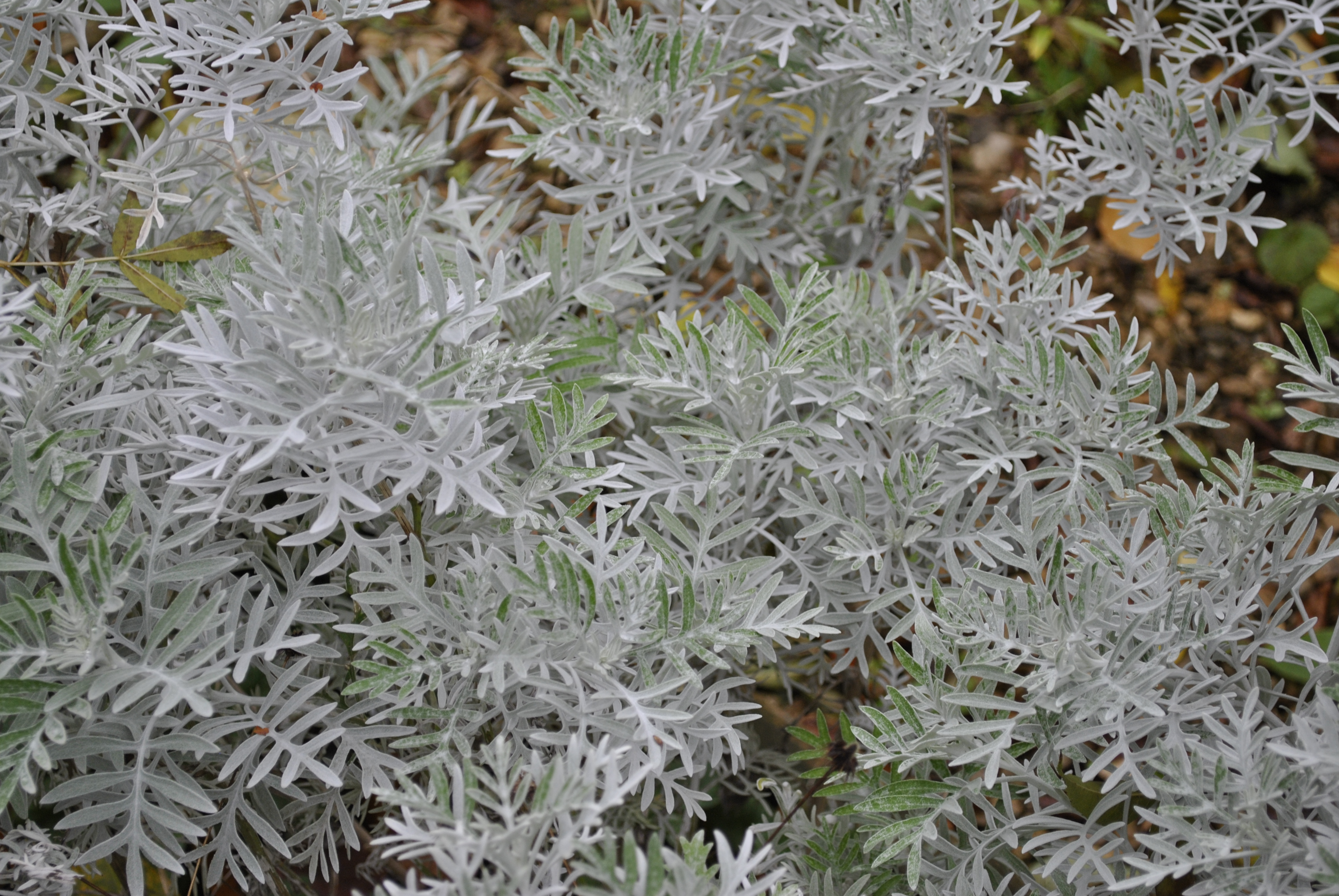
I find most people think this is Artemisia ‘Powis Castle’ but, in fact, it is Senecio viravira or Dusty Miller. In summer it is topped with beautiful clusters of pale lemon daisy flowers but these are insignificant compared to the year round silver grey foliage which always looks fresh, even in winter. Easy to grow and maintain, just a haircut in spring and away it goes for another year.

Despite the time of year and significant drop in temperature, Clematis ‘Madame Julia Correvon’ is still going strong and producing more flowers. Such an attractive and well behaved climber deserves a place in every garden.

Possibly the most popular shrubby Salvia, and for very good reason, is the ubiquitous ‘Hot Lips’, which is still flowering her face off in my shrub border. Sometimes red, sometimes white and sometimes red & white, the flowers respond to temperature and change colour accordingly. Pruning them seems to be the most asked question I get and I am pretty brutal in spring, cutting them back hard to new growth lower down. Probably more than 50% of the top growth goes. I also ‘layer’ a lower stem by pegging it down to the soil and ‘hey presto’, it roots! The shrubby salvias don’t last forever, 10 years if you are lucky, so a couple of younger plants waiting in the wings to be separated and grown on is a good insurance policy.

Finally, the first Narcissus poking their heads up!





 Davids Garden Diary