

It’s June, which means roses, and they are very good this year…..so far! I caveat any comments about roses because disaster could strike at any moment. Aphids, rose sawfly, blackspot, mildew etc., etc. However, this year I was lucky to have an army of Blue Tits which cleared all the aphids and caterpillars, and so far little or no blackspot. This is Rosa ‘Bonica’ grown as a standard and pruned to within an inch of its life in January, showing just how well they respond by producing an enormous number of flowers on shortish stems.

Hydrangea arborescens ‘Annabelle’ is a bit hit & miss in my garden. Some years it’s great, some years not so great. It is very dependent on the extent of spring rainfall. However, I learned something interesting last year from a professional gardener at a country house who said she was unhappy with the way the huge floppy flowerheads drooped, particularly after rain. So, she experimented with the pruning and discovered that if you don’t prune them so hard, the flowerheads are smaller but they stand upright on stronger stems. So, that’s what I did and it works! The flowers will still be impressive and should remain upright.
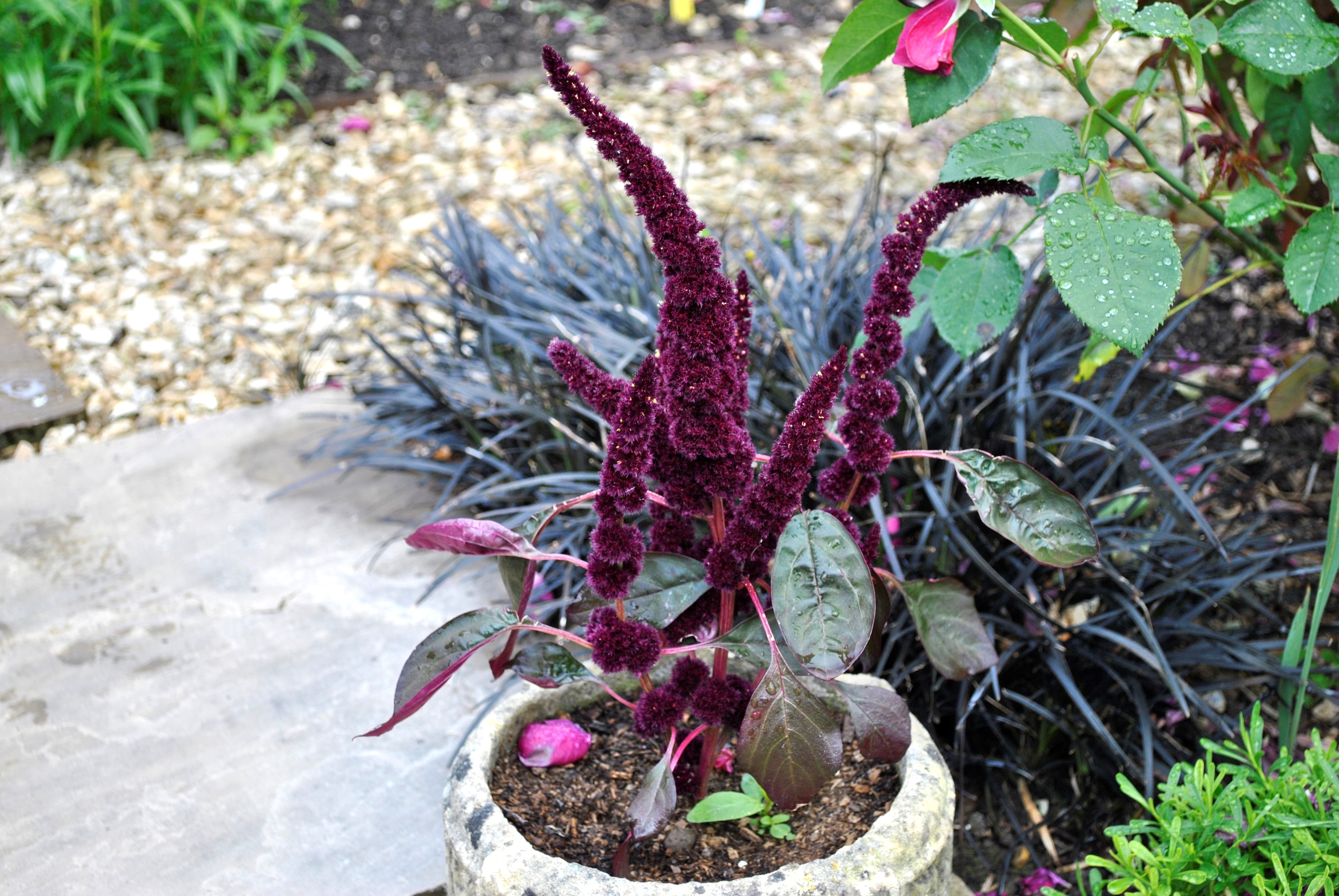
I am trialling this Amaranthus paniculatus ‘Foxtail’ for Which? Gardening magazine this year as part of their seed trials. They would like to know how well it grows and how striking the foliage looks in a pot. I managed to germinate 12 plants which are now all planted out in containers of various types and size. They are a bit weird and remind me of the stalks of millet seed we used to poke through the budgerigar’s cage! However, they are covered in ‘flowers’ and doing well. Not sure if I would grow them again though!
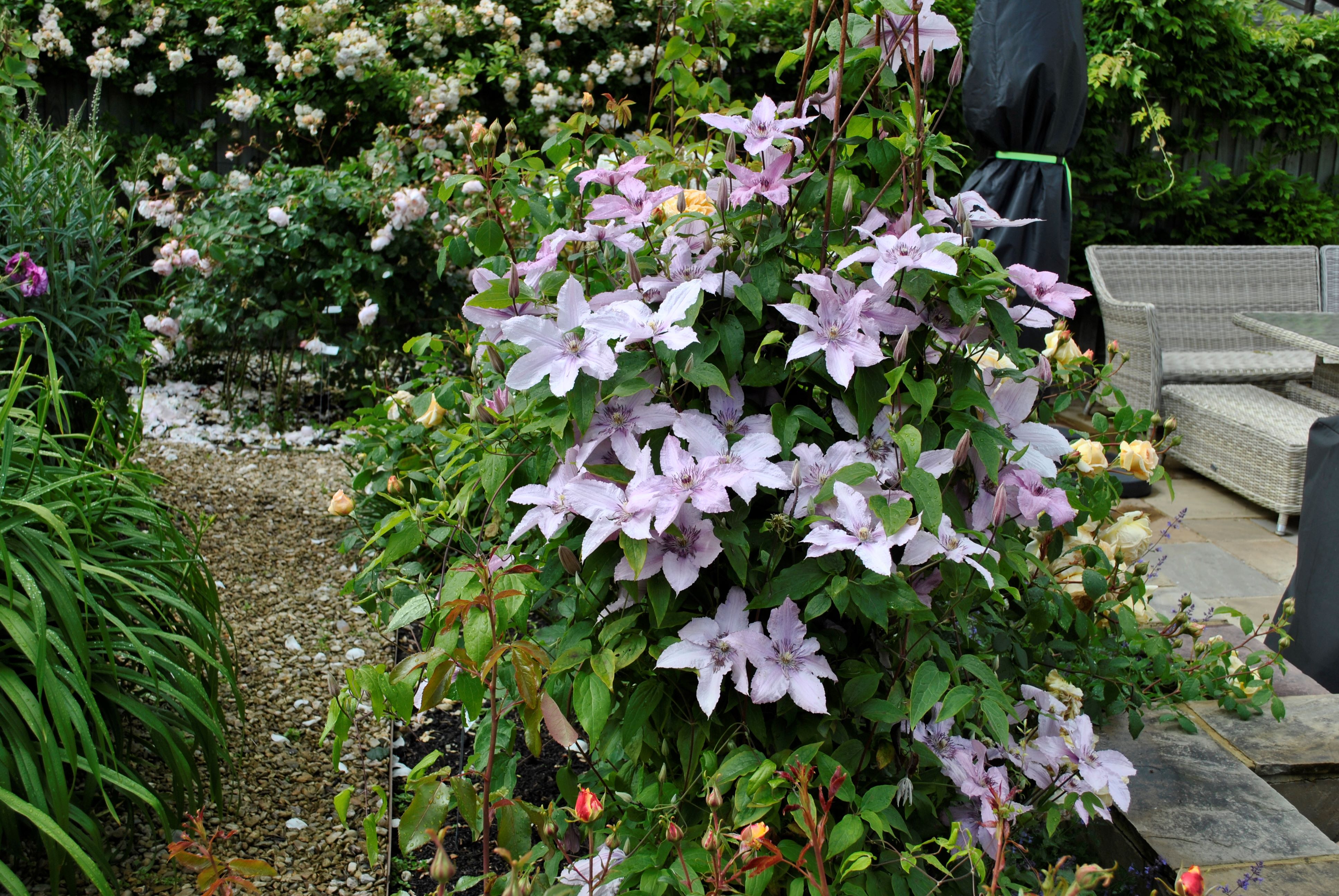
I grow a lot of clematis but ‘Hagley Hybrid’ is the most reliable and probably the most striking. Not the most evocative name in the world, almost like they couldn’t be bothered to choose a real name, but it has stood the test of time and flowers just when the roses are at their best too. The pale pinky mauve colour is a bit ‘washed out’ and could do with a new 2nd cousin with stronger hues, but that might reduce its vigour and reliability, so I will stick with the original.
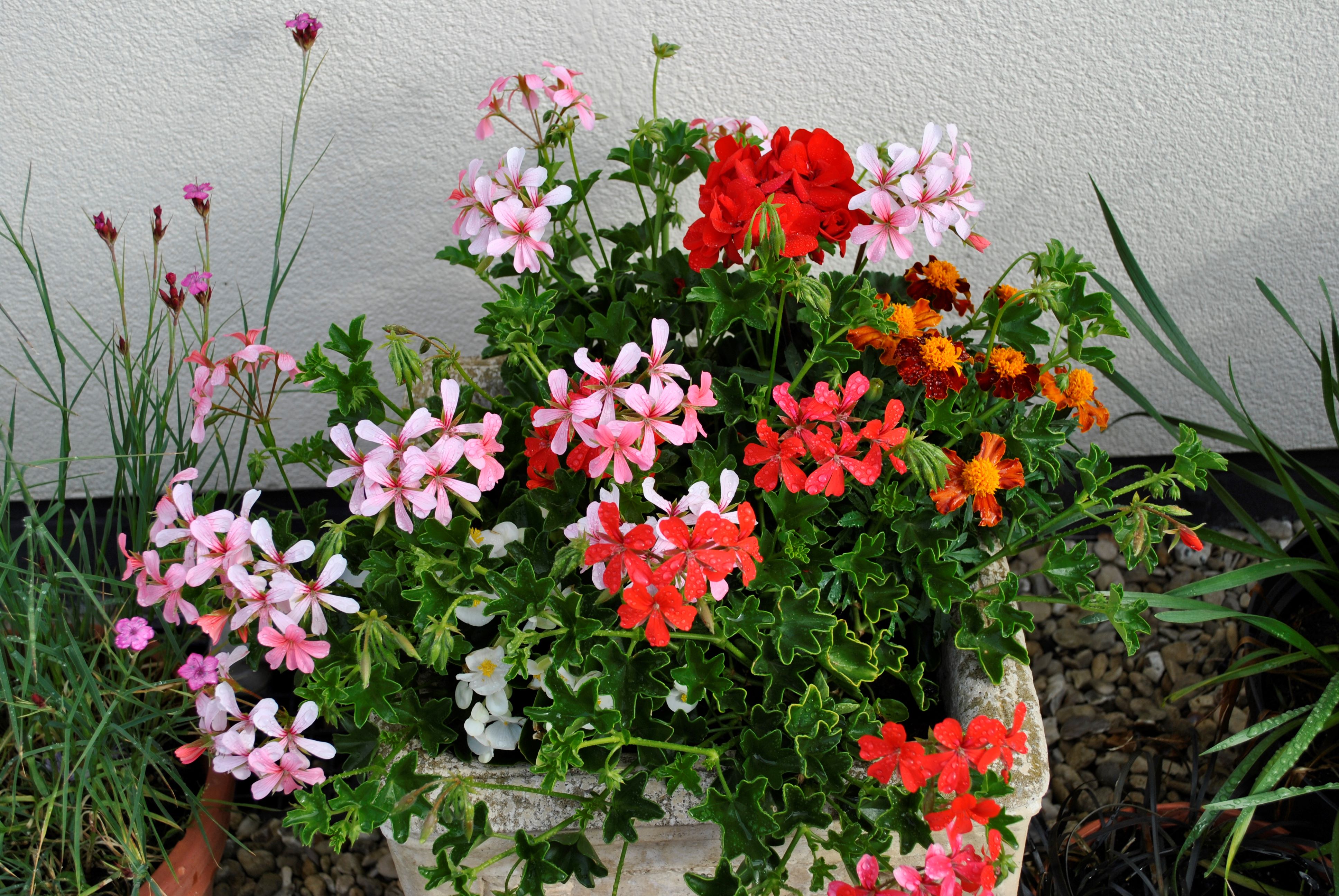
When I clear the big pots of their spring bulbs in mid-May, I refresh the top 6″ of compost, add some Osmocote controlled release fertiliser pellets, and go off to Lidl to buy a few trays of Pelargoniums. You literally cannot go wrong with 6 plants for £4.99 and the results are always good. In the past I have tried growing them myself from tiny plugs but, to be honest, Lidl plants are better and cheaper!

There was a slight shower last night which the roses appreciated. I admire ‘Darcey Bussell’, the rose and person; so pretty and graceful, almost dancing in the rain.

The low growing catmint, Nepeta faassenii ‘Kit Kat’ and ‘Junior Walker’ that border the low wall in the rose garden are buzzing with bees all day and set off the roses well. We do get a few cats in the garden, but mostly at night judging from the toilets I have to clear up each day! So, I have never seen a cat doing what cats are alleged to do and flattening the catmint in the process. Thank goodness!
Have a great weekend
David




 Davids Garden Diary