Six on Saturday

Storm Lilian has not been kind to the garden this week and many of my tall plants have been bent beyond their capacity for bending, resulting in snapping, which is never good. However, things like the Wisteria, which is firmly attached to the trellis fence, barely noticed and has decided to send out a fresh crop of flowers snuggled within the new foliage.

The latest Tradescantia to be added to the Collection was shortlisted for Chelsea Plant of the Year in 2023. It has the rather unusual name of ‘J S Brainstorm’, having been bred by Jan Spruyt in Belgium and claiming to be the first hardy Tradescantia to flower continuously for six months. So far, it has certainly done that for me this year, is still in full flower and showing no signs of slowing down yet. It looks remarkably similar to ‘Concord Grape’ which I am sure must be a parent. However, it is said to be ‘bred’ rather than ‘selected’ like so many of the Andersoniana hybrids have been, though how the exceptionally long flowering period came about is unclear.

Our beautiful Photinia fraseri ‘Red Robin’ hedge came under scrutiny from the Highways officer last week who kindly pointed out that their contractors would be resurfacing the footpaths in September and would I kindly cut the foliage back to the line of the footpath. I readily admit that the hedge is 12-18″ over the footpath but this still leaves enough for two people to walk alongside each other in comfort. However, as he pointed out, if I don’t trim it back, they will! This request/demand gives me a dilemma. If I trim it back 18″ there will be no foliage on the footpath side as Photinia leaves only grow on the outer extremities of the stems. Research tells me it would eventually grow back but would look ugly in the meantime. What to do?!

Once again this year, the Salvia uliginosa is a favourite with bees, its tall willowy stems topped with pale blue labiate flowers are a magnet. The bumbles are too large for the tiny flowers so they poke their tongue through the outside of the flower to drink the nectar. They will put up with the constant swaying, even in quite windy conditions, so the sugary sweet treat must be worth it.

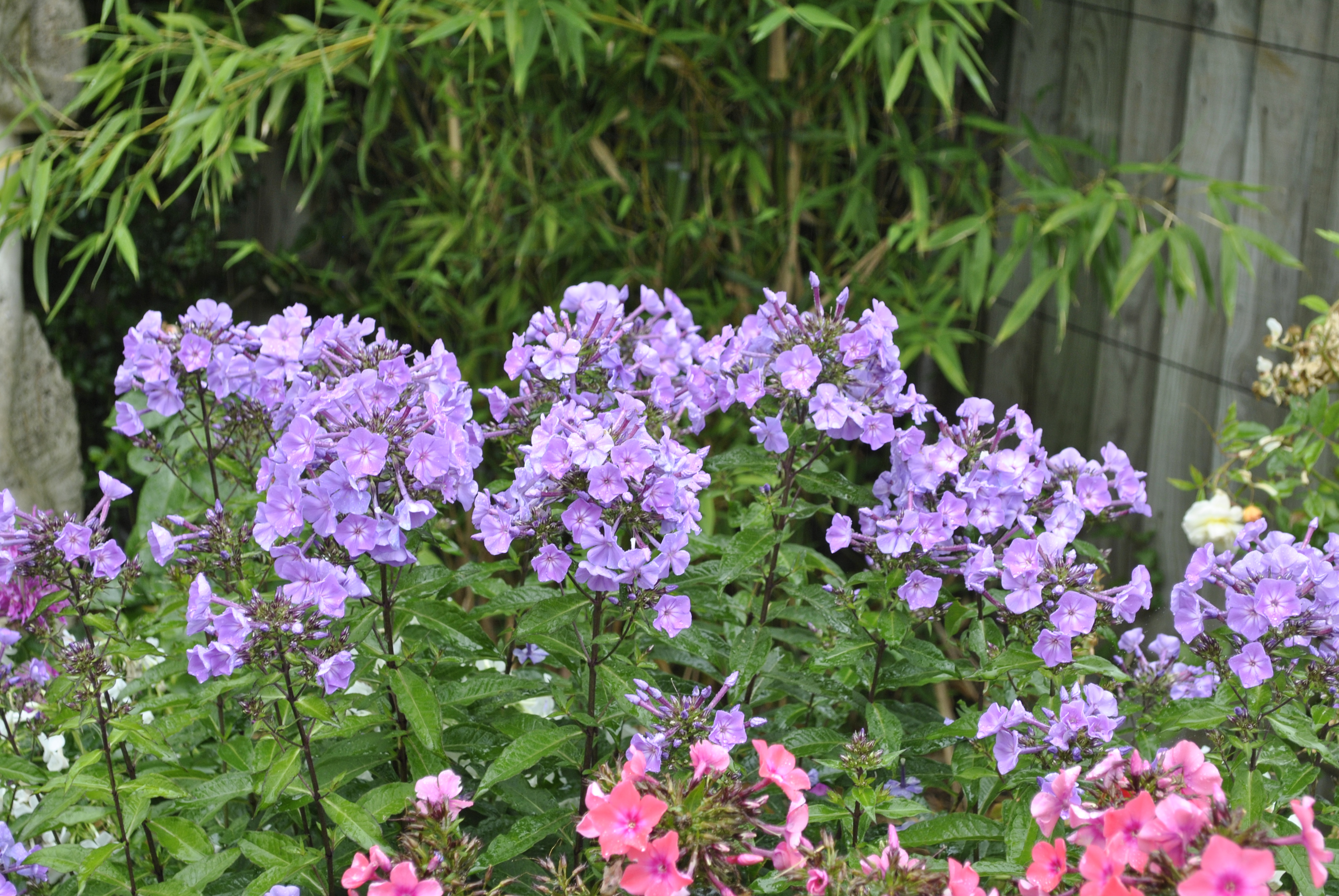
I believe this Phlox paniculata to be ‘Blue Paradise’ although I didn’t buy it. It has been here since we bought the bungalow 15 years ago and I have divided and replanted it several times, as well as giving loads away to friends. It is certainly a striking colour and doesn’t get mildew like others I have. Quite short growing at 3′, flowers for a long time and has a faint sweet scent of Granny’s dressing table.

I keep being asked about Verbena ‘Bampton’ which grows like a weed in my garden, seeding into every crack and crevice and enjoying the dry clay soil. However, in the front bed where the soil has been much improved and mulch is liberally applied, it positively excels. This single plant is 3′ tall and wide and covered in wiry flower stems which makes it an outstanding border plant. It is perennial but seems to grow better from new seedlings each year which I either lift and move, give away or compost. You can have too much of a good thing!

Have a great Bank Holiday weekend.

David

Six on Saturday

It rained all day on Friday and is still raining this morning here in the Cotswolds so these pictures were taken earlier in the week when the weather was still mild and sunny. As I look out of the window today, all I see is the devastating effects of wind and rain on anything above a foot tall. My Sweet Pea obelisk is lying horizontal on the ground and the tall, swaying Leucanthemums are now flat on their pretty white faces. And to top it off, we are forecast 40mph winds today!

My Dahlias are all either short varieties or young plants this year, and anyway they love the rain, the more the merrier for them. This one isn’t a named cultivar yet, it is a hybrid from days gone by but I keep the tuber going in the vain hope that it might be the next ‘Big Thing’. I have called it ‘Radiant Heat’ which I thought was quite apt. Hoping that Thompson & Morgan might be reading this and will make me an offer I can’t refuse!

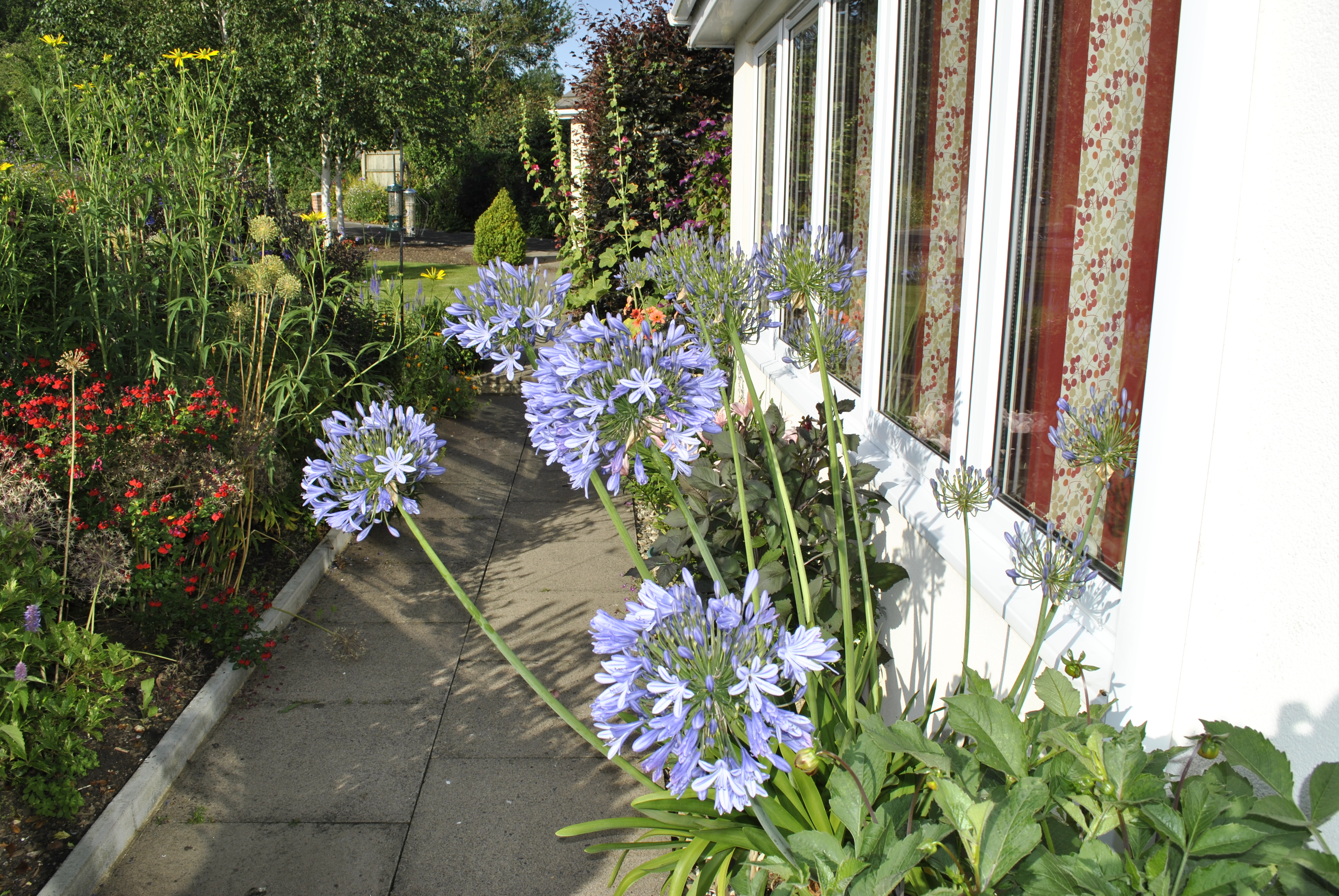
The Agapanthus are flowering a month later this year, probably due to the difficult winter they had. I have met a lot of people who have lost them completely, fleshy roots turned to mush by the harsh conditions in December. I always overwinter my evergreen ones in their pots in the greenhouse and keep them bone dry from October onwards until I start them off again in March. The herbaceous ones, also now in big terracotta pots, are turned on their sides and put in a sheltered spot behind the shed to keep the worst of the rain out.

Once again this year, the Diascia personata has been the subject of much discussion on walks around the garden with visitors and friends. I think 99/100 people think of Diascia as miniature plants in a variety of different colours, a bit like Nemesia. But this species of Diascia grows to waist height and is always lipstick pink. I find it doesn’t overwinter well in the ground so I take cuttings in June and July which grow into stocky little plants by September and survive in the cold greenhouse until spring. They are so floriferous, they almost flower themselves to death. By the end of the year, having flowered for nearly 10 months, they are exhausted!

This is one of several summer flowering ornamental onions I now have in the garden. I like them because they are short and flower reliably every year, unlike Spring flowering versions which I find are quite variable and often don’t appear the following year. The one pictured is Allium angulosum, or Mouse Garlic as it is often called. I now also have Allium ‘Millennium’ and Allium cernuum as well as Allium ampeloprasum, better known as Elephant Garlic. The flowers are beautiful purple lavender globes and highly attractive to bees and other pollinators.

As I have mentioned many times over the years, I am not a big fan of Garden Phlox but they are such reliable plants, given enough moisture, that I am reluctant to get rid of them. I keep splitting them and they seem to do even better! I believe this one is called ‘Blue Paradise’ but I couldn’t swear to it. The previous owner planted a few different ones in the 60’s and they are still growing strong which is a testament to their longevity. They can suffer from mildew if they get too dry at the roots which is why they probably went out of favour.

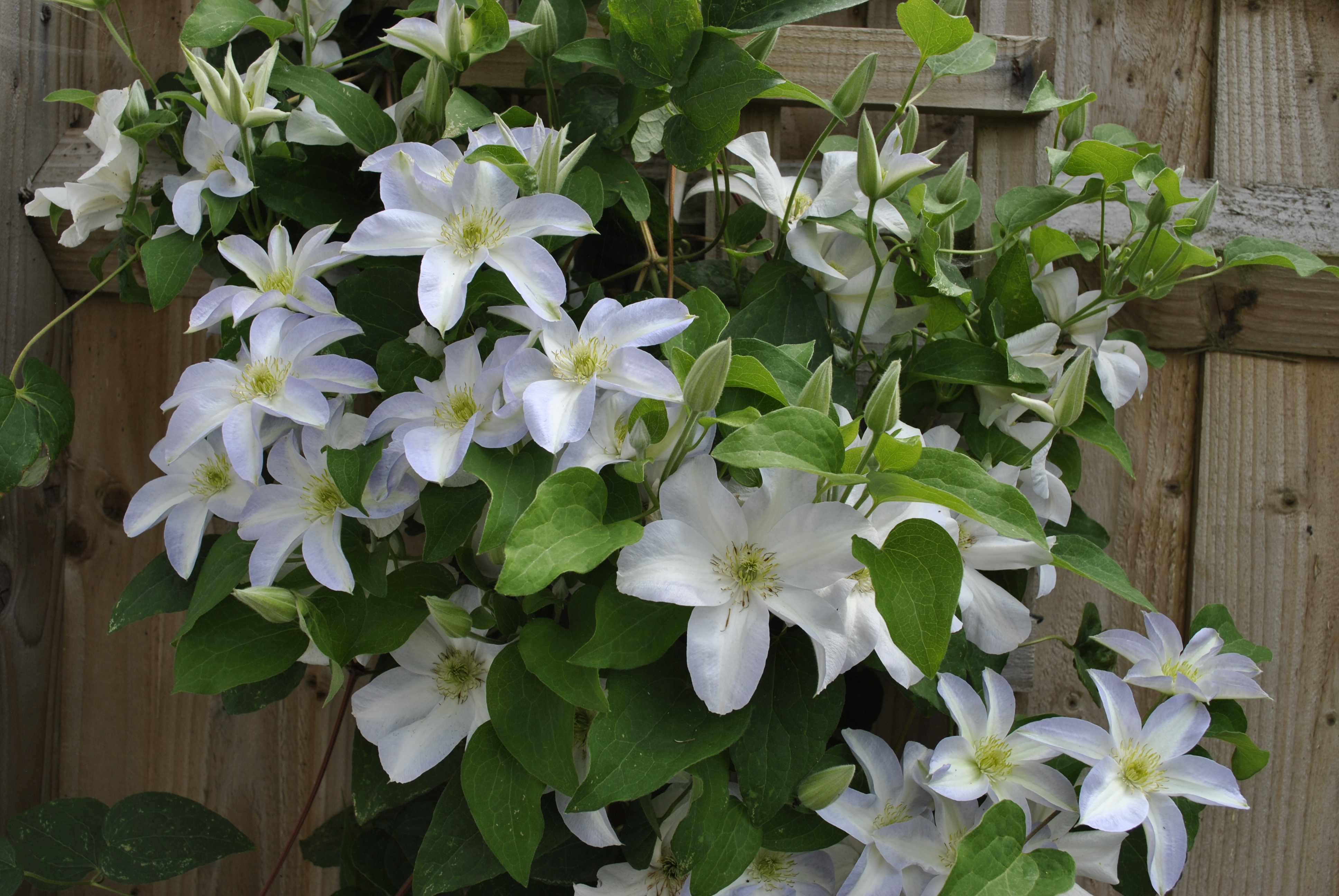
No roses worth showing this week so I decided to feature the delightfully named Clematis ‘Yukikomachi’ which is a short viticella variety ideal for a trellis panel next to a gate which is where mine is and gives me pleasure every time I pass through. I just hope it is still there tomorrow!

Have a great weekend

David