
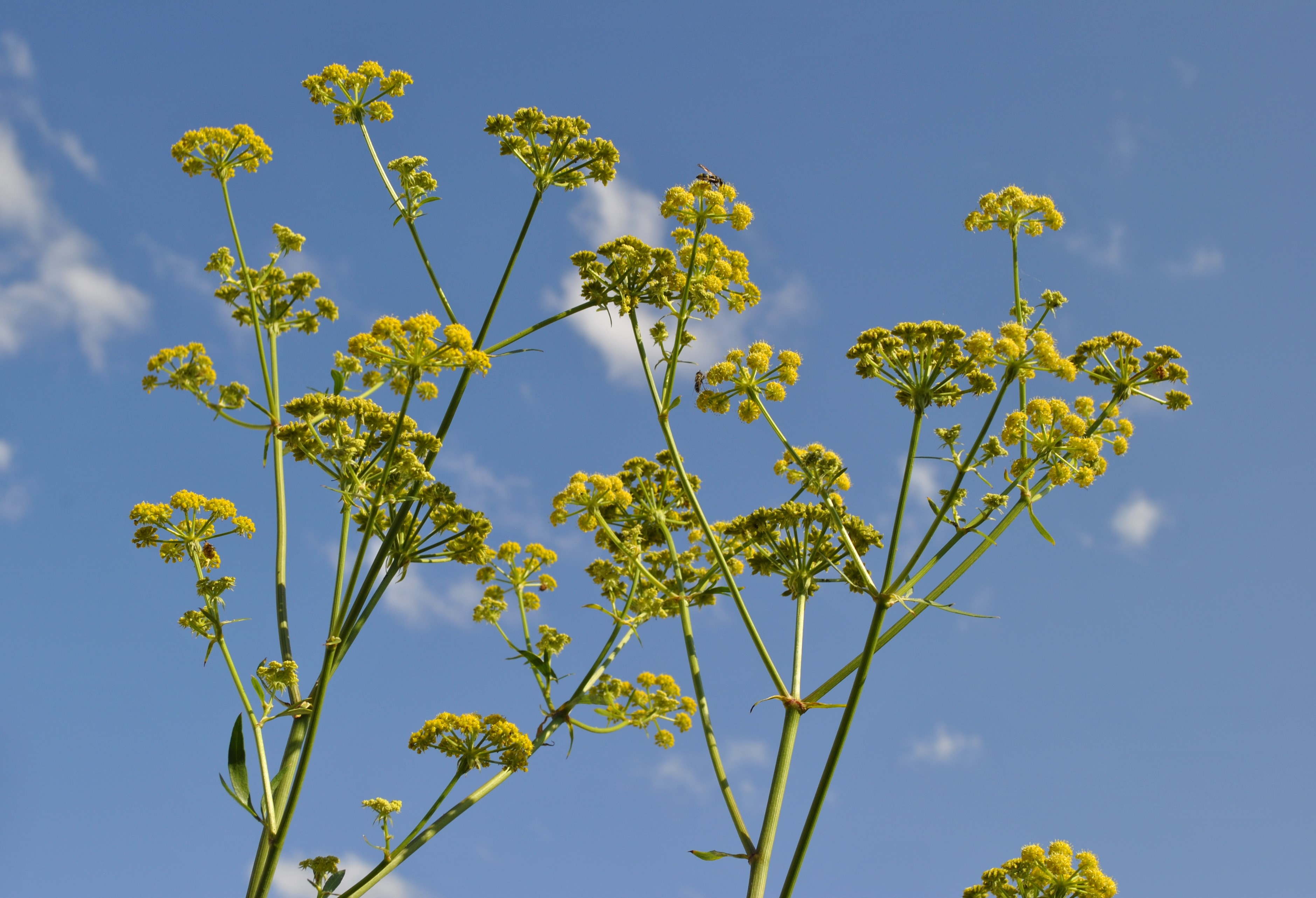
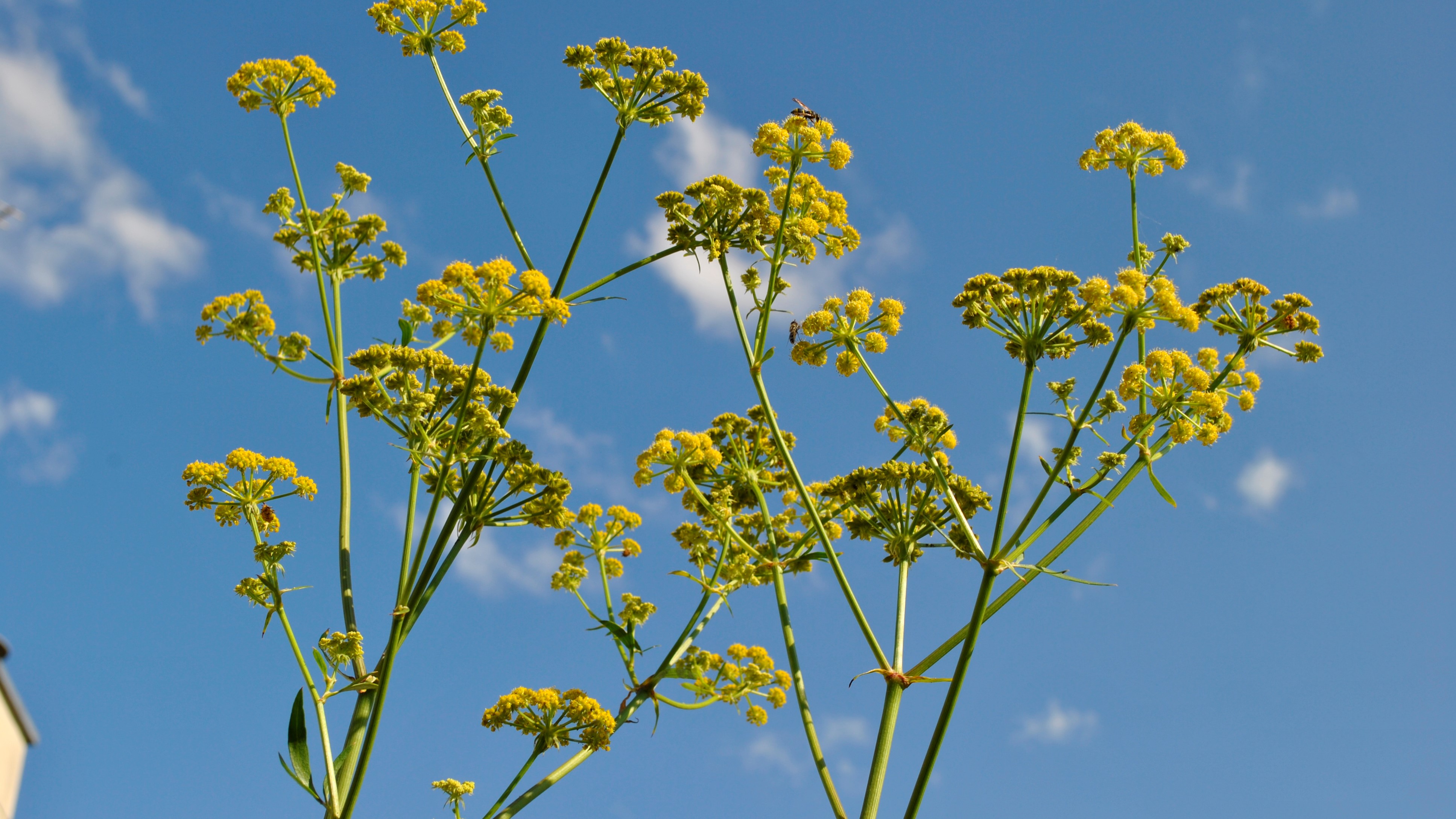
I like to grow a few very tall, dramatic plants at the back of borders like Rudbeckia laciniata, Thalictrum ‘Anne’ and this Lovage, Levisticum officinale, the leaves of which we occasionally use to flavour soups. I am told the seeds are also used as a spice in southern European cuisine. It is an herbaceous perennial, disappearing completely in winter, but sending up 2.5m high thick stems topped by thousands of tiny yellow florets on umbellifer flowers which are adored by bees and other pollinators.
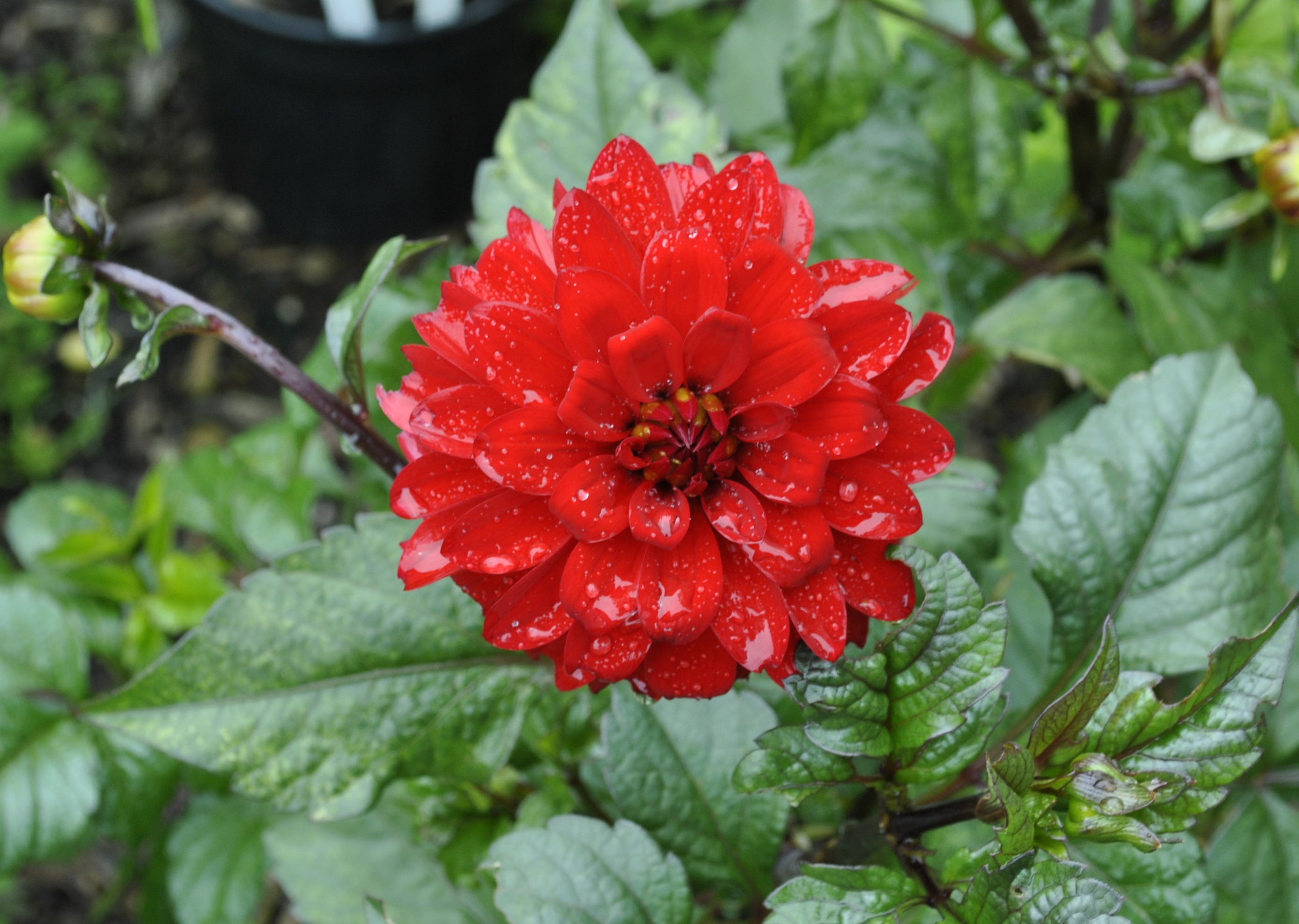
The rain and cooler temperatures of the last couple of weeks has been enjoyed by the dahlias and this one, ‘Bloodstone’ is a recent acquisition from Plant Heritage as it has become endangered in cultivation and needs a Plant Guardian to maintain, propagate and distribute it. The deep, almost luminous red of this heirloom waterlily type from 1939 flowers profusely against dark green foliage which makes it difficult to understand why it went out of favour. Probably just too many new varieties becoming available, and some of the older ones had to make way for the bigger, blousier, dinnerplate flowered ones.
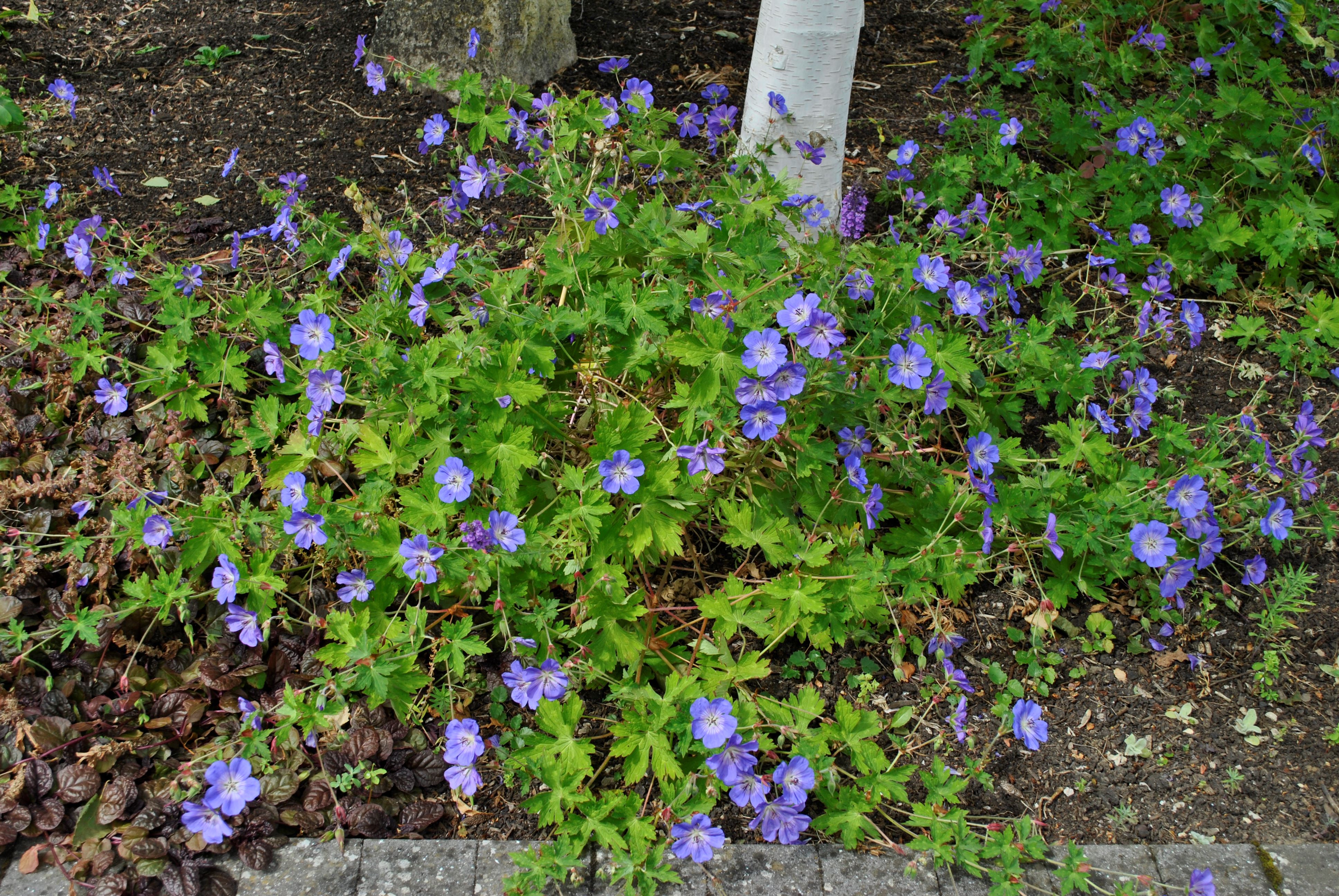
The six Geranium ‘Rozanne’ planted beneath the Silver Birches are having a much better year and spreading themselves as intended, almost touching hands in a wide circle. It was possibly the long, wet spring and early summer which kept the soil damp enough for their new shoots to benefit as they were emerging from their winter slumber. They grow very quickly so I only had a few days to clear away the spent leaves of narcissus and anemone blanda which previously covered the ground.

I went to an illustrated talk on Clematis last year and the speaker suggested that ‘Forever Friends’ was the best white so, naturally, it was ordered immediately! I am not sure it deserves the accolade of ‘best’; I think that ‘Destiny’ and ‘Sylvia Denny’ are up there too, but who am I to argue. I like the lemon yellow filaments against the stark white petals though.
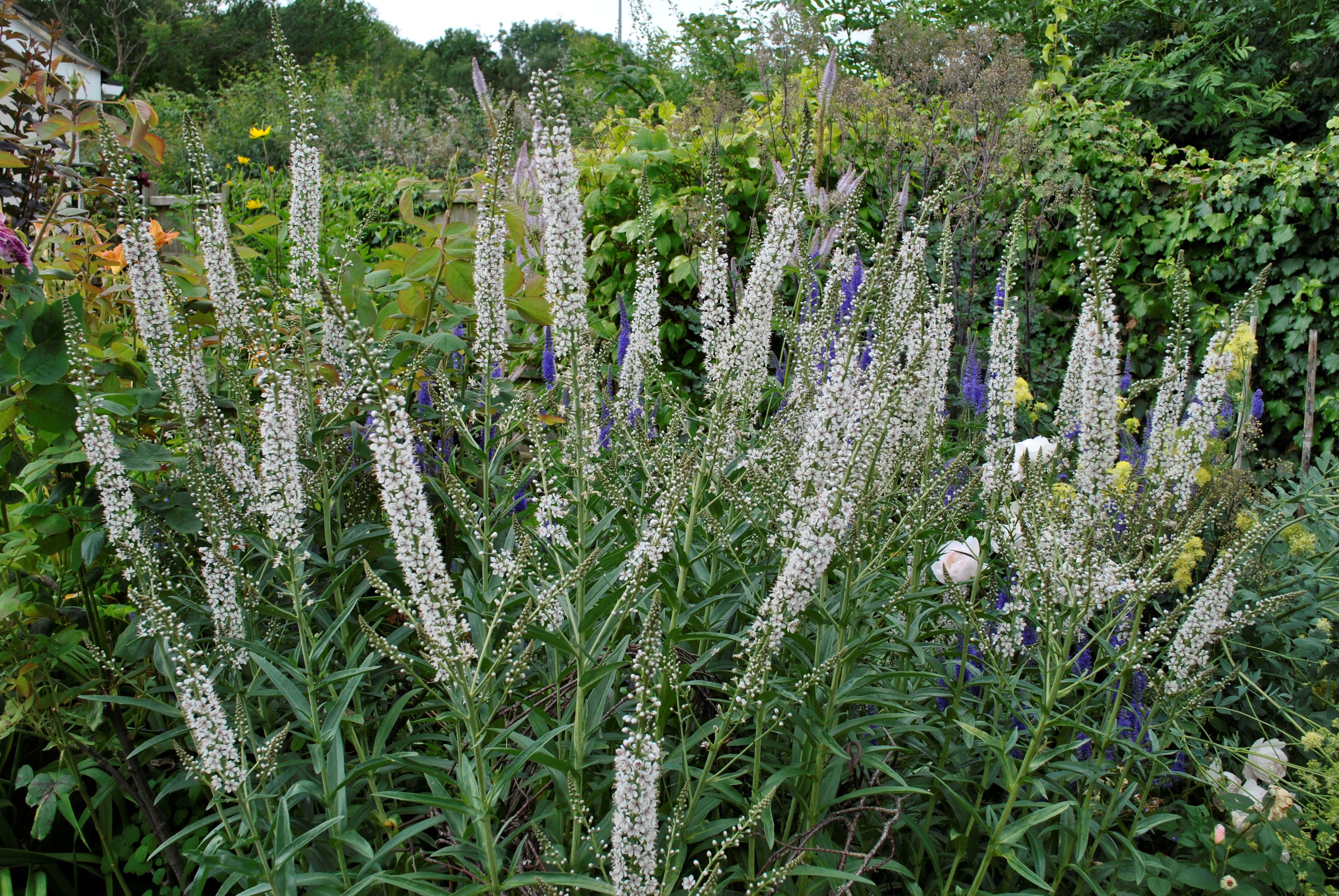
Nobody seems to know this perennial and yet it is a good plant that deserves to be in more gardens. Usually, when I tell people it is a Lysimachia, there is a sharp intake of breath and a polite ‘no thank you’. But this isn’t anything like the hideous, badly behaved yellow flowered ones. It is Lysimachia ephemerum which has glaucus leaves and pure white flower spikes with hundreds of tiny starry flowers which take several weeks to open and then explode into life making quite a show. Totally hardy, needs a bit of subtle support (I use a home-made hazel or birch girdle) and is a magnet for bees. Easily grown from seed and often throws seedlings which make good presents for plantaholic friends!

In addition to new foliage and long, whippy stems, the Wisteria sinensis ‘Prolific’ is producing numerous new flower racemes in a second flush. This is not unusual, it often happens for reasons I cannot explain other than the the obvious need for pollination and reproduction. This particular cultivar is an early flowerer and may have learned that late frosts often take the first flush of flowers, so they keep something in reserve for a second go!
Have a great weekend
David




 Davids Garden Diary