Six on Saturday

It’s been a week of mixed weather but Thursday and Friday were glorious autumn days, warm sunshine, no rain and no wind. A lot of clearing up was done, plants were lifted, divided, re-potted and real gardening was finally achieved. I felt so much better, the garden looked much better and then it all went back to normal this morning! More rain……

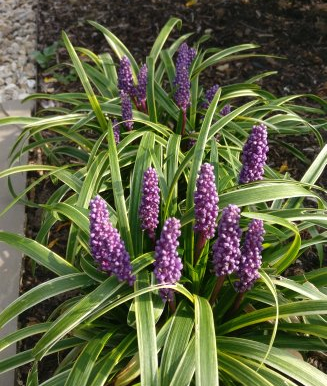
Another year has been and gone and I still don’t know the identity of this plant! It is a toss-up between Carex morrowii ‘Silver Sceptre’ and Liriope spicata ‘Gyn-ryu’ or ‘Silver Dragon’. It is driving me mad not knowing, so I am appealing to those who know about these things to cast your opinion please. As you can see, I have just split the mother plant into 9 divisions for a plant sale next year but I don’t know what to write on the labels!

Another plant which was bursting out of it’s pot, but needing to be contained, is Persicaria microcephala ‘Red Dragon’ which is now neatly divided into 6 new plants for next year’s charity sale. It will come with a warning label not to let it loose, it is a real spreader!

A quick Sweet Pea update for those following progress. Six weeks since sowing on 7th October. Seedlings now all pinched out, separated into their own pots and producing side shoots as planned. I discovered a slug hiding under one of the pots so ferric phosphate pellets applied just in case!
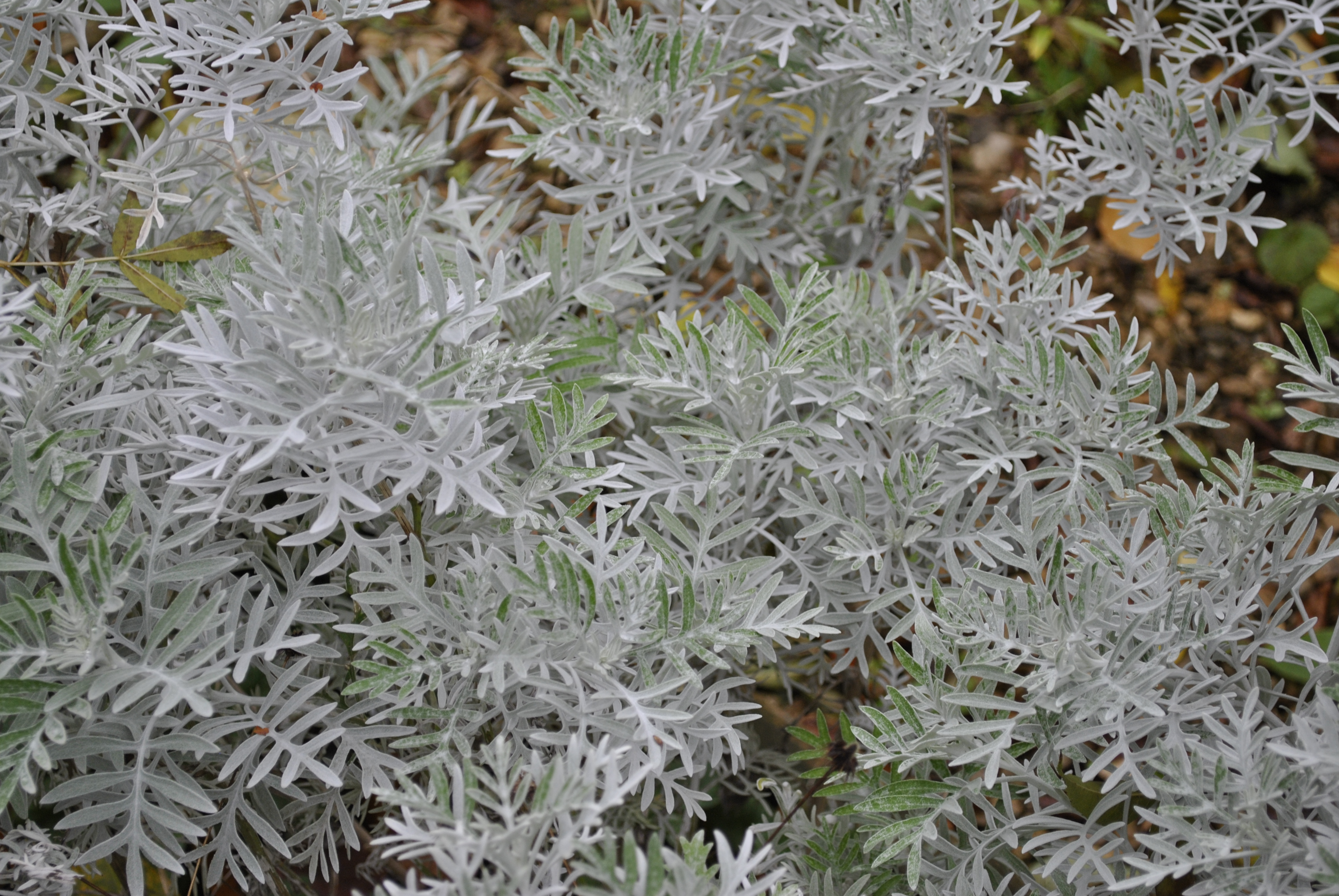
I find most people think this is Artemisia ‘Powis Castle’ but, in fact, it is Senecio viravira or Dusty Miller. In summer it is topped with beautiful clusters of pale lemon daisy flowers but these are insignificant compared to the year round silver grey foliage which always looks fresh, even in winter. Easy to grow and maintain, just a haircut in spring and away it goes for another year.

Despite the time of year and significant drop in temperature, Clematis ‘Madame Julia Correvon’ is still going strong and producing more flowers. Such an attractive and well behaved climber deserves a place in every garden.

Possibly the most popular shrubby Salvia, and for very good reason, is the ubiquitous ‘Hot Lips’, which is still flowering her face off in my shrub border. Sometimes red, sometimes white and sometimes red & white, the flowers respond to temperature and change colour accordingly. Pruning them seems to be the most asked question I get and I am pretty brutal in spring, cutting them back hard to new growth lower down. Probably more than 50% of the top growth goes. I also ‘layer’ a lower stem by pegging it down to the soil and ‘hey presto’, it roots! The shrubby salvias don’t last forever, 10 years if you are lucky, so a couple of younger plants waiting in the wings to be separated and grown on is a good insurance policy.

Finally, the first Narcissus poking their heads up!
Six on Saturday

During the last very, very hot two weeks it has been a struggle to keep everything alive, particularly plants in pots and those planted out just a few months ago in the new rose garden. The (five) water butts ran out in quick succession and I had to resort to the hosepipe which I try not to do but needs must! Of course, as soon as I got the hosepipe out, it rained; big rain, lots of rain. My (five) water butts are now full again!

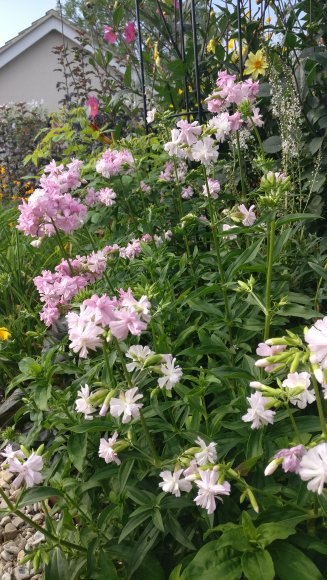
I am a great fan of Soapwort with its pretty white and pink flowers; so dainty yet tough as old boots. As perennials go, this one should be in every garden but it seems to have lost favour like a lot of ‘common’ plants. The nursery trade has a huge influence on how gardens are planted unless, like me and many others, you hunt down the seeds and grow them yourself.

The saponin properties found in soapwort plant are responsible for creating the bubbles that produce soap. You can easily make your own liquid soap simply by taking about twelve leafy stems and adding them to a pint of water. This is usually boiled for about 30 minutes and then cooled and strained. Alternatively, you can start out with this small, easy recipe using only a cup of crushed, loosely packed soapwort leaves and 3 cups of boiling water. Simmer for about 15 to 20 minutes on low heat. Allow to cool and then strain. Note: The soap only keeps for a short period (about a week) so use it right away. Use caution as this can cause skin irritation in some people.

These two tough little pots of Liliope muscari were given to me by my friend Nan a few years ago and only found their way into the ground in May, since when they have been much happier and flowered better than they ever did in pots. They like the shade of the Physocarpus and the moist clay beneath.

This is quite simply a stunning rose despite its rather lax habit, with gorgeous apricot flowers on almost thornless stems and a fruity tea scent. Destined to be one of my favourites I think

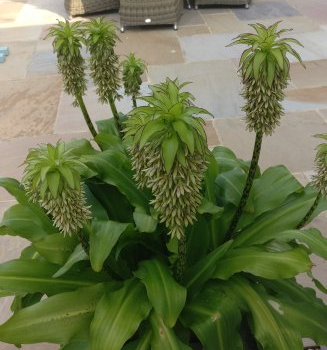
My little potted Eucomis bicolour has excelled herself this year with eleven flower spikes which I think is down to the ‘Carol Klein method’ of repotting with fresh gritty compost every February before growth gets underway. It has surprisingly few roots for such a leafy plant, but stores it’s food in its huge bulb.

Finally, I don’t often recommend gardening websites, particularly the large nurseries with big marketing budgets or here-today-gone-tomorrow gadgets, but this one seems to be different and a good idea for hard pressed gardeners. The Secret Gardening Club https://www.secretgardeningclub.co.uk/ is a venture by Yorkshire Lavender who take over excess stock from nurseries all over the country and sell it to club members at a fraction of the price, often starting at just £1.99.
Every week they let all their club members know what great plants offers they have available by email. I have joined the club, bought some plants, received them and have been impressed with the quality, the packaging and the customer service. I speak as I find and so far this seems to be a genuinely good idea.

So, there are my six for this Saturday.

Have a great weekend!

David