Six on Saturday

The warm sunshine of the last few days has done wonders for the garden and brought out the heat lovers like the Tuscan jasmine, Trachelospermum jasminoides, which is now covered in starry flowers wafting their sweet scent over the patio.

Naturally, the roses have also loved the heat, and ‘Roald Dahl’ is one of my favourites. It reminds me of my Granny’s powder puff on her dressing table, but I could be making that up. It was a very long time ago! Roald is one of those David Austin types with clusters of huge flower heads which need supporting or they end up on the floor!

My National Collection of hardy Tradescantias has been recognised with a new plaque which now sits proudly at my entrance gate, surrounded by Clematis ‘Etoile Violette’. The hope is that it may prompt a few questions about why Plant Heritage exists and the work it does to preserve and maintain threatened species and cultivars. Mine is just one of around 600 National Collections around the UK in gardens, stately homes, botanic gardens and arboretums.

My little forest of self-sown Delphinium requienii is thriving in the front garden, despite being far too close together. This compromises their height, which is two feet shorter than usual, but has the added benefit is more flowers for the bees and other pollinators. This biennial form of Larkspur is unique, in that it does not get attacked by slugs and snails due to its glossy, almost leathery leaves which are apparently inedible to our slimy friends. The seedlings sit in place all winter without any damage and rise perfectly intact in the spring.

My favourite clematis at the moment is the texensis variety ‘Princess Diana’ which is absolutely covered in small, fluted dark pink flowers. Elegant and beautiful like Diana herself. I am unashamedly a Royalist and hope to acquire the equally beautiful ‘Princess Kate’ very soon.

Hardy Fuchsia ‘Whiteknights Pearl’ which was moved earlier this year to a more suitable position, has emerged unscathed and is flowering again like nothing happened. A little shorter than usual perhaps, but that is understandable having lost a lot of established roots. She will recover and prosper in her new, improved position and delight us with her dancing ballerina flowers for many years to come.

Have a great weekend

David

Six on Saturday

Another week, another storm. This time it was Ciaran’s turn to rip through the garden on Thursday, drenching the already saturated soil and knocking the patio furniture about. Fortunately, once again, no permanent damage was done, just a few pots to make upright and one or two leggy plants to prop up with my homemade rusty steel girdles. Not that the storm bothered my tall hardy Fuchsia ‘Whiteknights Pearl’ one little bit. Standing proudly erect and still flowering its pretty little head off.

I know I mentioned this last week and received a few comments, but I just wanted to show how quickly the autumn sown Sweet Peas grow. These are now ready for the growing tips to be pinched out to encourage side shoots to grow. In another couple of weeks I will select the best ones and pot them up separately. They don’t blink at having their roots disturbed at this stage.

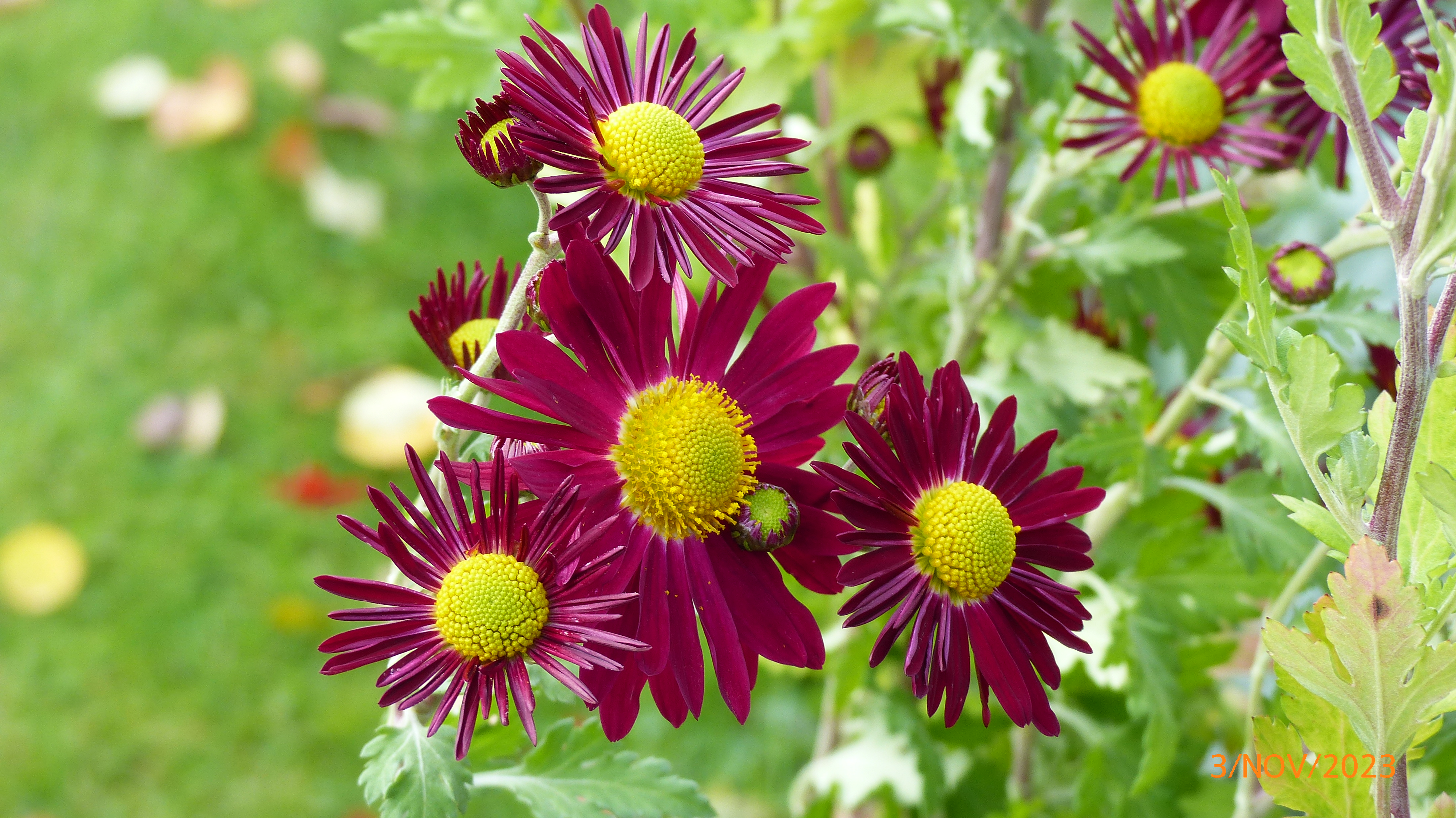
As well as ‘Bretforton Road’ featured last week, my other favourite hardy Chrysanthemum at this time of year is ‘Royal Command’. This one has been with me for many years and is a real survivor. Tough and resilient, I just love its dark red quilled petals and bright yellow centre on tall stems. Not sold by many nurseries these days as there just so many more popular ones on offer, but sometimes the old ones are the best!

This diminutive Pieris ‘Little Heath’ was bought as a 9cm pot for my winter hanging basket last November and has grown into a handsome little shrub. About to flower too! Currently in a clay pot where it has been happy all summer, I think it is time to find a place in the garden where it can get its feet down and mature alongside its bigger cousins.

And so to this week’s ‘What am I?’ quiz round. If you can identify this without resorting to a plant app or other external source you are truly a very clever plant person indeed. It took me quite a while to realise what it was, and then only by accident. Give up? It is Guizotia abyssinica, more commonly called Niger or Nyjer, the source of the tiny black seeds adored by Goldfinches. It took quite a while to realise that these unusual plants which were popping up all around the Nyjer seed feeder were, in fact, Nyjer plants! I kept pulling them up thinking they were a weed which, as I didn’t plant them, they were. But one escaped my notice and sneakily grew within the cover of a Pittosporum and has now popped it’s head out of the top and is about to flower!.As they originate in Ethiopia, I doubt if they will take any frost but we will see. I hope to post a photo of the flower very soon!

The Hesperantha coccinea are adding a touch of glamour to the front border at the moment with their tall stems of crimson flowers. I took advice from the National Collection Holder who told me to never walk past them in the summer without chucking some water over them! Apparently, the reason they often flower reluctantly is a lack of water in the dry summer months. In their native South Africa they grow in moist soil along the banks of rivers and streams or in low lying areas which retain water most of the year. They hate being dry at the roots.

Finally, just to say the Salvia uliginosa is STILL flowering and attracting bumble bees on dry days. It just never stops! What a success, my outstanding Plant of the Year!

Have a great weekend. I am off to learn all there is to know about Hardy Geraniums from an expert at our Gardening Group.

David