Six on Saturday

Storm Lilian has not been kind to the garden this week and many of my tall plants have been bent beyond their capacity for bending, resulting in snapping, which is never good. However, things like the Wisteria, which is firmly attached to the trellis fence, barely noticed and has decided to send out a fresh crop of flowers snuggled within the new foliage.

The latest Tradescantia to be added to the Collection was shortlisted for Chelsea Plant of the Year in 2023. It has the rather unusual name of ‘J S Brainstorm’, having been bred by Jan Spruyt in Belgium and claiming to be the first hardy Tradescantia to flower continuously for six months. So far, it has certainly done that for me this year, is still in full flower and showing no signs of slowing down yet. It looks remarkably similar to ‘Concord Grape’ which I am sure must be a parent. However, it is said to be ‘bred’ rather than ‘selected’ like so many of the Andersoniana hybrids have been, though how the exceptionally long flowering period came about is unclear.

Our beautiful Photinia fraseri ‘Red Robin’ hedge came under scrutiny from the Highways officer last week who kindly pointed out that their contractors would be resurfacing the footpaths in September and would I kindly cut the foliage back to the line of the footpath. I readily admit that the hedge is 12-18″ over the footpath but this still leaves enough for two people to walk alongside each other in comfort. However, as he pointed out, if I don’t trim it back, they will! This request/demand gives me a dilemma. If I trim it back 18″ there will be no foliage on the footpath side as Photinia leaves only grow on the outer extremities of the stems. Research tells me it would eventually grow back but would look ugly in the meantime. What to do?!

Once again this year, the Salvia uliginosa is a favourite with bees, its tall willowy stems topped with pale blue labiate flowers are a magnet. The bumbles are too large for the tiny flowers so they poke their tongue through the outside of the flower to drink the nectar. They will put up with the constant swaying, even in quite windy conditions, so the sugary sweet treat must be worth it.

I believe this Phlox paniculata to be ‘Blue Paradise’ although I didn’t buy it. It has been here since we bought the bungalow 15 years ago and I have divided and replanted it several times, as well as giving loads away to friends. It is certainly a striking colour and doesn’t get mildew like others I have. Quite short growing at 3′, flowers for a long time and has a faint sweet scent of Granny’s dressing table.

I keep being asked about Verbena ‘Bampton’ which grows like a weed in my garden, seeding into every crack and crevice and enjoying the dry clay soil. However, in the front bed where the soil has been much improved and mulch is liberally applied, it positively excels. This single plant is 3′ tall and wide and covered in wiry flower stems which makes it an outstanding border plant. It is perennial but seems to grow better from new seedlings each year which I either lift and move, give away or compost. You can have too much of a good thing!

Have a great Bank Holiday weekend.

David

Six on Saturday

We are currently enjoying a spell of good weather here in Gloucestershire and the plants have appreciated it. As per usual, the sturdy little Aster ageratoides ‘Stardust’ is already in flower and pushing its way to the front to be admired.

The ever-increasing clump of Helianthus ‘Miss Mellish’ is reaching new heights, no doubt thanks to the spring rain and mild temperatures. However, even a ‘Chelsea Chop’ in May doesn’t seem to hold it back for long, the side shoots sending up even more cheery bright yellow ‘suns’. Fascinating to glance over every hour or so during the day to see the flowers turning to face the sun!

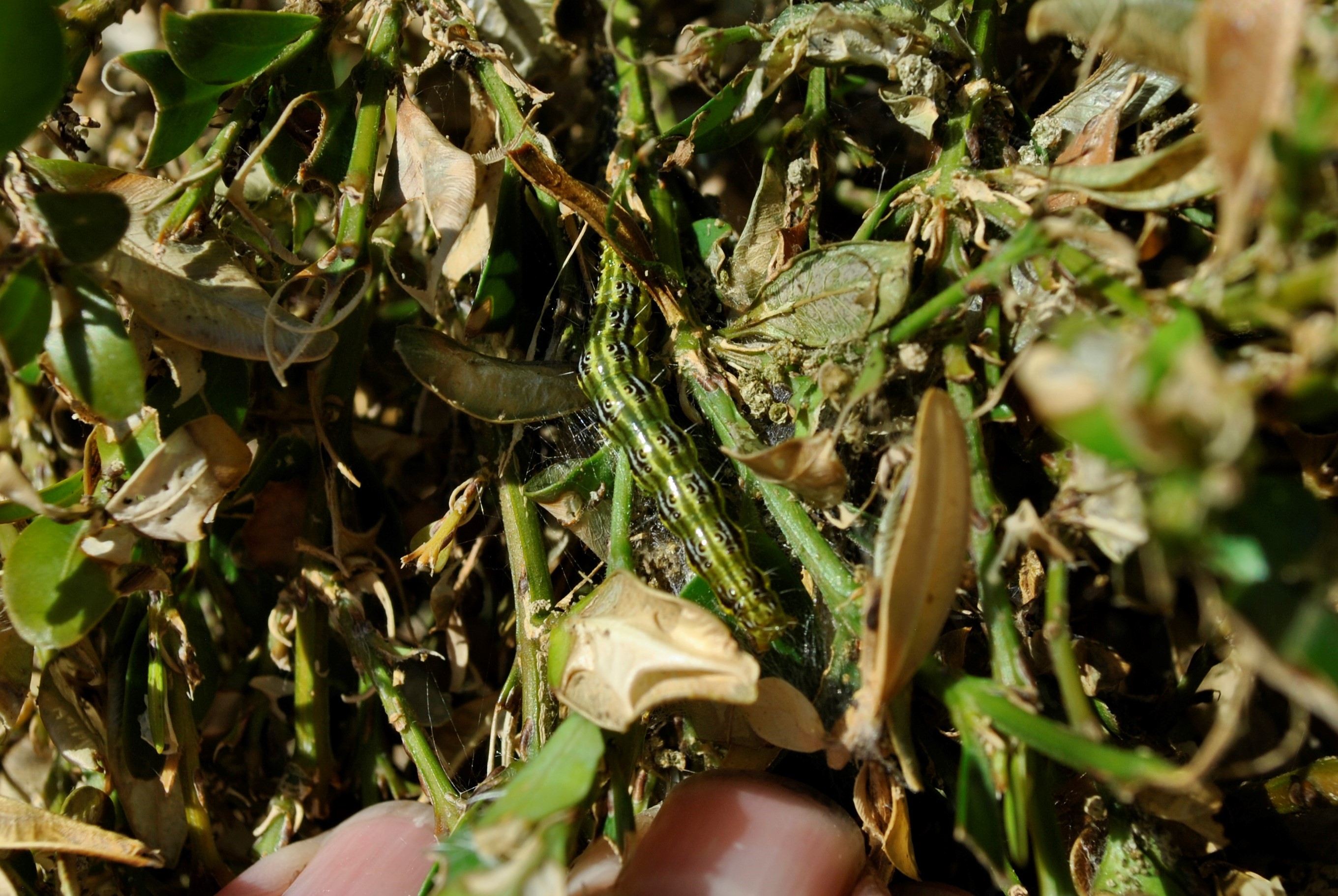
A friend asked me for advice last week, and you can probably see why! She has, or rather had, a beautiful collection of neatly clipped Box balls, Buxus sempervirens, which have all been ravaged by the Box Moth Caterpillar. I gave her the name of the recommended treatment with XenTari, but I think the damage is done. So sad when years of work and dedication are ruined, but that is just nature at work.

Of the many echinacea I have tried over the years, these Echinacea pallida have been the best and most long lived. Perhaps because they are a species rather than one of the many cultivars now available, I’m not sure. I do also have a small clump of Echinacea purpurea which comes back every year, but I fear that is dwindling.

Looking down the front border the other way, A newcomer this year is Leucanthemum superbum ‘Edgebrook Giant’. a big, showy, Shasta daisy which I acquired from the Plant Heritage Plant Exchange last year as a tiny rooted cutting. Now in its second year, it is dominating this part of the border with it’s huge white daisy flowers with bright yellow centres.

The star of the roses this year has been ‘Let’s Celebrate’ which has flowered non-stop since early June and is showing no signs of letting up. Not a strongly scented rose but the clusters of fluffy pink and white flowers are much admired by visitors which is usually the sign of a good rose!

Finally, it’s going to be a very good year for the rowan, Sorbus hupehensis ‘Pink Pagoda’, which seems to produce fruit every other year. I love watching the antics of the wood pigeons as they edge out gingerly to the tips of flimsy branches to pick the berries. Amazingly, they never fall off!

Have a great weekend

David

Six on Saturday

Back from a week in the Channel Islands to see friends and enjoy the sunshine. Boy oh boy, if you want to see Agapanthus, that’s the place to go! However, back to my own garden and the struggles with the heat and humidity over the last week or so. You would think that dahlias would like the heat, coming from Mexico and South America, but I find they appreciate a bit of shade and lots of water. I have had a terrible time with aphids this year, sucking the life out of the flower stems, farmed by black ants for their sugary secretions. I keep hosing or spraying them off, but they are back next day! However, Dahlia ‘David Howard’ (above) has not been affected and is flowering magnificently. Hard to believe this was a chance seedling of the bright red ‘Bishop of Llandaff’ spotted by Suffolk nurseryman, David Howard, in the 1950’s.

The diminutive Alstroemeria brasiliensis is rather shy and retiring and hates competition, so I have to make sure she has enough room to develop and flower unhindered. Not a strong grower like the modern cultivars selected for their height and vigour, this one is barely 18″ tall and a weakling by comparison. Pretty nevertheless.

The Tulbhagia violacea is now in full bloom and much admired, despite the smell of garlic from stroking the leaves and flowers. However, It’s called Society Garlic because Dutch settlers to South Africa thought it was a more polite spice to use for flavoring dishes than true garlic; it can be eaten without causing bad breath!

A new addition this year is Helianthus ‘Monarch’ with double flowers and an attractive green centre. Tall and self supporting like its cousins, this makes a nice change from the common single types.

More yellow, and another new addition for this year, and also a double flowered variety, is Rudbeckia hortensia. Very tall at 2.5m, rather like R. laciniata, the fluffy double flowerheads are very striking. Of course, you have to like yellow! There are still some who are snooty about yellow and won’t have it in their gardens. Apologies if that offends!


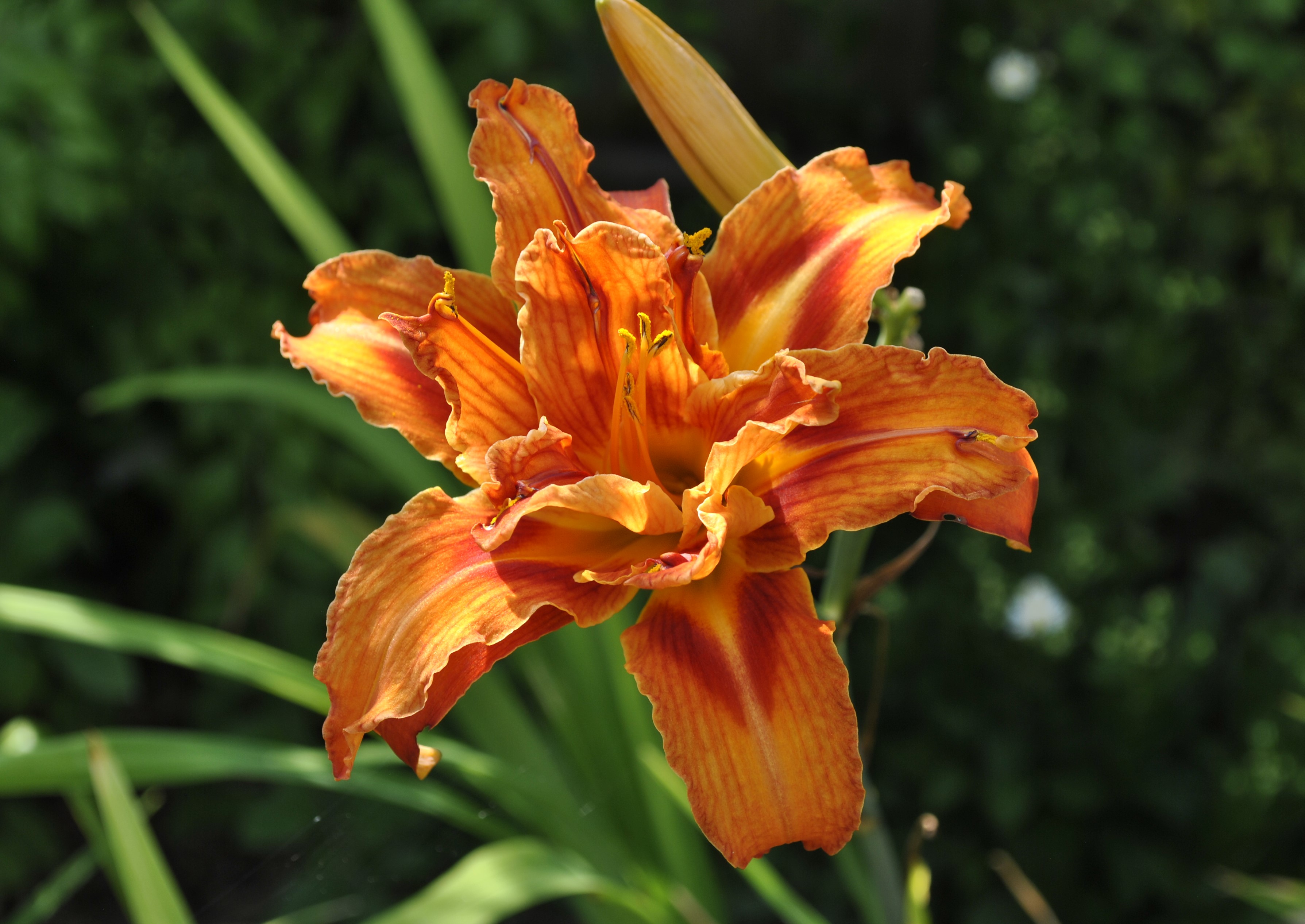
I don’t care for day lilies, Hemerocallis, as much as I used to. I quite enjoy the flowers like this double flowered version of fulva called ‘Kwanso’, but the mountains of foliage get on my nerves. They need a firm hand and a big cull is on the cards for next year!

The front border is at its best now billowing with self -sown Cosmos, some Crocosmia, Phlox, Alstroemeria, Salvia uliginosa, Rudbeckia laciniata and Goldsturm, Diascia personata and interspersed with Osmanthus, Pittosporum and hardy Chrysanthemums. A few short weeks ago we were all complaining about the relentless rain. Now it is a job to keep things watered!

Have a great weekend

David

Six on Saturday

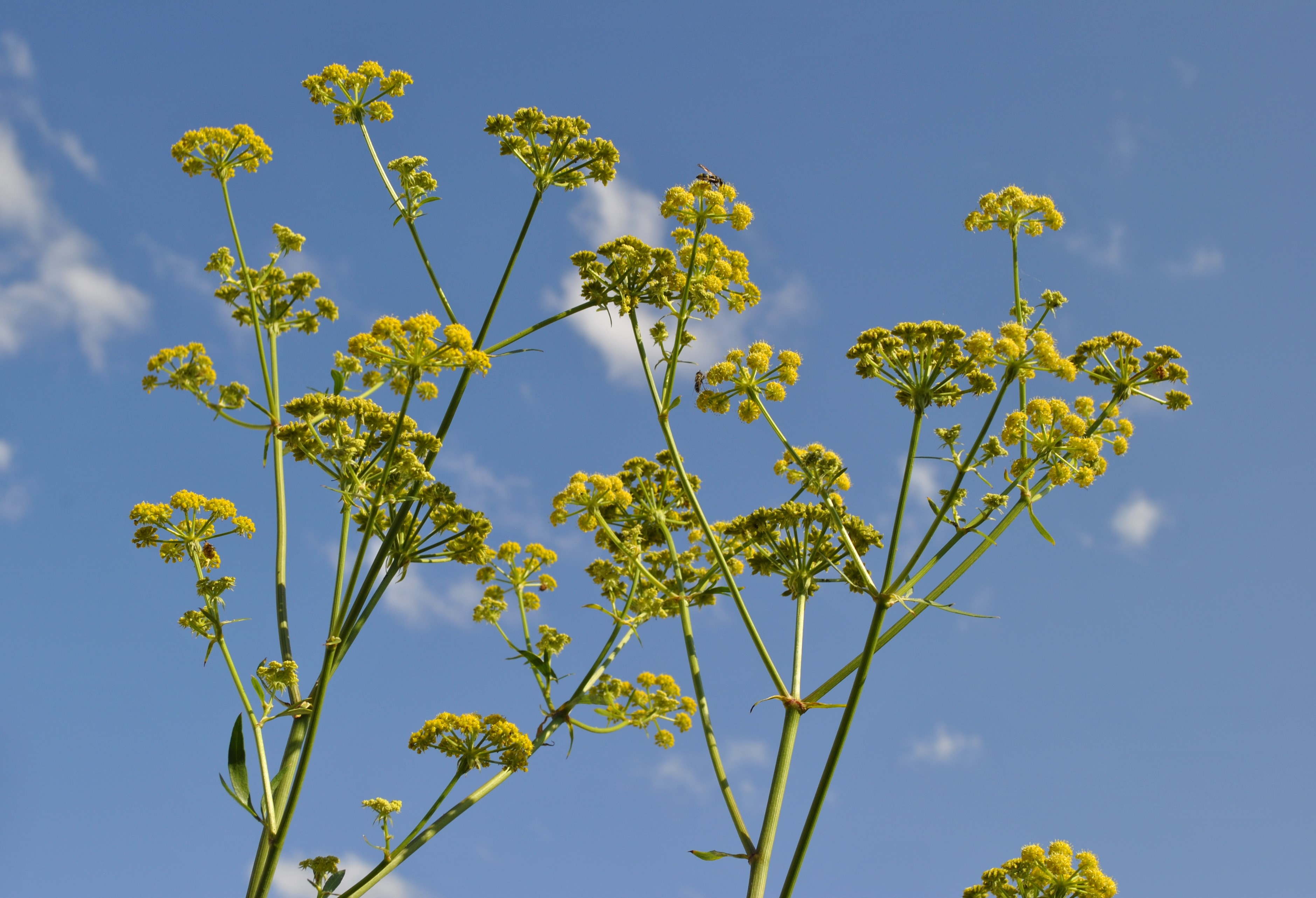
I like to grow a few very tall, dramatic plants at the back of borders like Rudbeckia laciniata, Thalictrum ‘Anne’ and this Lovage, Levisticum officinale, the leaves of which we occasionally use to flavour soups. I am told the seeds are also used as a spice in southern European cuisine. It is an herbaceous perennial, disappearing completely in winter, but sending up 2.5m high thick stems topped by thousands of tiny yellow florets on umbellifer flowers which are adored by bees and other pollinators.

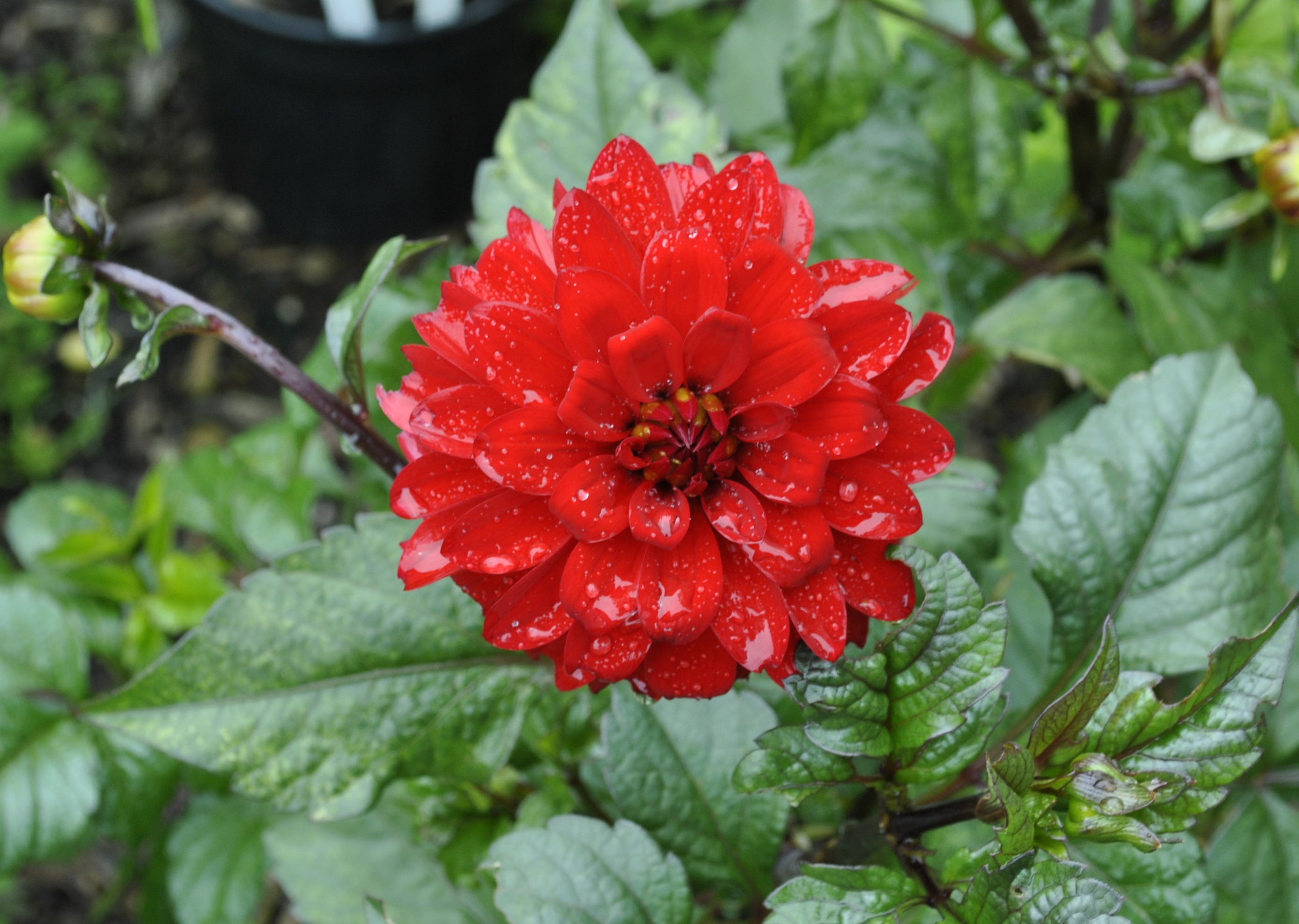
The rain and cooler temperatures of the last couple of weeks has been enjoyed by the dahlias and this one, ‘Bloodstone’ is a recent acquisition from Plant Heritage as it has become endangered in cultivation and needs a Plant Guardian to maintain, propagate and distribute it. The deep, almost luminous red of this heirloom waterlily type from 1939 flowers profusely against dark green foliage which makes it difficult to understand why it went out of favour. Probably just too many new varieties becoming available, and some of the older ones had to make way for the bigger, blousier, dinnerplate flowered ones.

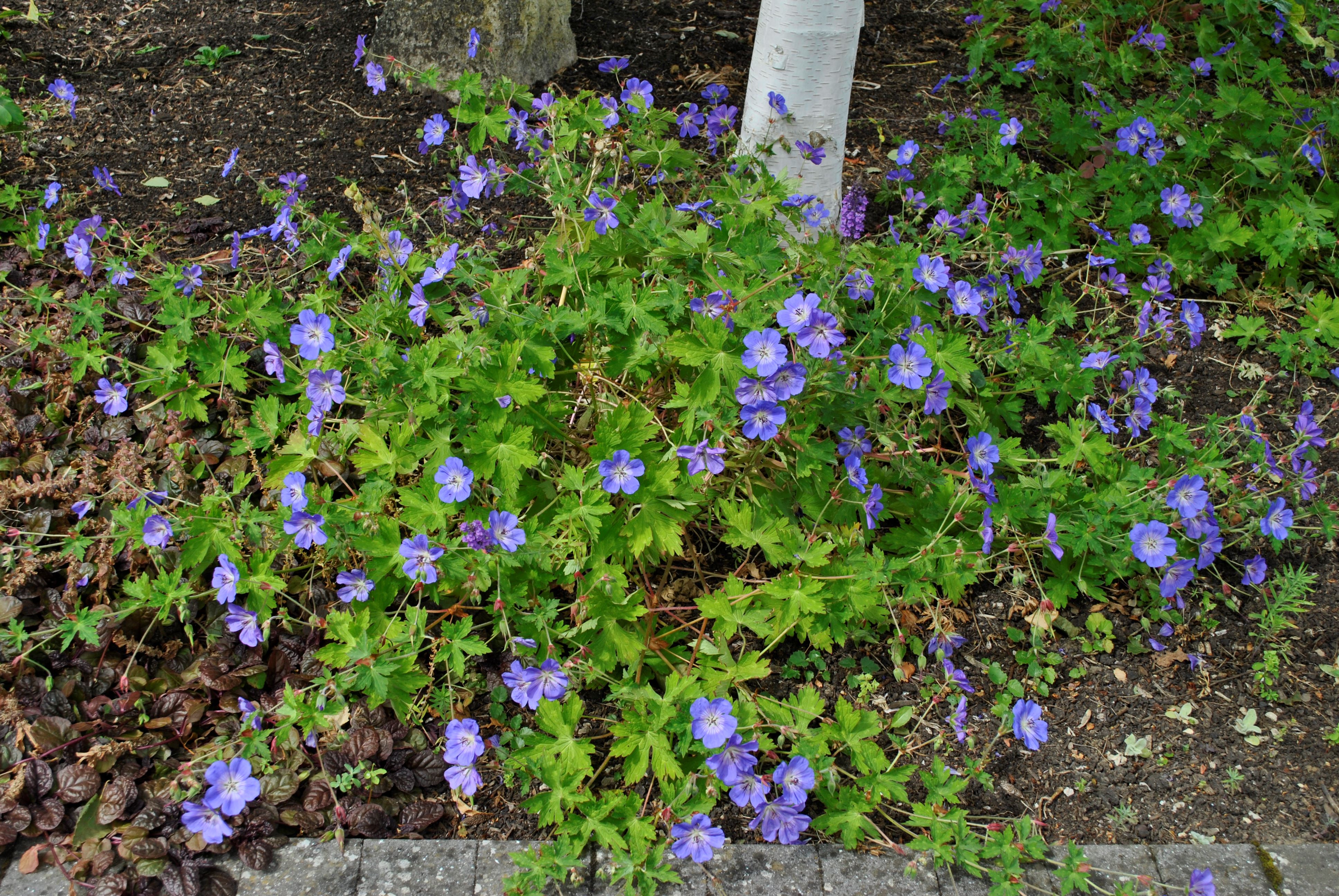
The six Geranium ‘Rozanne’ planted beneath the Silver Birches are having a much better year and spreading themselves as intended, almost touching hands in a wide circle. It was possibly the long, wet spring and early summer which kept the soil damp enough for their new shoots to benefit as they were emerging from their winter slumber. They grow very quickly so I only had a few days to clear away the spent leaves of narcissus and anemone blanda which previously covered the ground.

I went to an illustrated talk on Clematis last year and the speaker suggested that ‘Forever Friends’ was the best white so, naturally, it was ordered immediately! I am not sure it deserves the accolade of ‘best’; I think that ‘Destiny’ and ‘Sylvia Denny’ are up there too, but who am I to argue. I like the lemon yellow filaments against the stark white petals though.

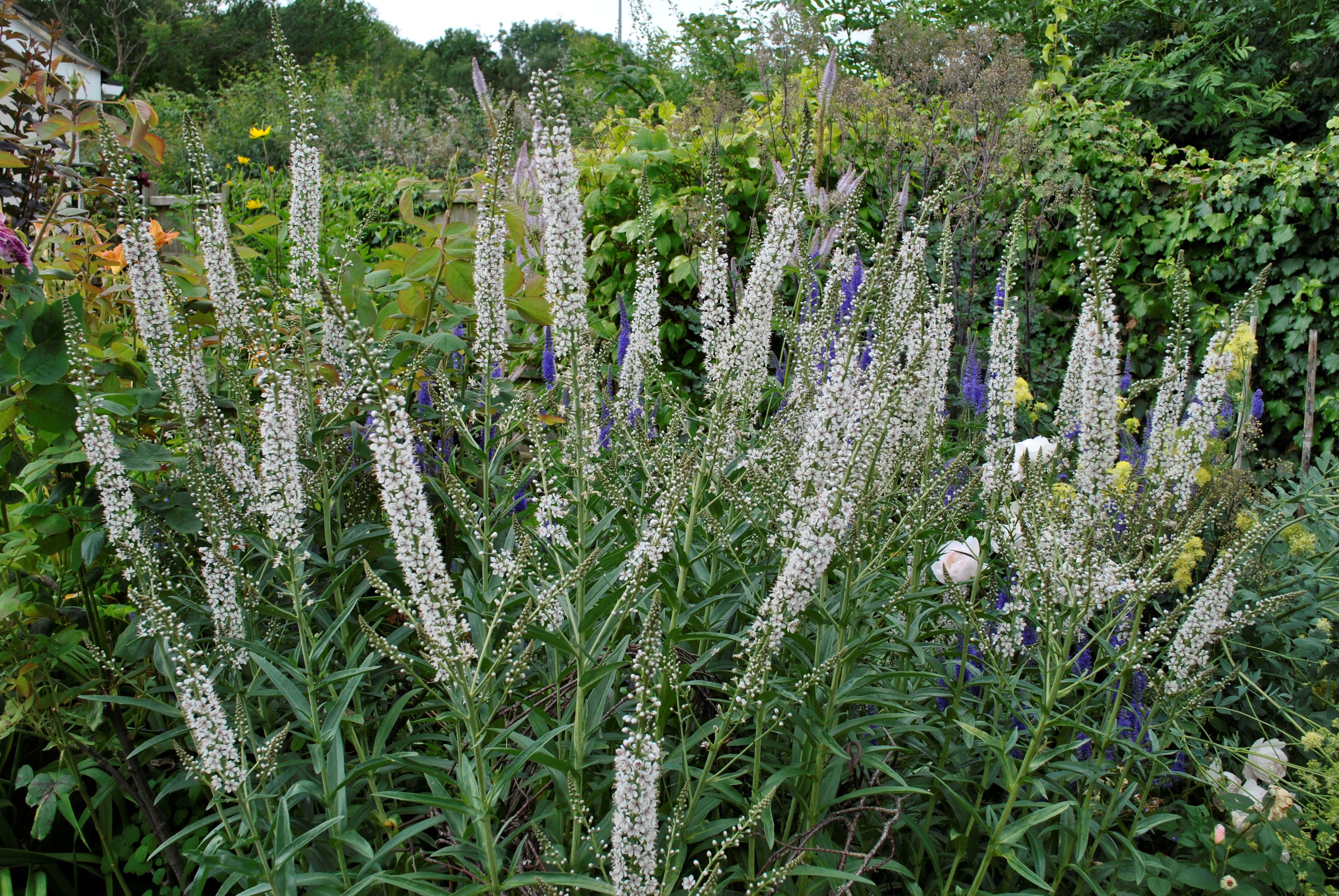
Nobody seems to know this perennial and yet it is a good plant that deserves to be in more gardens. Usually, when I tell people it is a Lysimachia, there is a sharp intake of breath and a polite ‘no thank you’. But this isn’t anything like the hideous, badly behaved yellow flowered ones. It is Lysimachia ephemerum which has glaucus leaves and pure white flower spikes with hundreds of tiny starry flowers which take several weeks to open and then explode into life making quite a show. Totally hardy, needs a bit of subtle support (I use a home-made hazel or birch girdle) and is a magnet for bees. Easily grown from seed and often throws seedlings which make good presents for plantaholic friends!

In addition to new foliage and long, whippy stems, the Wisteria sinensis ‘Prolific’ is producing numerous new flower racemes in a second flush. This is not unusual, it often happens for reasons I cannot explain other than the the obvious need for pollination and reproduction. This particular cultivar is an early flowerer and may have learned that late frosts often take the first flush of flowers, so they keep something in reserve for a second go!

Have a great weekend

David

Six on Saturday

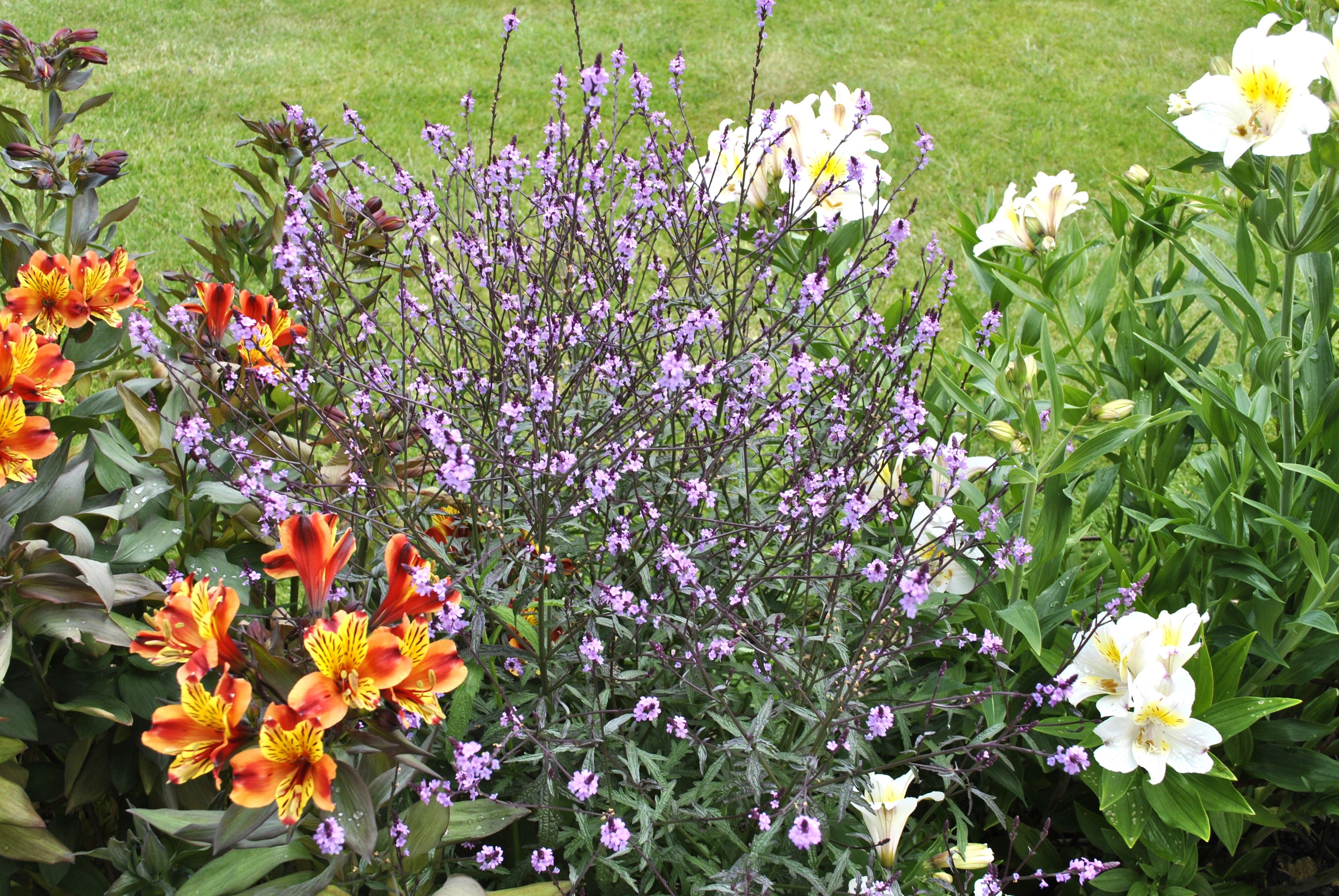
It’s raining again! I have a list of jobs to do in the garden, some of them quite urgent and involving power tools, which will have to wait. However, I did manage to pop out between the showers to photograph six things for this morning’s post. First up is Verbena ‘Bampton’ which popped up all by itself between two Alstroemerias. So, does this make it a weed? A plant in the wrong place? It certainly seeds itself about in my garden and I am constantly pulling up seedlings alongside those ‘true’ weeds like Bittercress and Sun Spurge. I allowed this one to grow to maturity as I thought the colour combo might work. The wiry mauve flower spikes certainly make an interesting contrast.
My unusual hanging basket by the front door has certainly prompted a few comments this year! However, it is certainly eye-catching and colourful, if you like yellow and green, and soon it will be covered in tiny bright red fruits of Tomato ‘Tumbling Tom Red’. Which?Gardening magazine want to know whether it grows well in a basket or pot and whether we get a good crop of tasty tomatoes. It all looks promising at the moment but it certainly takes some watering and feeding to keep it going.

The little Japanese aster, Kalimeris incisa ‘Charlotte’ is just starting to flower and, although a little swamped by the surrounding plants, it is holding its own at the moment. A clump-forming perennial to about 60cm tall producing a mound of dark green foliage topped with pale purple daisies with gold centres, produced over a long period from mid-summer to mid-autumn. I have a few Chrysanths too but these Kalimeris flower earlier and for longer, don’t succumb to mildew and, so far, are not eaten by slugs and snails.

Every year, visitors to my garden ask what this is. I am amazed it is not grown in more gardens and sold by more nurseries and garden centres, for it is a superb easy-to-grow plant. Diascia personata is a semi-evergreen perennial with upright stems producing racemes of small pink flowers with darker pink centres from late spring into autumn. I have had it for several years and take cuttings in late summer in case of winter losses. It needs a bit of support so it grows happily in amongst other plants. I grow it with Hesperis matronalis which is over by the time the Diascia flowers.

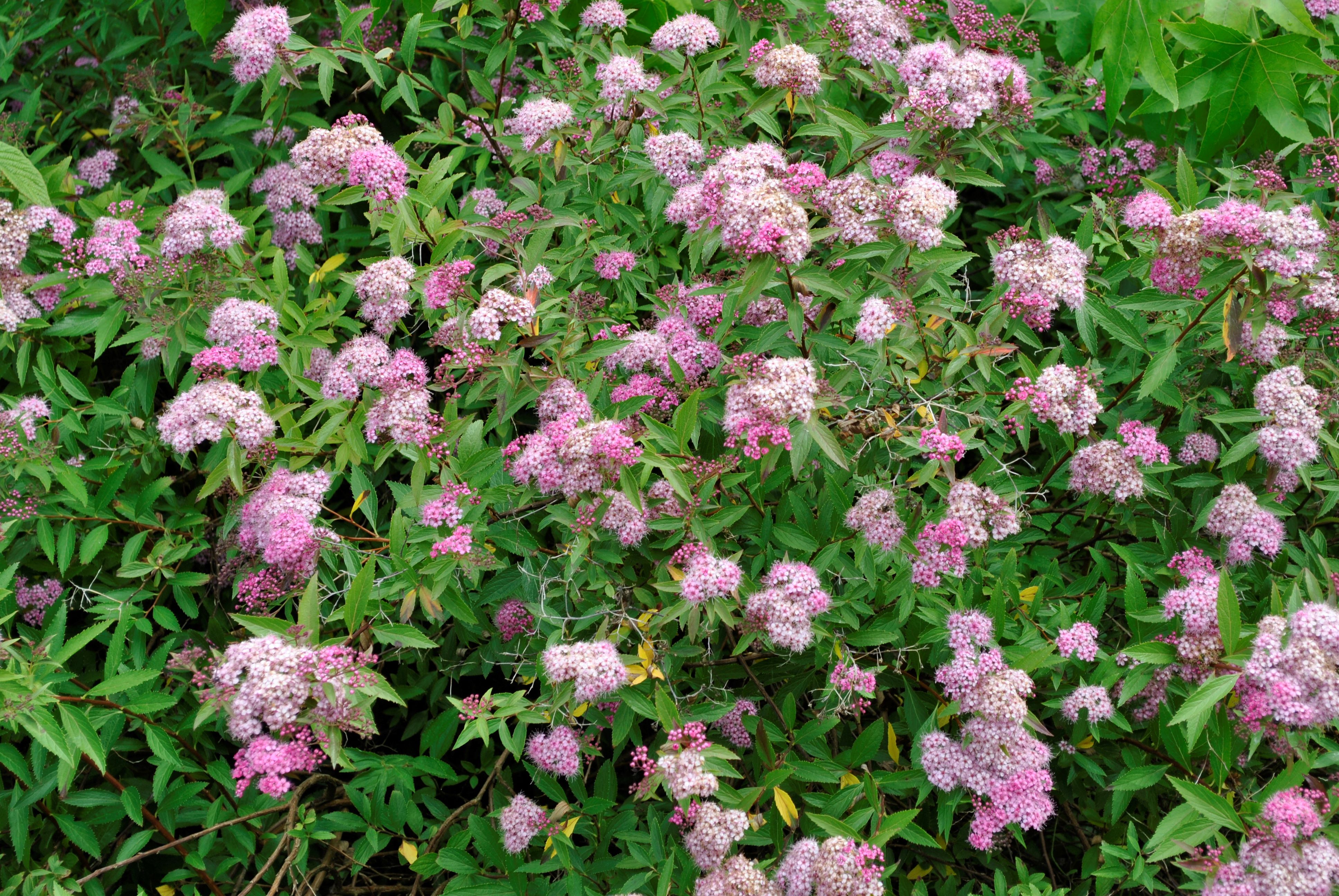
Possibly the oldest shrub in the garden is this Spiraea japonica which was grown from a cutting 16 years ago when we moved here. A neighbour was digging it out and disposing of it as he thought it was ‘ugly’, and decided to replace it with a Cornus kousa which is now a thing of great beauty in every season. Ugly or not, it is an undemanding shrub which flowers briefly in early summer, gets pruned hard in winter and is forgotten about until the following July.

Salvia forskaohlei or Indigo Woodland Sage, has huge leaves and enormous spikes of indigo flowers, very different from the usual shrubby or nemerosa types. In fact, Salvia is the largest genus of plants in the sage family Lamiaceae, with nearly 1000 species of shrubs, herbaceous perennials, and annuals. This one is totally hardy and great for poor, dry soils where it will spread and cover the ground in no time. In my garden it is in the ‘difficult’ border where little else thrives in the almost impenetrable clay. It is a magnet for bees and other pollinators too.

Finally, I am looking for some help identifying this pretty cluster-flowered floribunda rose which is rambling over my archway. It was inherited with the garden and is reliable, very healthy and flowers for several weeks in July and August. A friend has suggested it might be ‘Dorothy Perkins’. Has anyone got a similar or alternative suggestion please? I would love to know its name.

Have a great weekend

David

Six on Saturday

The warm sunshine of the last few days has done wonders for the garden and brought out the heat lovers like the Tuscan jasmine, Trachelospermum jasminoides, which is now covered in starry flowers wafting their sweet scent over the patio.

Naturally, the roses have also loved the heat, and ‘Roald Dahl’ is one of my favourites. It reminds me of my Granny’s powder puff on her dressing table, but I could be making that up. It was a very long time ago! Roald is one of those David Austin types with clusters of huge flower heads which need supporting or they end up on the floor!

My National Collection of hardy Tradescantias has been recognised with a new plaque which now sits proudly at my entrance gate, surrounded by Clematis ‘Etoile Violette’. The hope is that it may prompt a few questions about why Plant Heritage exists and the work it does to preserve and maintain threatened species and cultivars. Mine is just one of around 600 National Collections around the UK in gardens, stately homes, botanic gardens and arboretums.

My little forest of self-sown Delphinium requienii is thriving in the front garden, despite being far too close together. This compromises their height, which is two feet shorter than usual, but has the added benefit is more flowers for the bees and other pollinators. This biennial form of Larkspur is unique, in that it does not get attacked by slugs and snails due to its glossy, almost leathery leaves which are apparently inedible to our slimy friends. The seedlings sit in place all winter without any damage and rise perfectly intact in the spring.

My favourite clematis at the moment is the texensis variety ‘Princess Diana’ which is absolutely covered in small, fluted dark pink flowers. Elegant and beautiful like Diana herself. I am unashamedly a Royalist and hope to acquire the equally beautiful ‘Princess Kate’ very soon.

Hardy Fuchsia ‘Whiteknights Pearl’ which was moved earlier this year to a more suitable position, has emerged unscathed and is flowering again like nothing happened. A little shorter than usual perhaps, but that is understandable having lost a lot of established roots. She will recover and prosper in her new, improved position and delight us with her dancing ballerina flowers for many years to come.

Have a great weekend

David

Six on Saturday

It’s June, which means roses, and they are very good this year…..so far! I caveat any comments about roses because disaster could strike at any moment. Aphids, rose sawfly, blackspot, mildew etc., etc. However, this year I was lucky to have an army of Blue Tits which cleared all the aphids and caterpillars, and so far little or no blackspot. This is Rosa ‘Bonica’ grown as a standard and pruned to within an inch of its life in January, showing just how well they respond by producing an enormous number of flowers on shortish stems.

Hydrangea arborescens ‘Annabelle’ is a bit hit & miss in my garden. Some years it’s great, some years not so great. It is very dependent on the extent of spring rainfall. However, I learned something interesting last year from a professional gardener at a country house who said she was unhappy with the way the huge floppy flowerheads drooped, particularly after rain. So, she experimented with the pruning and discovered that if you don’t prune them so hard, the flowerheads are smaller but they stand upright on stronger stems. So, that’s what I did and it works! The flowers will still be impressive and should remain upright.

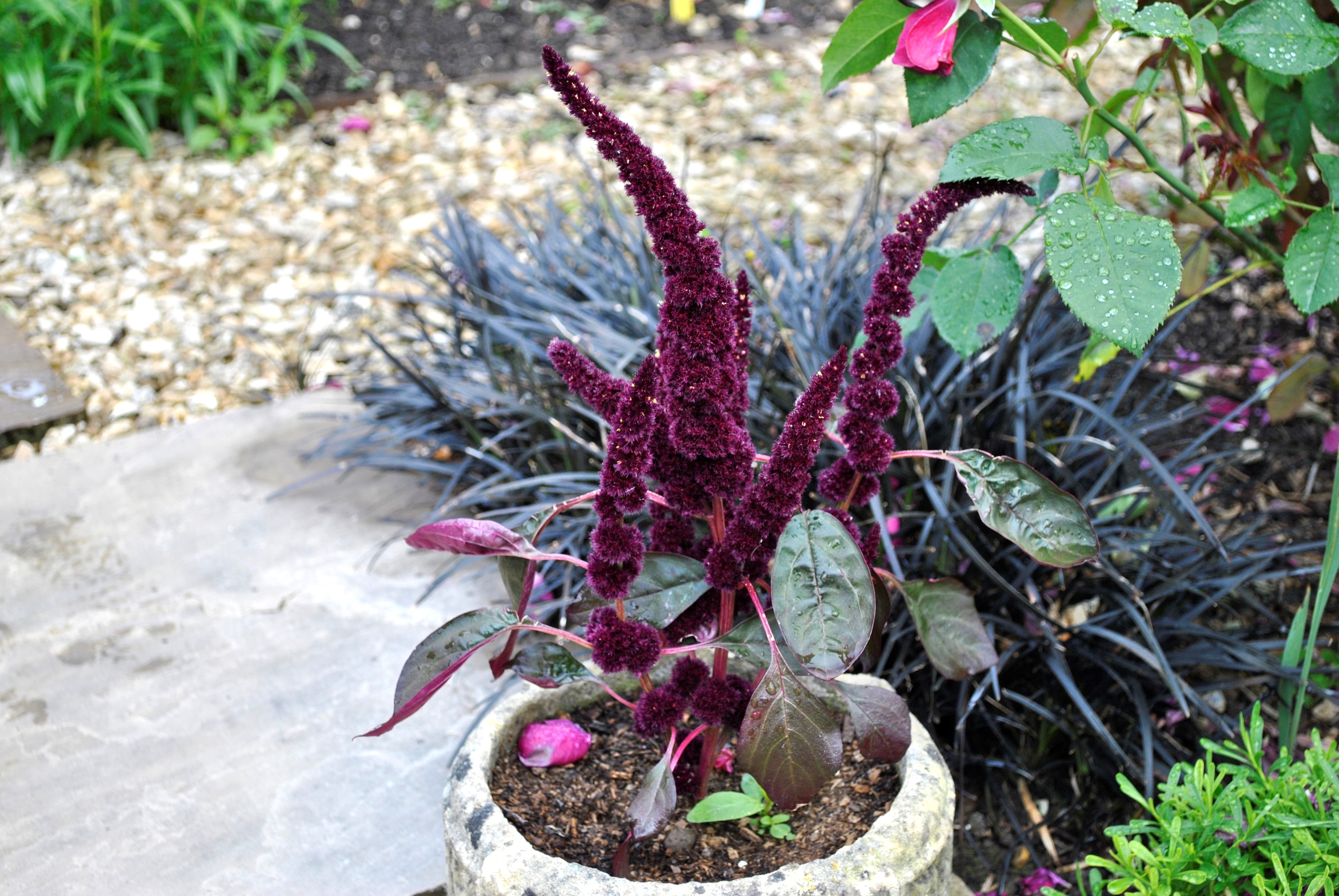
I am trialling this Amaranthus paniculatus ‘Foxtail’ for Which? Gardening magazine this year as part of their seed trials. They would like to know how well it grows and how striking the foliage looks in a pot. I managed to germinate 12 plants which are now all planted out in containers of various types and size. They are a bit weird and remind me of the stalks of millet seed we used to poke through the budgerigar’s cage! However, they are covered in ‘flowers’ and doing well. Not sure if I would grow them again though!

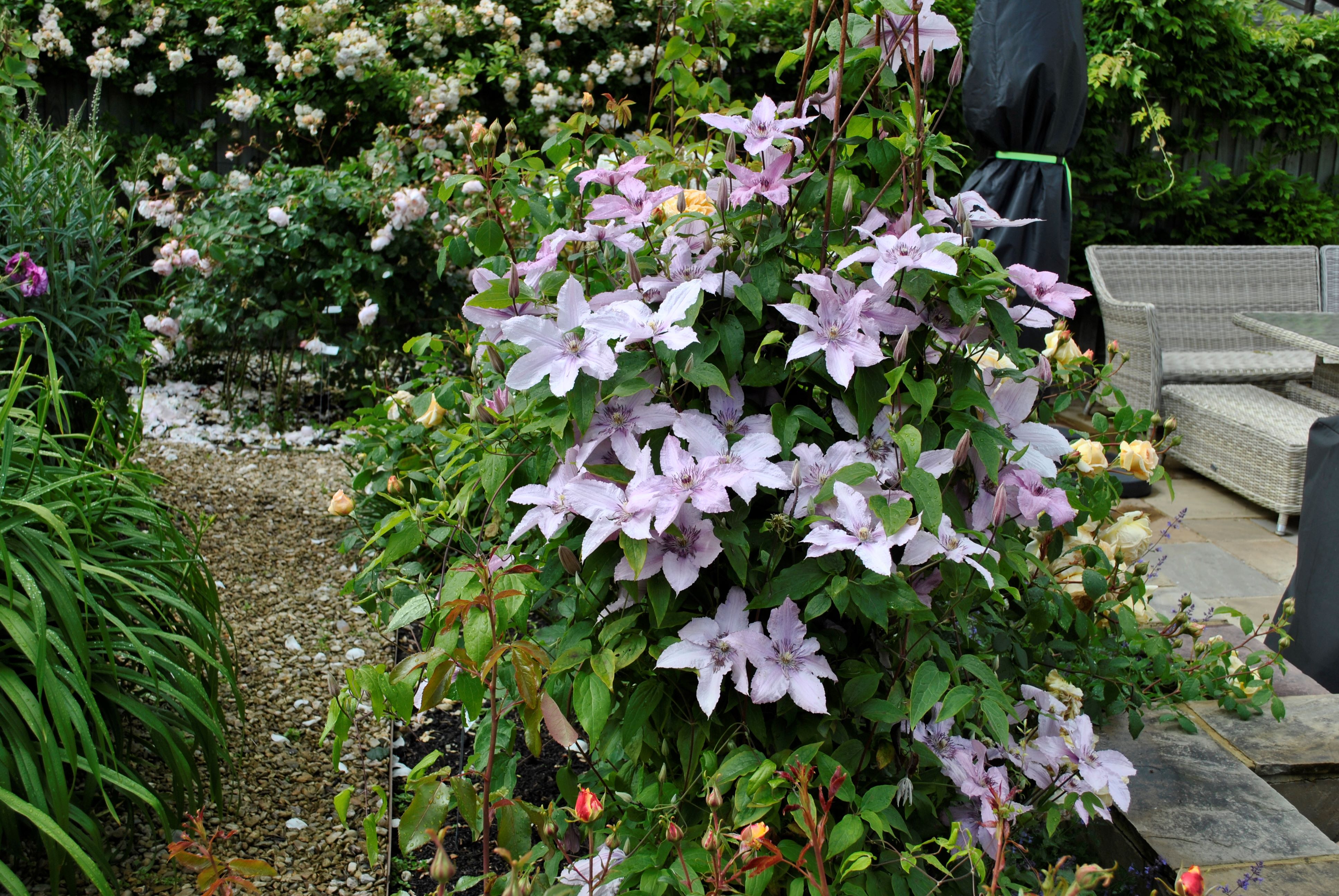
I grow a lot of clematis but ‘Hagley Hybrid’ is the most reliable and probably the most striking. Not the most evocative name in the world, almost like they couldn’t be bothered to choose a real name, but it has stood the test of time and flowers just when the roses are at their best too. The pale pinky mauve colour is a bit ‘washed out’ and could do with a new 2nd cousin with stronger hues, but that might reduce its vigour and reliability, so I will stick with the original.

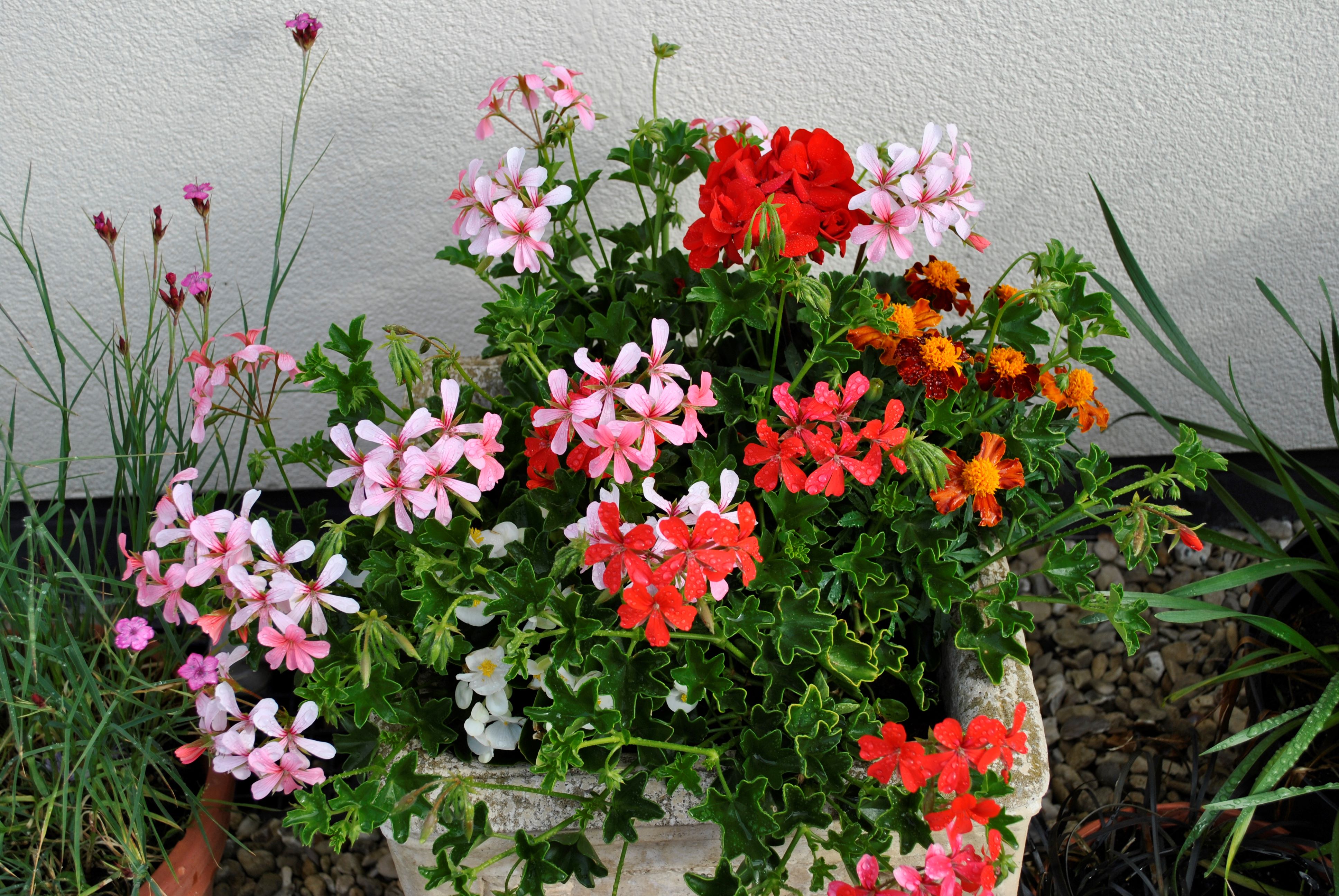
When I clear the big pots of their spring bulbs in mid-May, I refresh the top 6″ of compost, add some Osmocote controlled release fertiliser pellets, and go off to Lidl to buy a few trays of Pelargoniums. You literally cannot go wrong with 6 plants for £4.99 and the results are always good. In the past I have tried growing them myself from tiny plugs but, to be honest, Lidl plants are better and cheaper!

There was a slight shower last night which the roses appreciated. I admire ‘Darcey Bussell’, the rose and person; so pretty and graceful, almost dancing in the rain.

The low growing catmint, Nepeta faassenii ‘Kit Kat’ and ‘Junior Walker’ that border the low wall in the rose garden are buzzing with bees all day and set off the roses well. We do get a few cats in the garden, but mostly at night judging from the toilets I have to clear up each day! So, I have never seen a cat doing what cats are alleged to do and flattening the catmint in the process. Thank goodness!

Have a great weekend

David

Six on Saturday

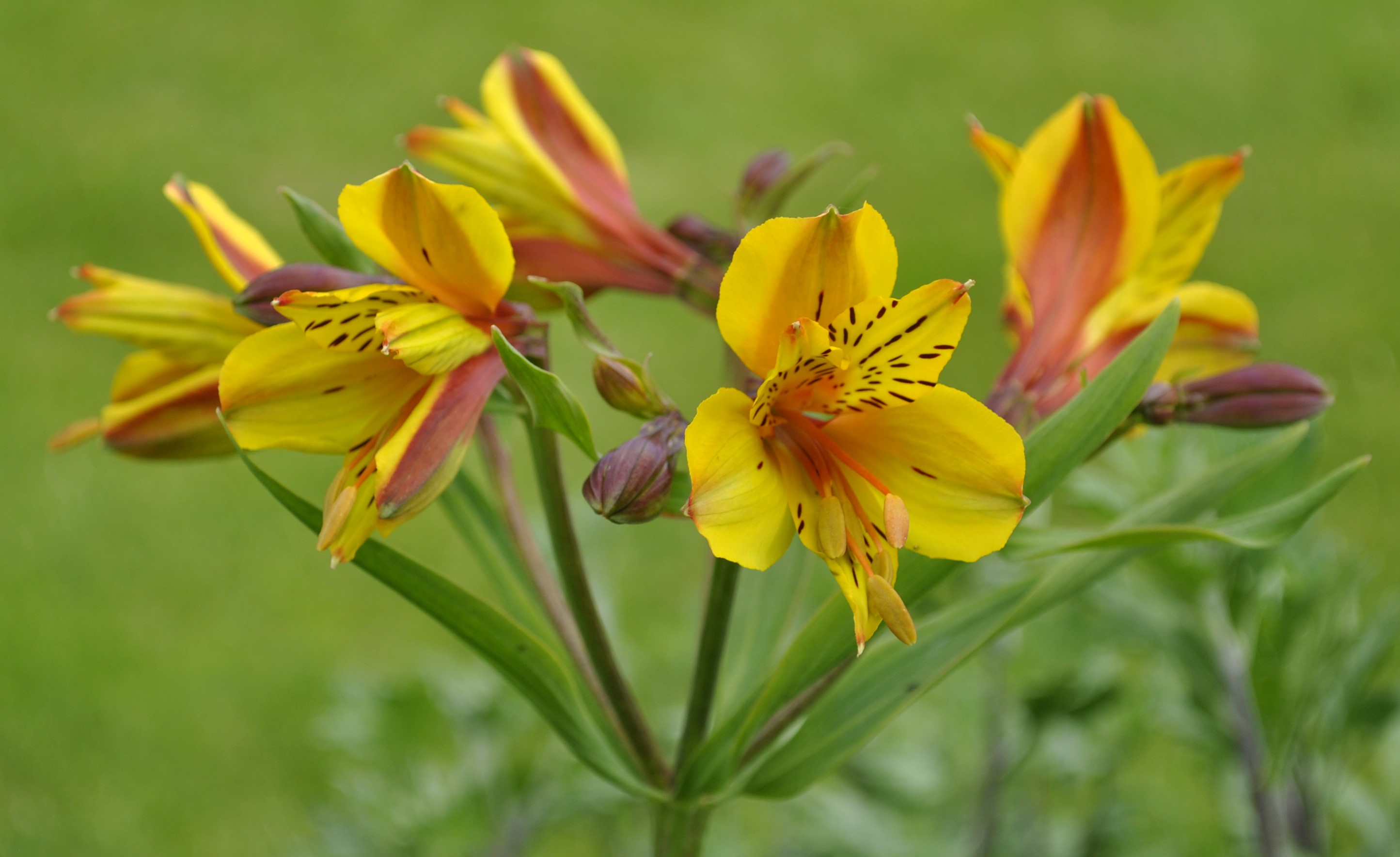
Six lovely things for a rainy Saturday, starting with Alstroemeria ‘Princess Sophia’, of which I am a Plant Guardian for Plant Heritage. This means that, for some reason, known only to the Nursery trade, this cultivar has gone out of favour and is no longer being sold. It is in danger of becoming obsolete, so we try to stop that happening by propagating and passing plants to others to look after and do the same. Worth keeping I think.

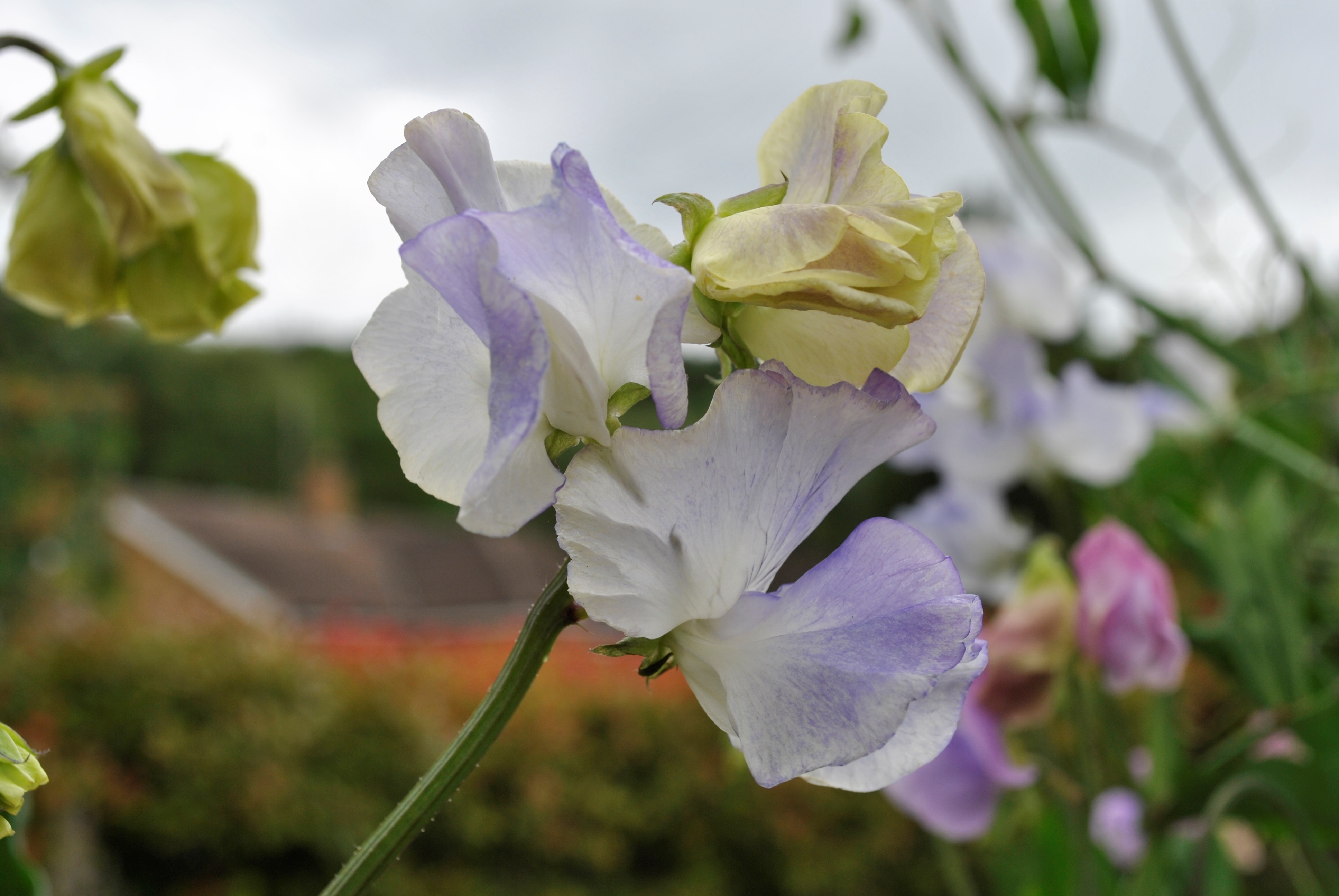
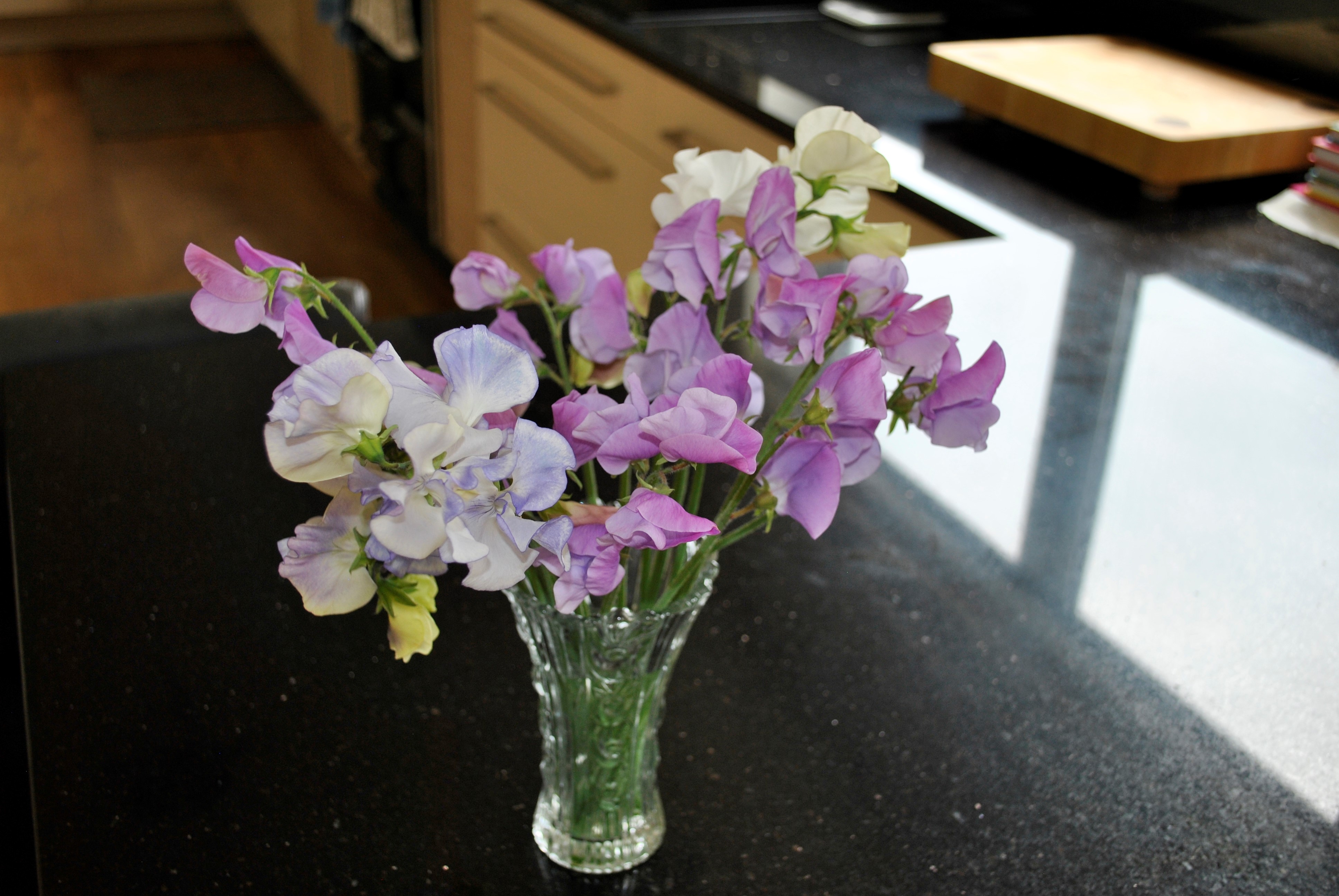
Sweet Peas are one of my favourites and there is simply nothing better than the scent of a bunch on the kitchen window cill. This one is ‘Betty Maiden’ which I trialled for Which? Gardening magazine in 2019 and have grown every year since from saved seed. Like most members of the pea family, it is self pollinating so you won’t find the bees swarming all over it like most open pollinated plants. Fortunately though, this means they will come true from seed, keeping the cultivar going forever.

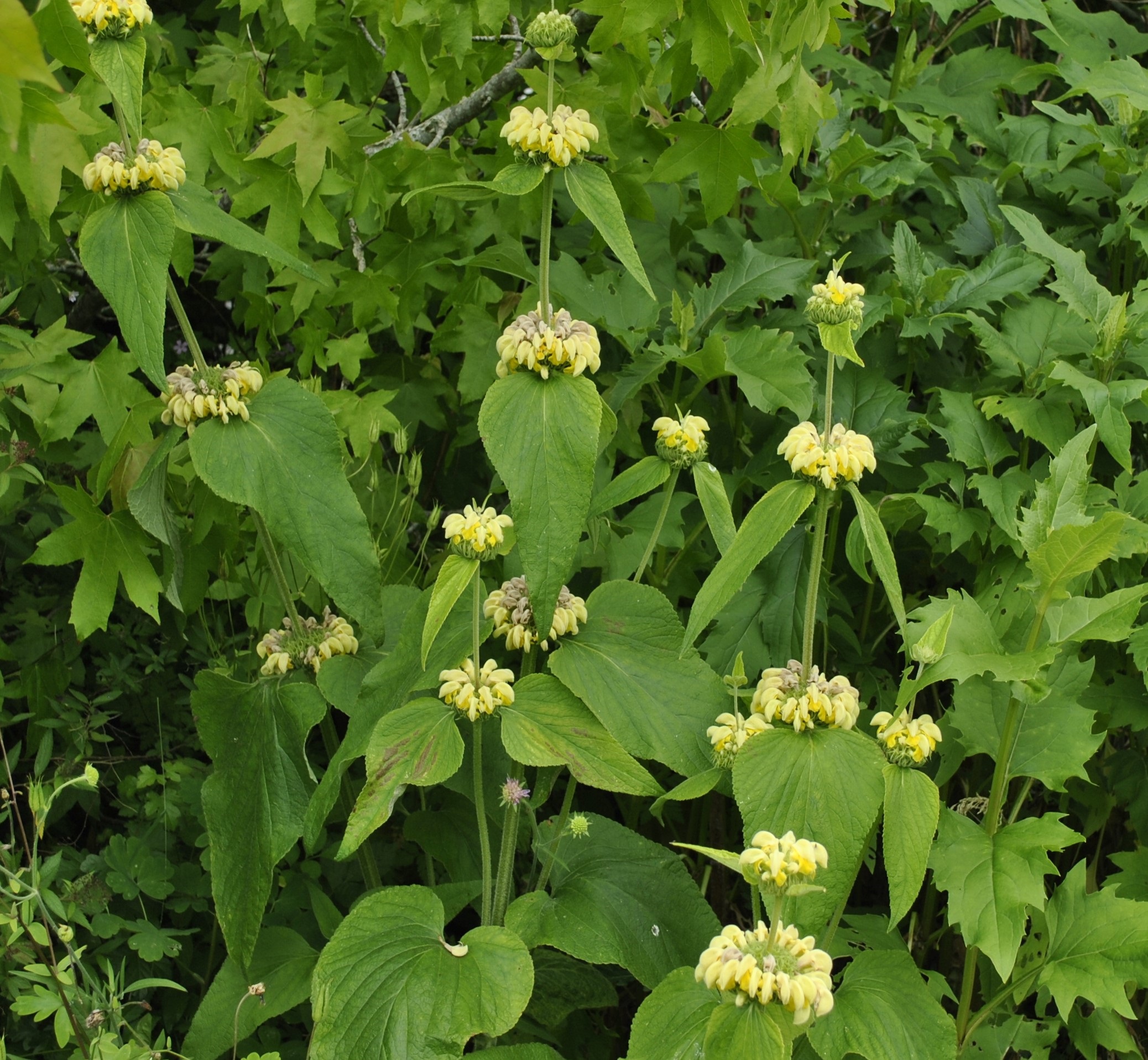
I sowed seed of Phlomis russeliana many years ago which did well and have gradually self-seeded in various parts of the garden, mostly in places I don’t mind. They seem to like the company of other plants and squeeze themselves into tight spaces. For what is supposed to be a Mediterranean sun lover, they certainly like my clay!

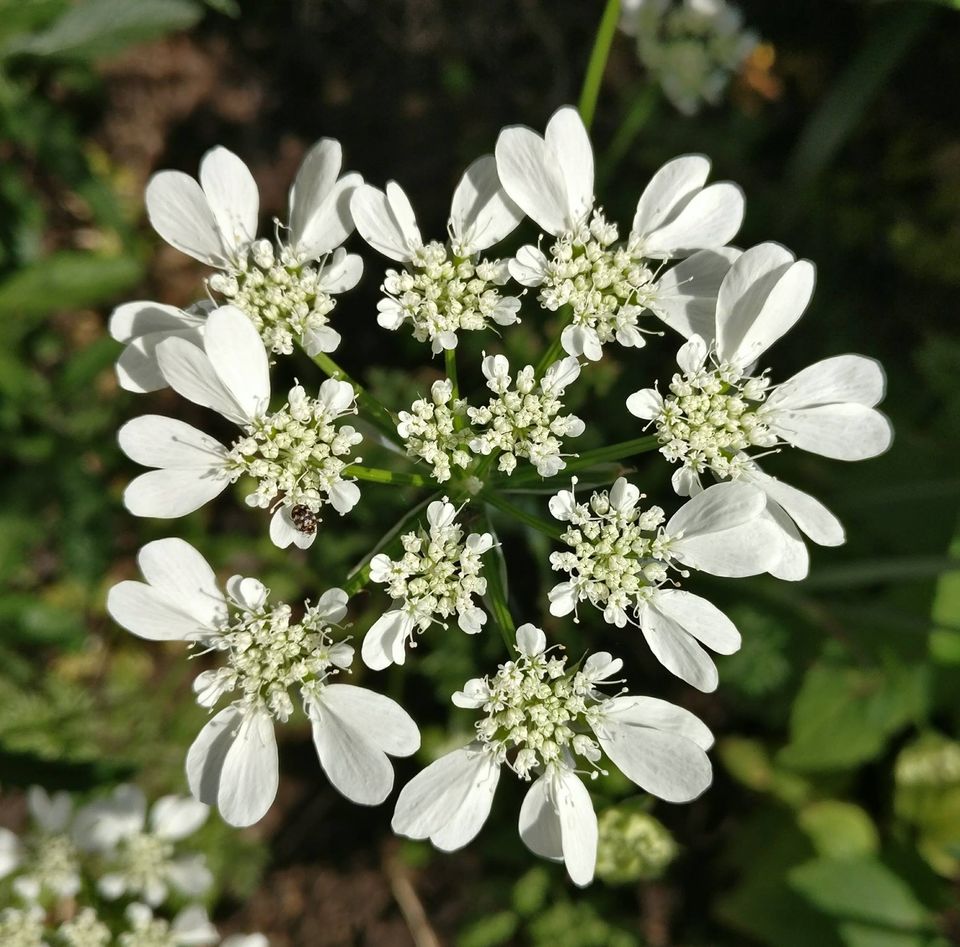
There is a lot of Ammi majus around at the moment which, to me, is just posh cow parsley. But this is different. Orlaya grandiflora, the White Lace Flower, is exquisite in it’s delicate design and composition. Like mini lace handkerchiefs on a creamy white flat umbellifer flowerhead. Nature at her beautiful best.

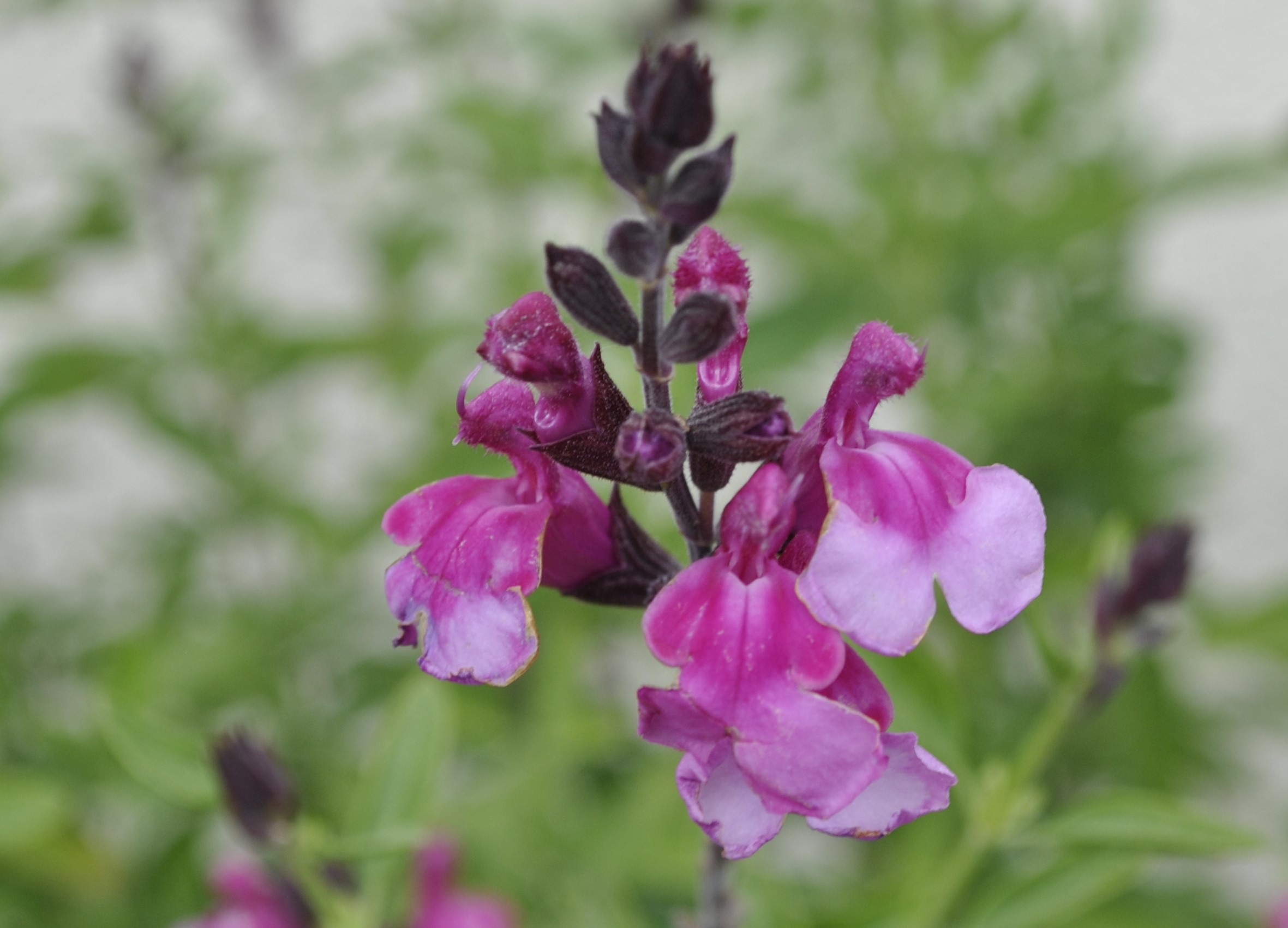
There are hundreds of shrubby salvias available and they are all good, but some are better than others. Personally, I think this is one of the best, Salvia greggii ‘Icing Sugar’ which is a double pink variety emerging from dark, almost black buds. Given to me last year by a friend, it is thriving in a pot at the moment while I try to find a space for it!

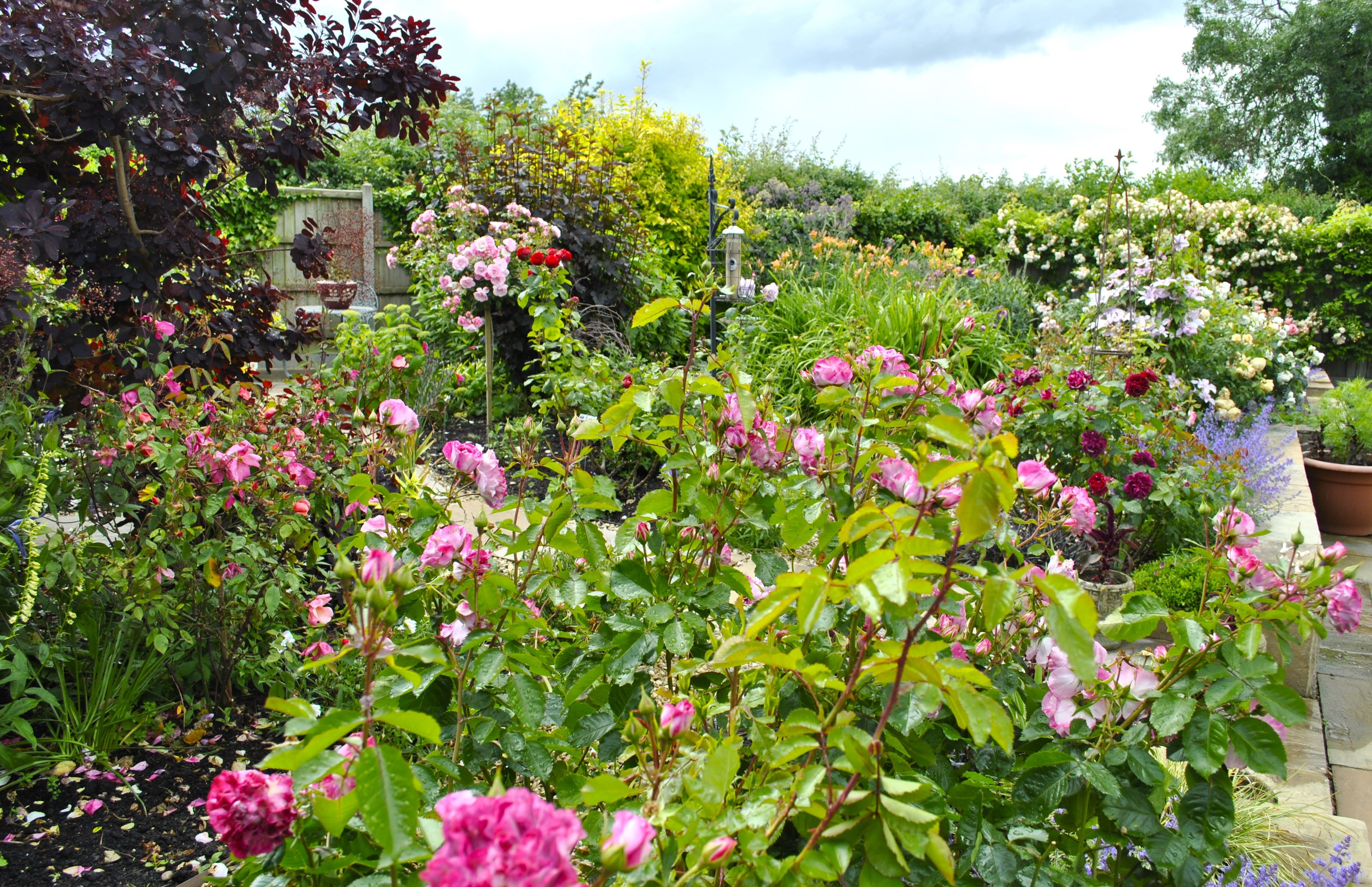
The rose garden is looking good so far this year. The rain has certainly helped, and I am using Uncle Tom’s Rose Tonic this year to try to ward off the dreaded blackspot. Only two sprayings so far, but they do look healthier than last year. I don’t use insecticides in the garden as the Blue Tits do a wonderful job of clearing the early aphids and caterpillars in May to feed their youngsters. And the Robins are already on to their second brood!

Have a great weekend

David

Six on Saturday

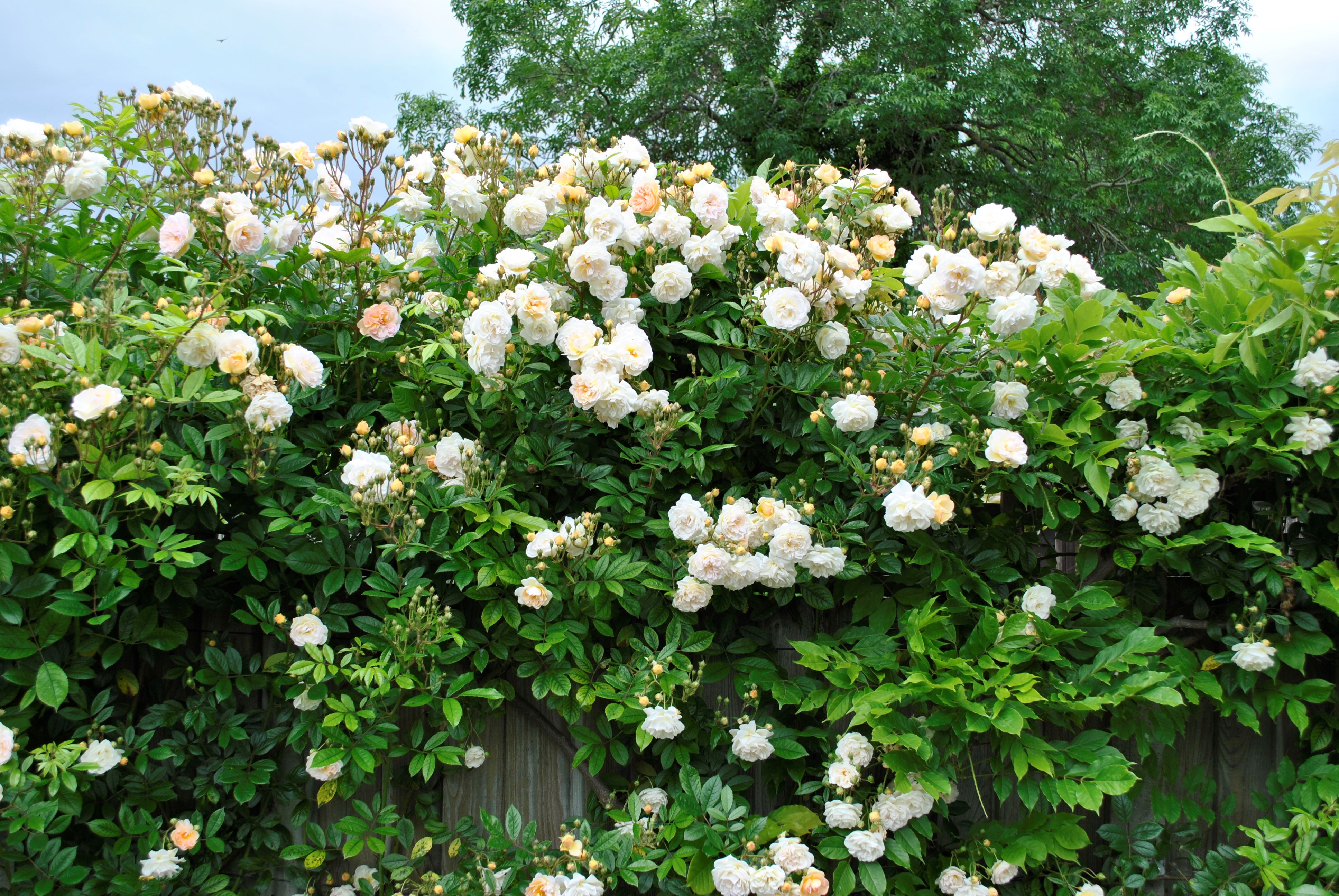
We were away for a few days in the frozen north (Sheffield!) looking after grandchildren over half term, and came back to a garden awash with colour and scent! This is my short rambler rose ‘Ghislaine de Feligonde’, almost thornless and very well behaved. She is not very smelly but looks gorgeous on the fence mingling with the wisteria.

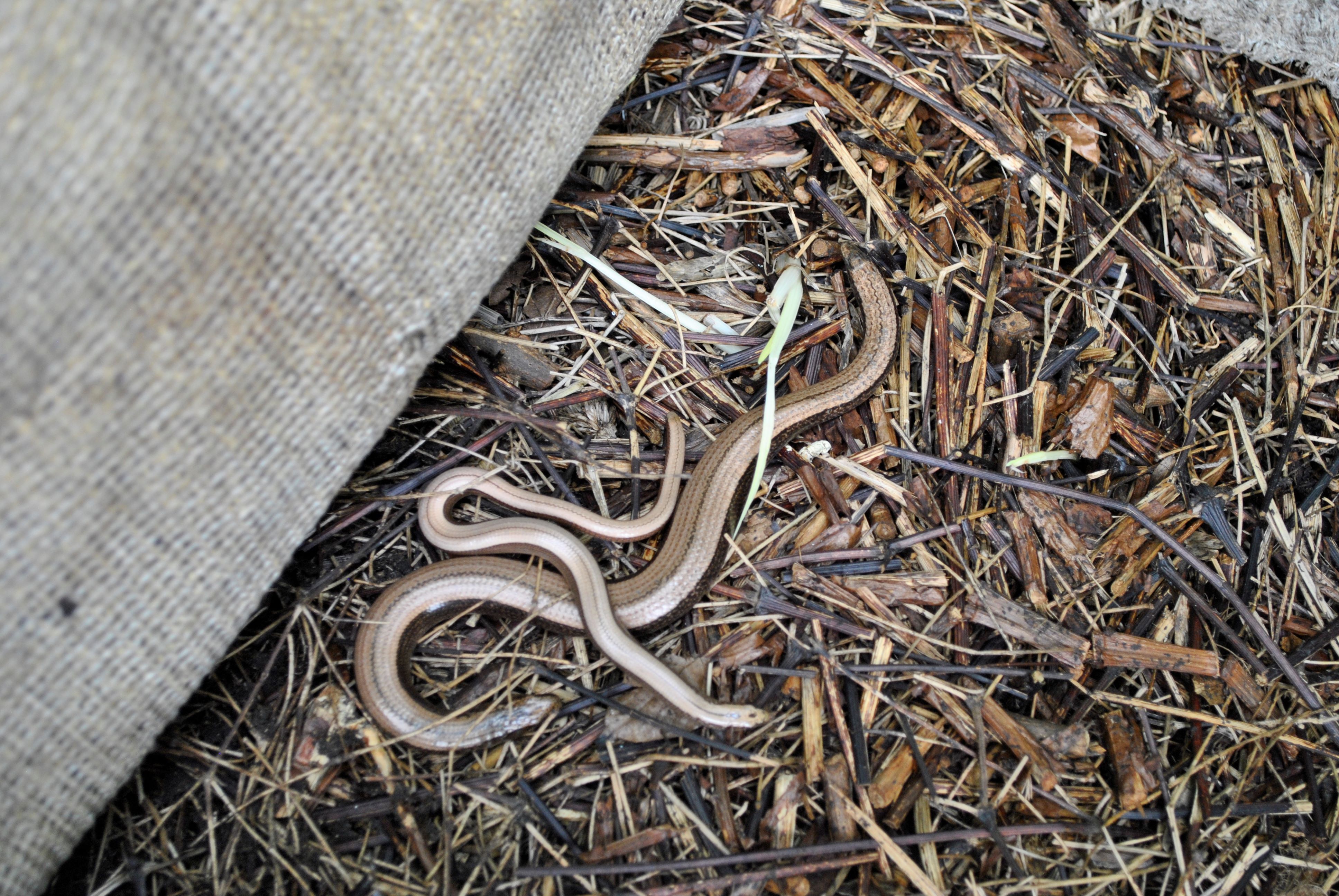
Pulling the old carpet back on one of the compost heaps, I was very pleased to find a family of Slow Worms having a nap before venturing out this evening on slug patrol. They are not snakes but legless lizards, and completely harmless. They are long lived, so these could be the same ones I found last year and the year before.

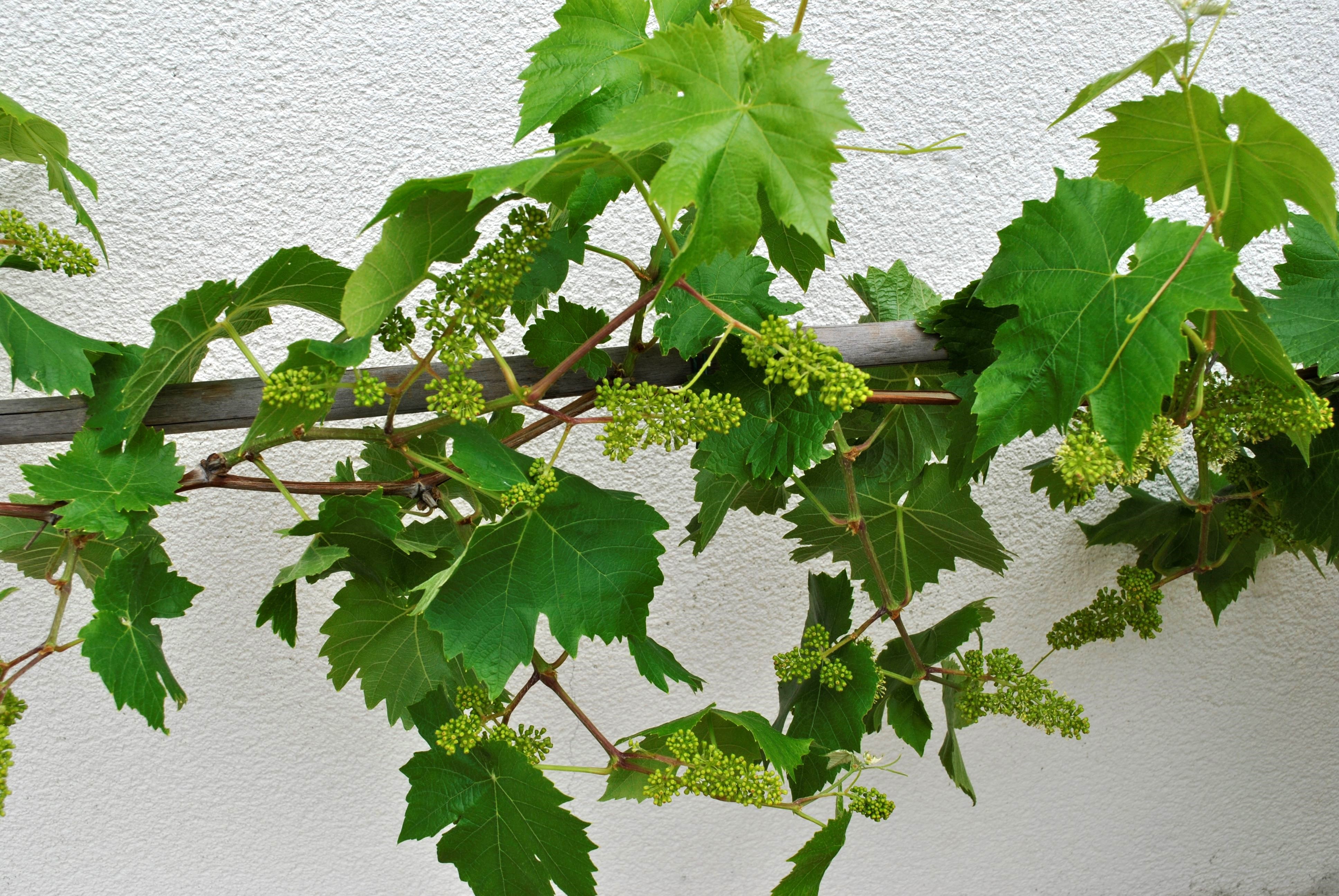
It looks like it’s going to be another bumper grape harvest this year. The embryonic Pink Fox Grapes are forming well and I already have requests from some of my jam and jelly making friends. If there are enough to go round, I might even try my hand at making some wine this year!

The Sambucus nigra ‘Black Lace’ is also showing signs of producing a great crop of flowers and berries. I love the pretty pink flowers and dark, almost black foliage. It gets pruned hard every winter, but seems to thrive on it and comes back bigger and better every year.

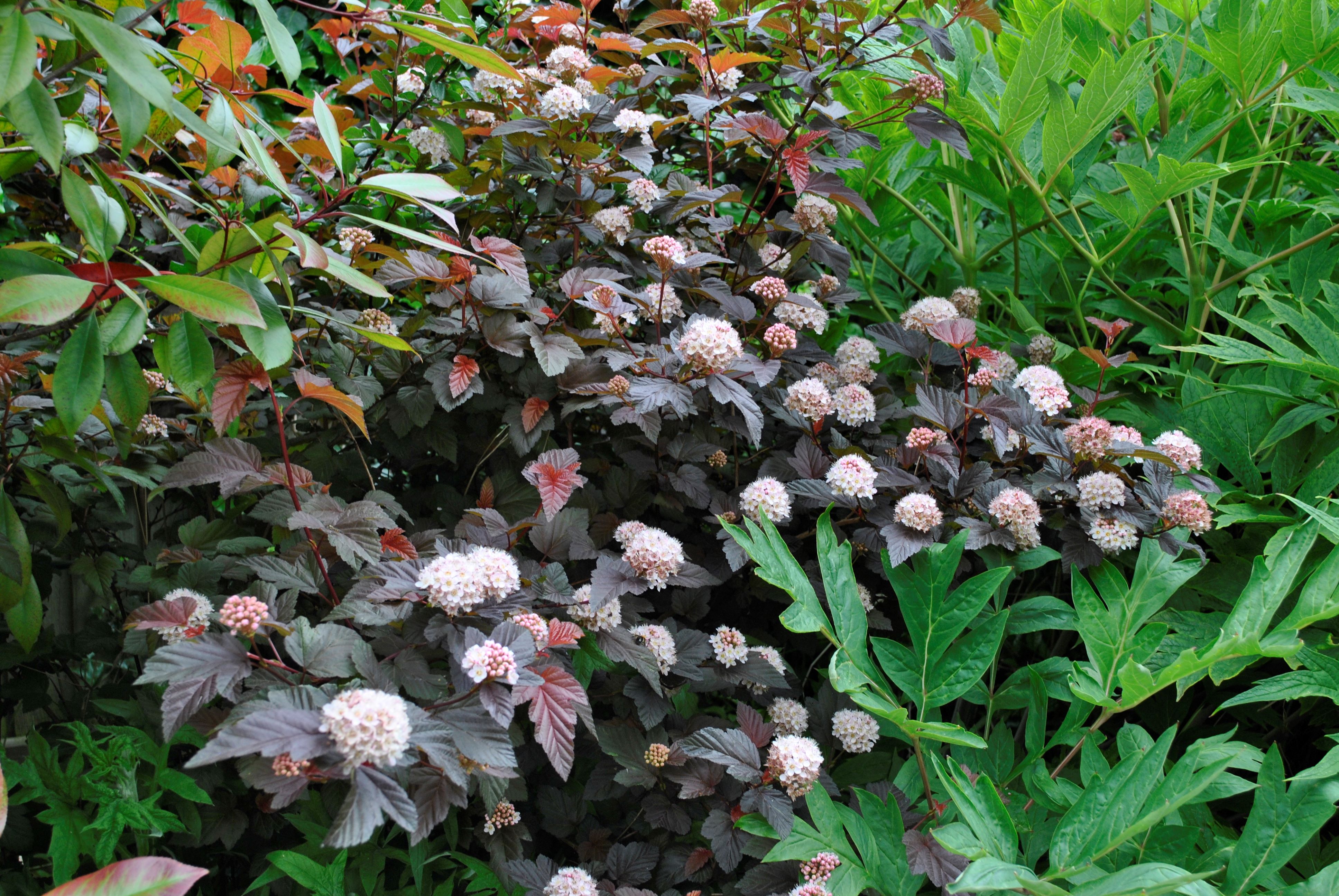
The dainty little Physocarpus opulifolius ‘Lady in Red’ is in full flower but getting swamped by a huge Photinia on one side and an even bigger yellow Tree Peony on the other. However, I love the contrast of shapes and colours in this shrubbery border.

The majestic spires of Delphinium ‘Black Knight’ are now well over 2m tall and at risk of getting snapped if we get any strong winds, which is what normally happens! They are supported with hoops but these provide the perfect snapping point! In the meantime the bees are having a great time.

I have been picking my autumn sown sweet peas for two weeks and they are coming thick and fast so I am cutting a bunch every other day. The scent in the kitchen is overpowering! I suddenly remembered why I love gardening so much!

Have a great weekend

David

Six on Saturday

Definitely NOT what you want in your prized white Allium ‘Mount Everest’. I am plagued with snails this year. I have looked in all the usual hiding spots to clear them away, but still they appear.This chap obviously thought he would be safe here!

First Sweet Pea flower of the year. A pretty pink one, which is amazing because I only sowed white and blue ones! They were supposed to be a mixture of creamy white ‘Cathy’ and blue flaked ‘Betty Maiden’. No matter, they are all gorgeous.

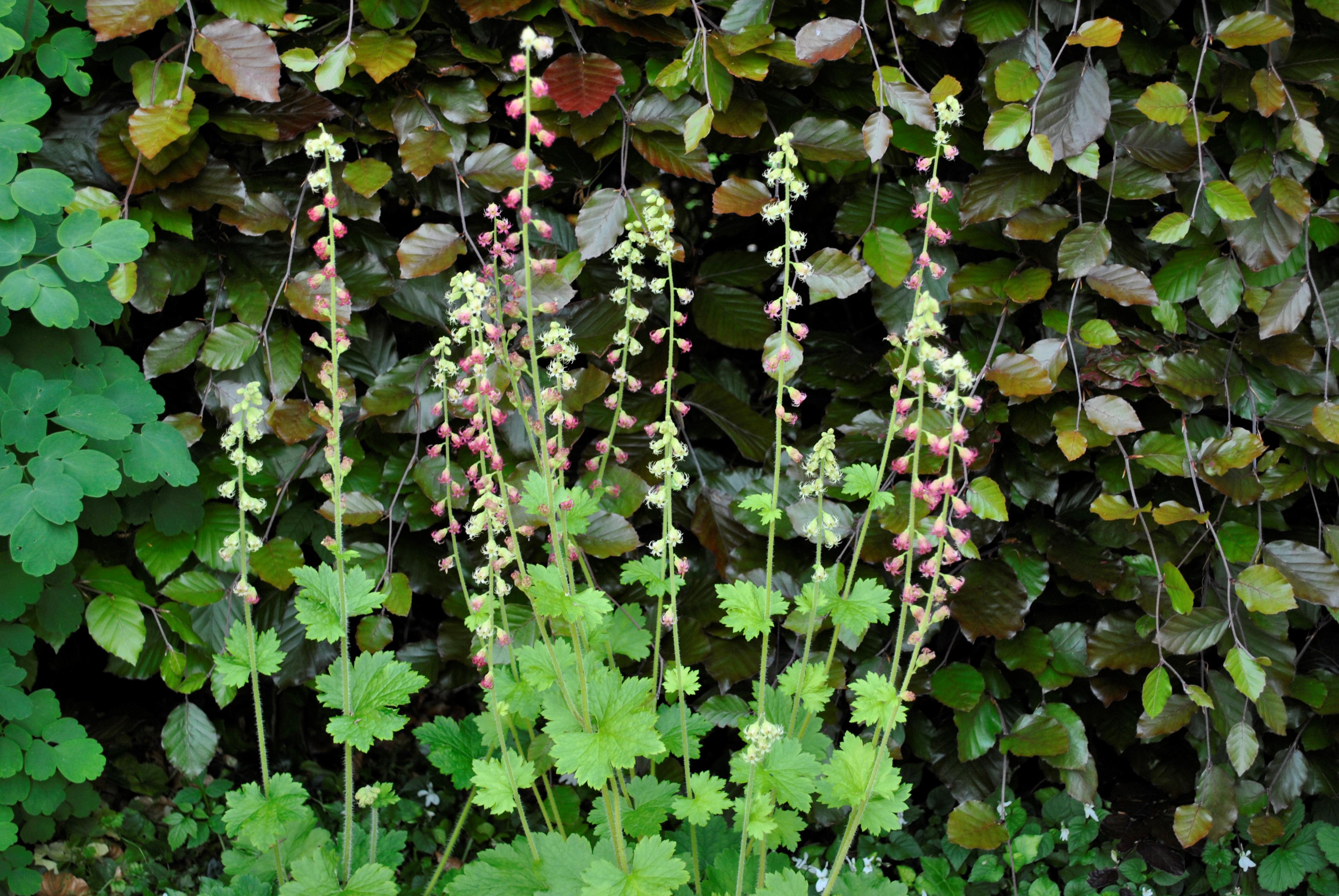
This little plant hardly ever gets a mention, maybe because the leaves look very similar to Wood Avens, and gets weeded out earlier in the year. Tellima grandiflora or Fringe Cups, is a western North American wildflower which is now a common sight along British hedgerows and in deciduous woodland in spring. It has tiny yellow or red flowers and soft felty leaves..

Not in my garden (obviously!) but an ocean of wild garlic along the banks of a stream in Painswick this week. I found it interesting that the flowers were more prevalent on the sunny side of the stream.

A veritable forest of perennial sunflowers, Helianthus ‘Miss Mellish’, which are due for the ‘Chelsea Chop’ next week. I try to tier them by chopping them shorter at the front and leaving some untouched in the middle. That way I get more flowers over a longer period.

Just emerging is Clematis integrifolia, which would normally sprawl over other shrubs but I keep it contained within a grow-through ‘lobster pot’ to get it to grow vertically and so I can appreciate the beautiful mauve flowers en-masse. It works well with roses and the background of Trachelospermum jasminoides which will hopefully be in flower next week if this beautiful weather continues.

Have a great weekend

David